About this artwork
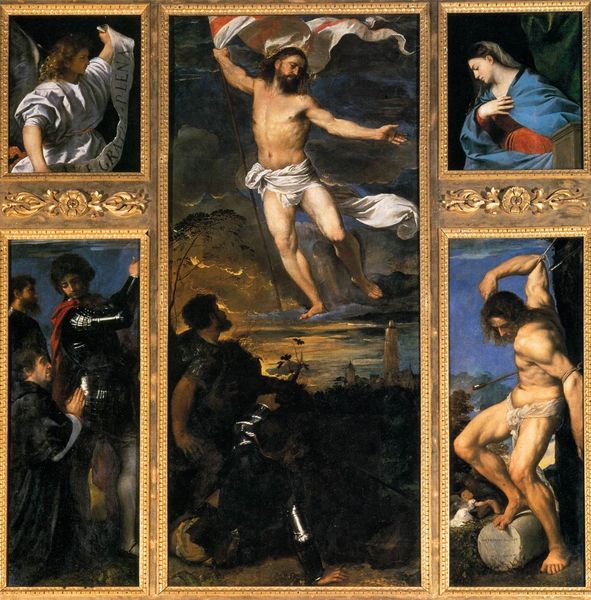
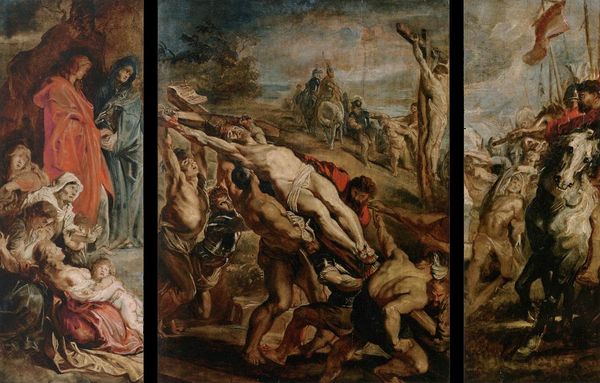
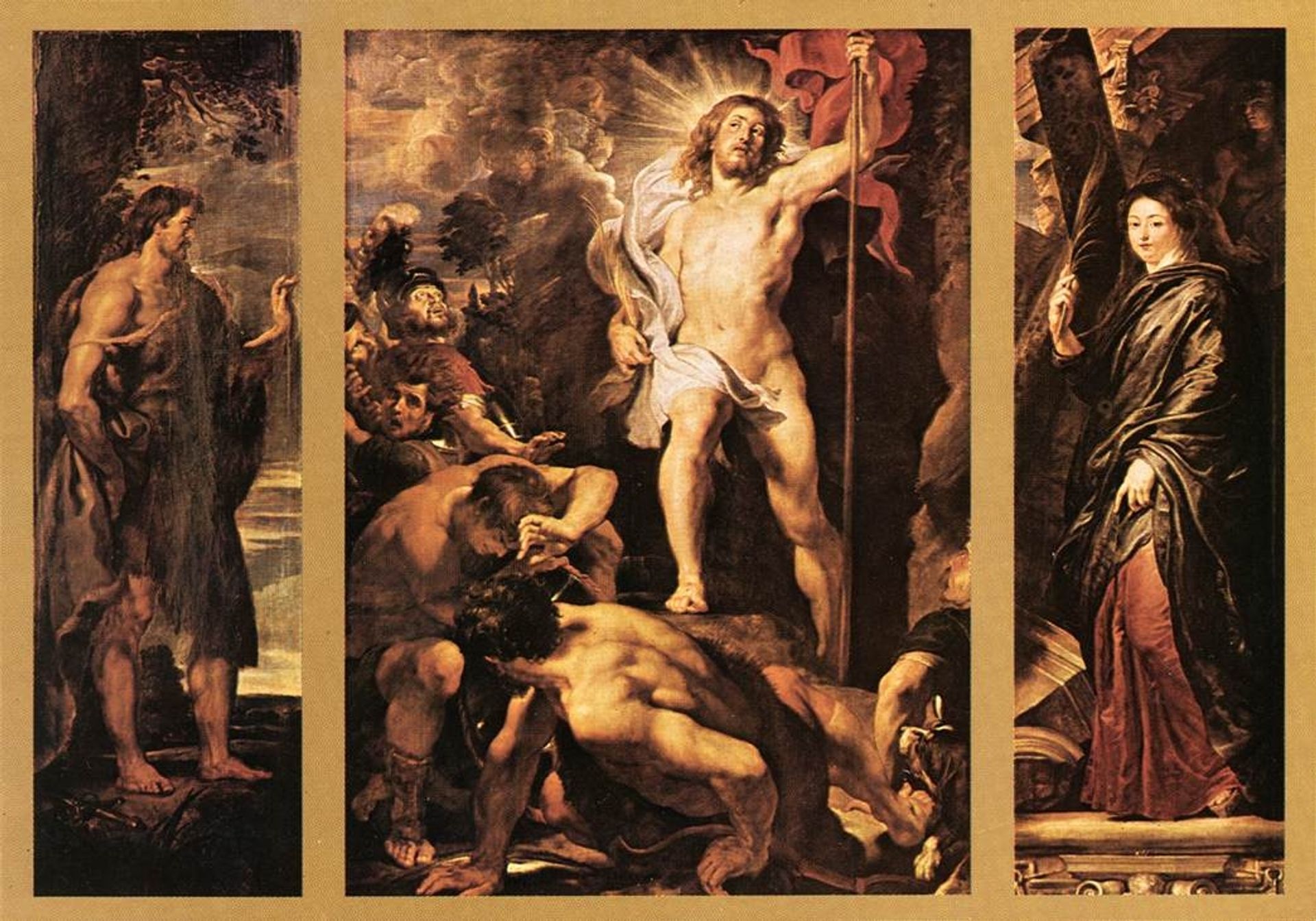
Peter Paul Reubens created this oil on canvas triptych depicting 'The Resurrection of Christ'. It currently resides in the Cathedral of Our Lady, Antwerp. Painted in the 17th century, the work reflects the socio-political climate of the time in the Spanish Netherlands. The Catholic Church, a major power, employed art as a tool for religious instruction and propaganda during the Counter-Reformation. Rubens, a devout Catholic, uses his dramatic baroque style to reaffirm the Church's authority. The central panel shows Christ rising triumphantly, a visual metaphor for the Church's resilience. Rubens' style, characterized by dynamic compositions, rich colors, and sensual figures, reinforces the emotional impact of the scene. The soldiers recoil from the radiant Christ. The side panels featuring John the Baptist and Saint Livinus, integrate local figures into the divine narrative. Looking at 'The Resurrection', one might use historical archives, theological texts, and studies of patronage to understand how art was embedded in the social, political, and religious life of its time.
The Resurrection of Christ
1612

Peter Paul Rubens
1577 - 1640Location
Cathedral of Our Lady, Antwerp, BelgiumArtwork details
- Medium
- painting, oil-paint
- Dimensions
- 138 x 178 cm
- Location
- Cathedral of Our Lady, Antwerp, Belgium
- Copyright
- Public domain
Tags
Comments
Share your thoughts
About this artwork
Peter Paul Reubens created this oil on canvas triptych depicting 'The Resurrection of Christ'. It currently resides in the Cathedral of Our Lady, Antwerp. Painted in the 17th century, the work reflects the socio-political climate of the time in the Spanish Netherlands. The Catholic Church, a major power, employed art as a tool for religious instruction and propaganda during the Counter-Reformation. Rubens, a devout Catholic, uses his dramatic baroque style to reaffirm the Church's authority. The central panel shows Christ rising triumphantly, a visual metaphor for the Church's resilience. Rubens' style, characterized by dynamic compositions, rich colors, and sensual figures, reinforces the emotional impact of the scene. The soldiers recoil from the radiant Christ. The side panels featuring John the Baptist and Saint Livinus, integrate local figures into the divine narrative. Looking at 'The Resurrection', one might use historical archives, theological texts, and studies of patronage to understand how art was embedded in the social, political, and religious life of its time.
Comments
Share your thoughts