paper, photography
#
portrait
#
aged paper
#
old engraving style
#
hand drawn type
#
paper
#
photography
#
personal sketchbook
#
intimism
#
journal
#
fading type
#
sketchbook drawing
#
sketchbook art
#
word imagery
#
columned text
Dimensions: height 178 mm, width 113 mm
Copyright: Rijks Museum: Open Domain
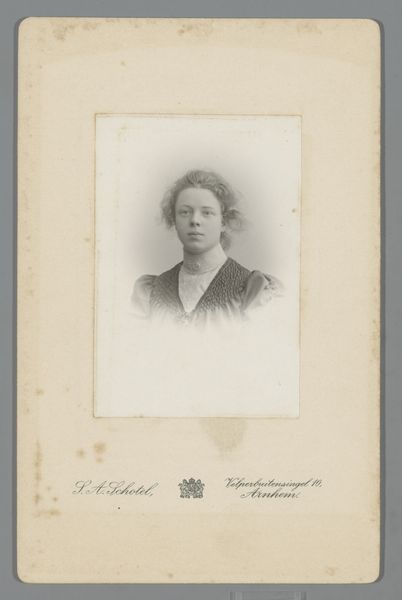
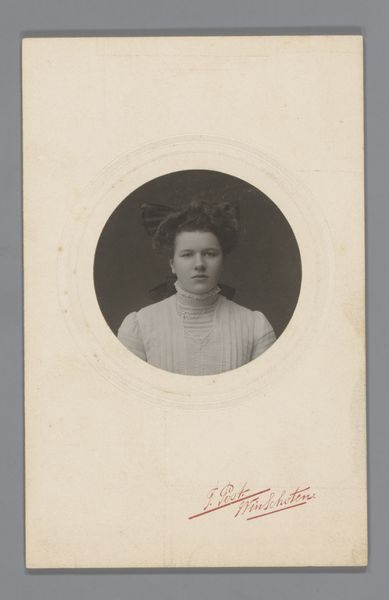
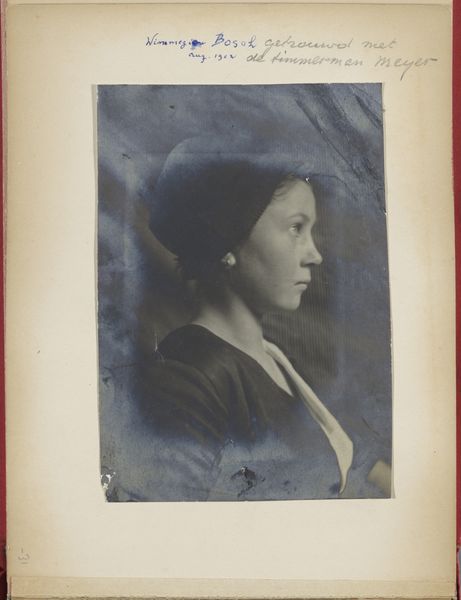
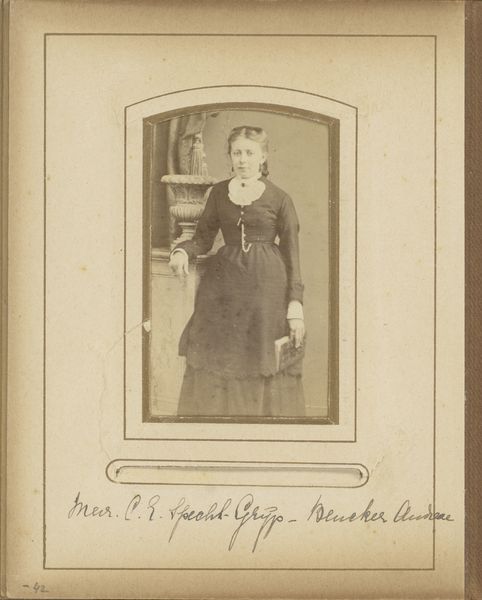
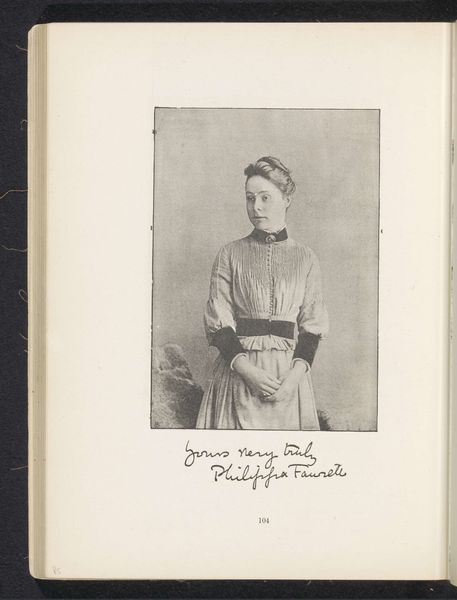
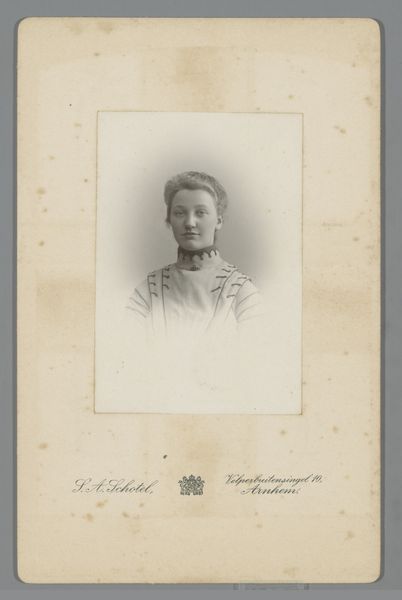
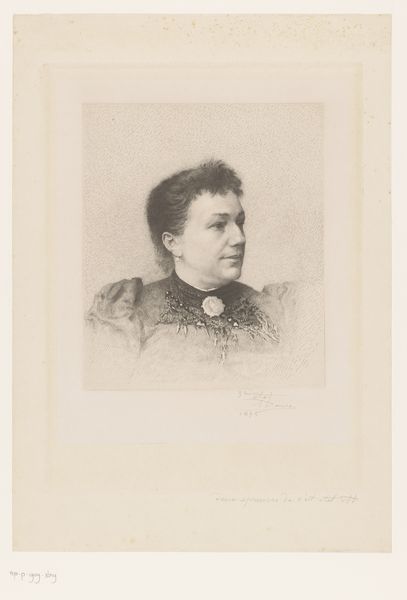
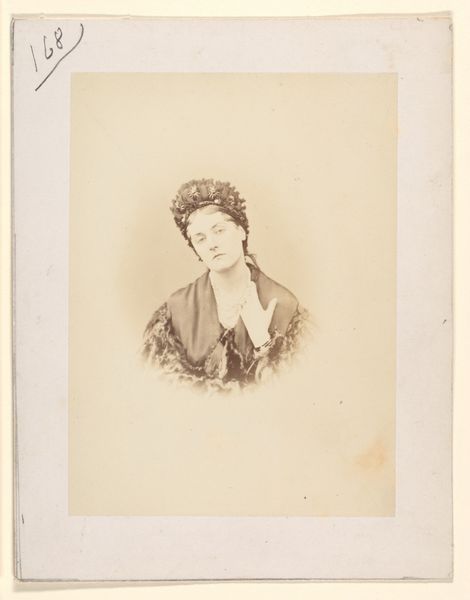
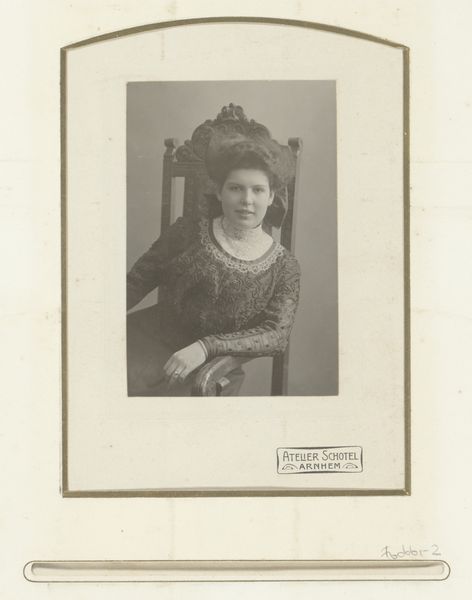
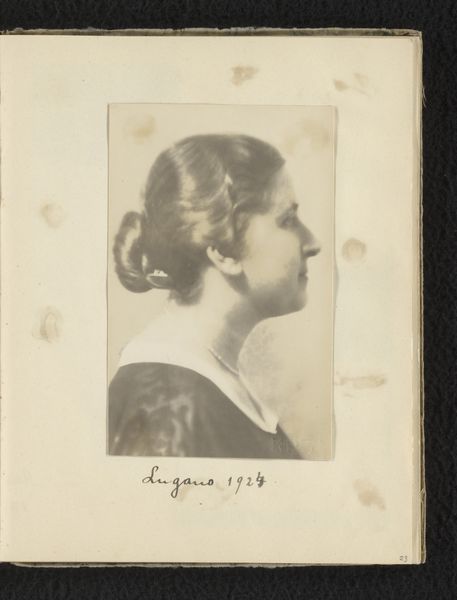
Curator: Looking at "Brief van mogelijk Prins aan Marie Jordan," or "Letter from a Possible Prince to Marie Jordan," its mood feels surprisingly intimate for a piece of potentially formal correspondence. What catches your eye first? Editor: The contrasting visual textures. We have a photograph, seemingly carefully framed, paired with fluid, hand-drawn type on what appears to be aged paper. It creates an interesting visual and textural dichotomy. Curator: Indeed. This piece, possibly dating back to 1908, uses photography and handwriting on paper to convey its message. We need to acknowledge that without much information, we are placed in a contemporary moment imagining a long-ago intimacy. I read the portrait of Marie Jordan within a possible patriarchal, if loving, dynamic. Editor: Semiotically, the portrait is fascinating. Note the subject's gaze, directed just off-center, which invites the viewer into a carefully constructed personal narrative. It presents an intimate view that nonetheless adheres to the compositional and tonal conventions of a formal portrait. The placement of the photographic portrait against the background of hand-drawn text creates meaning that extends beyond each of the two image components. Curator: I wonder, also, about Marie Jordan. Was this exchange consensual, or perhaps an imposition, a letter from a "possible prince"? As a contemporary observer, I ask myself how to confront its possible power dynamics and whether there's a possibility to approach her personhood beyond its connection to a prince. What were the broader gendered expectations of the time that shaped this interaction? Editor: Regardless of its intent or origin, the beauty here stems from the material contrast – the texture of the paper, the soft focus of the photo, the confident, looping script. I find the juxtaposition genuinely pleasing to the eye. Curator: Absolutely. It offers a fascinating glimpse into possible lives and into ways of early 20th-century visual communication. Thank you for drawing our attention to its compelling elements. Editor: My pleasure. There's a particular satisfaction in appreciating how a photograph's subject blends the formal with the casual to produce new meaning in ways that endure over time.
Comments
No comments
Be the first to comment and join the conversation on the ultimate creative platform.
 Collect
 React
React Comment
More like this