1912
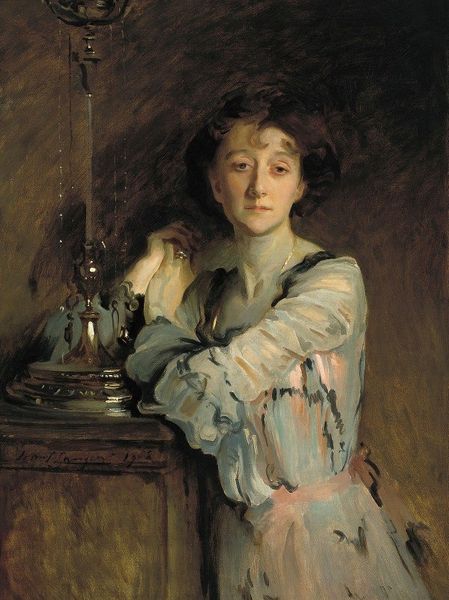
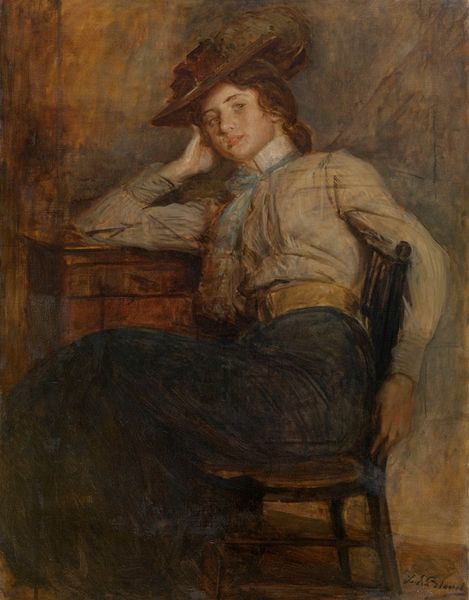
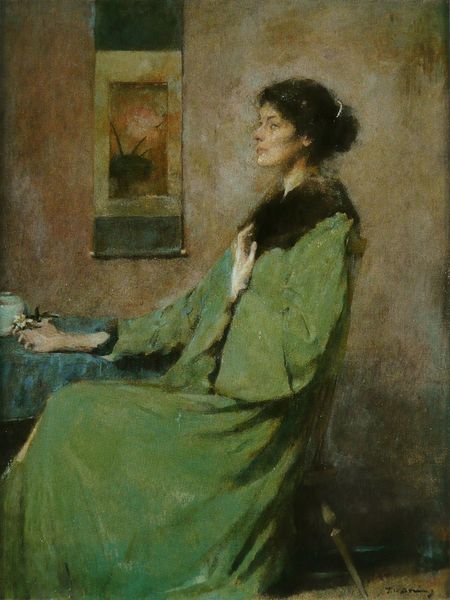
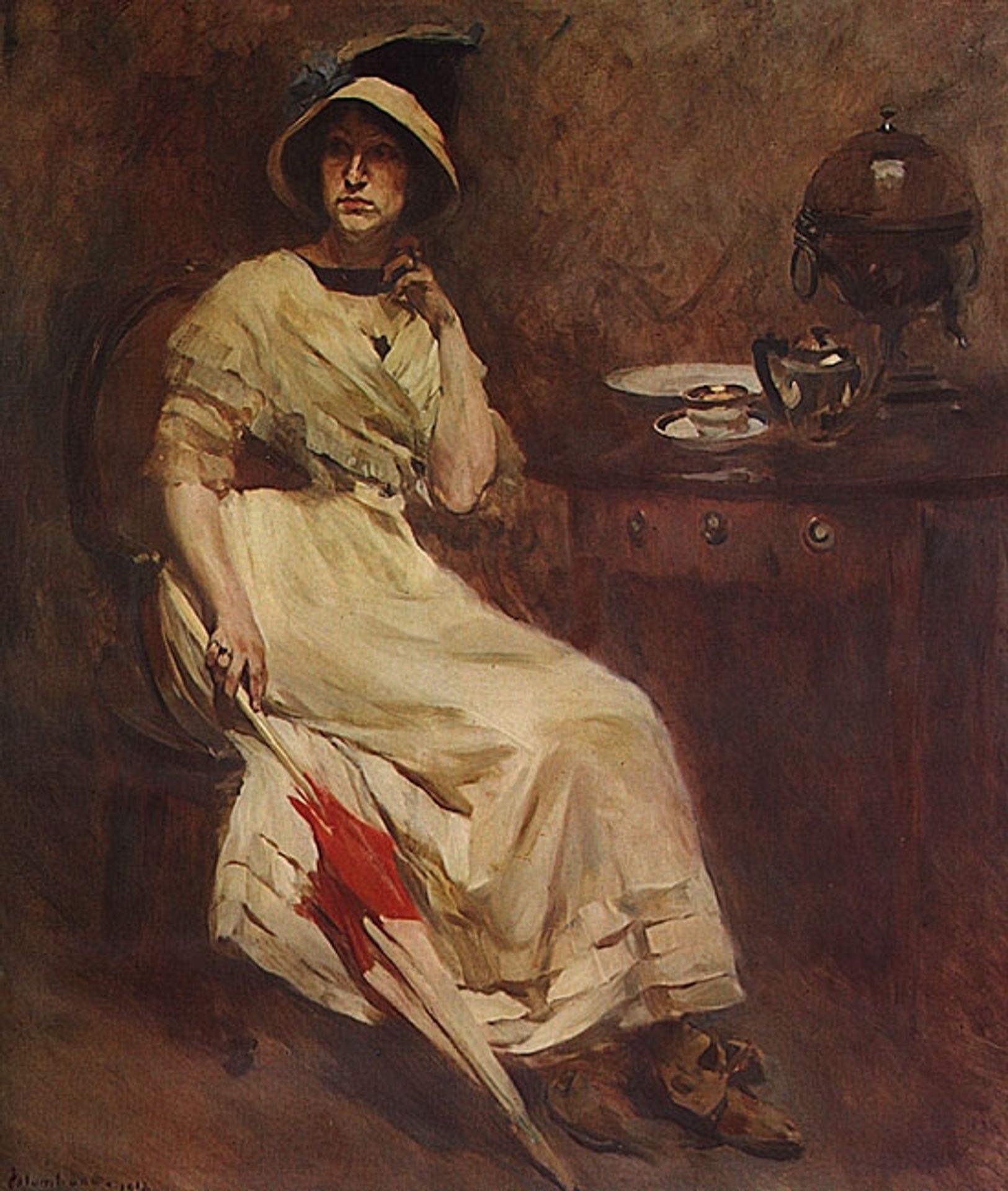
Retrato de Mª Cristina Bordalo Pinheiro

Listen to curator's interpretation
Curatorial notes
Editor: So, this is "Retrato de Maria Cristina Bordalo Pinheiro," painted in 1912 by Columbano Bordalo Pinheiro. It’s an oil painting, and the woman in it seems kind of melancholic. What do you see in it? Curator: Beyond a portrait, this image encapsulates a very specific moment in early 20th-century bourgeois life in Portugal. It depicts not just a woman, but her social standing, her access to leisure, and the way these are subtly communicated through her posture, clothing, and even the still life behind her. How do you think this portrait functions within the broader artistic trends of its time? Editor: I guess I hadn't thought about it as a commentary on social class. I was more focused on the individual. So, are you suggesting the painting is making a statement? Curator: Absolutely. Look at the specificities of her attire, the positioning of the tea service, and the overall muted tones. These were all conscious decisions, and the reception would be closely linked to contemporary notions of class and representation within Portuguese society. Considering Portugal’s political climate at the time – the end of the monarchy approaching – can a painting like this uphold or even challenge the establishment? Editor: I see what you mean. Maybe it's a quiet subversion? She isn't overly glamorous, yet she exudes privilege. It's not as straightforward as a revolutionary painting, but perhaps subtly subversive. I am more aware now of how cultural forces intersect with artistic expression. Curator: Exactly! The politics of imagery often operates on multiple levels.