


Curatorial notes
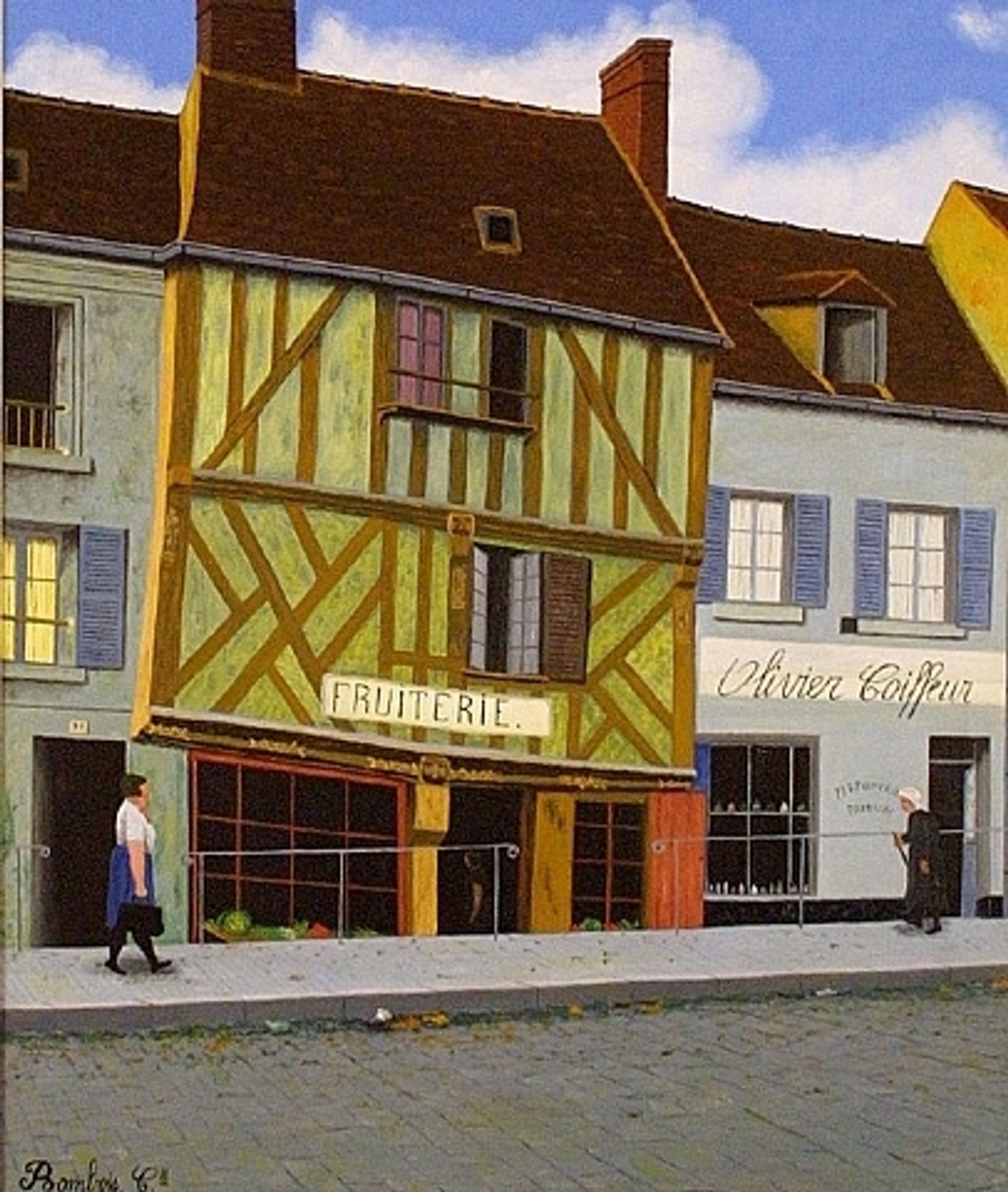
Curator: "Vieille Maison a Compiegne," painted in 1935 by Camille Bombois. It's an intriguing street scene, certainly not how one would imagine the French landscape usually being depicted. Editor: My first thought is, what a captivating composition! It feels like stepping back in time, yet there's a certain timeless quality about it. Curator: Absolutely. Bombois was part of a wave of self-taught artists painting modern life through a naive lens, emphasizing the quotidien—the materiality of everyday experience. He came to painting following time as a farmhand, then a wrestler! Editor: Knowing Bombois' background certainly sheds light on the scene depicted. This almost theatrical presentation, with its vibrant colors and deliberately flattened perspective, points to the cultural fascination with urban life in France at the time. It speaks to how images were used to construct a certain national identity. Curator: Notice the detail he applies to each material - wood, plaster, stone. This feels deeply rooted in physical labour, contrasting with high art traditions that downplay process. Even the signage for the shops gets such specific attention. Editor: Yes, the emphasis on ordinary shops like "Fruiterie" and the Coiffeur. These are not monumental landmarks but spaces that represent the social fabric, daily routines, and a sense of shared existence. The small details feel intentional to promote a certain visual experience of French daily life. Curator: There's an undeniable tension between this seemingly genuine folk-art simplicity and the highly constructed nature of the scene itself. Was he, like other Naive painters, subconsciously critiquing capitalist values via subject matter? Or perhaps the way painting allows us to consider these buildings as a reflection of a certain national mythologising. Editor: Perhaps both. I agree with your comment on the naivete being more about production and presentation than perspective, and there is something deeply romantic about it - the soft daylight feel almost makes the subjects a theatrical display. These were spaces for social interaction at a pivotal moment in French history. These types of works helped define a national aesthetic, shaping perception and projecting ideas about the role of public space. Curator: Food for thought, definitely. Looking at Bombois' treatment of the physical structures versus, say, their intended function within the culture, is fascinating and maybe offers something uniquely pertinent. Editor: Indeed, a vivid portal into a past—real and imagined—of the French urban landscape.