print, engraving
#
baroque
# print
#
landscape
#
river
#
cityscape
#
italian-renaissance
#
engraving
Dimensions: height 501 mm, width 600 mm
Copyright: Rijks Museum: Open Domain
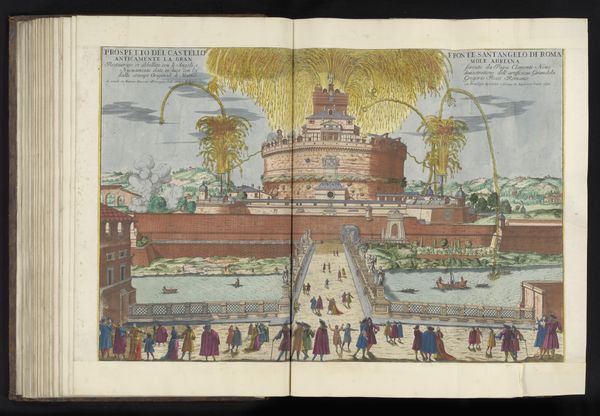
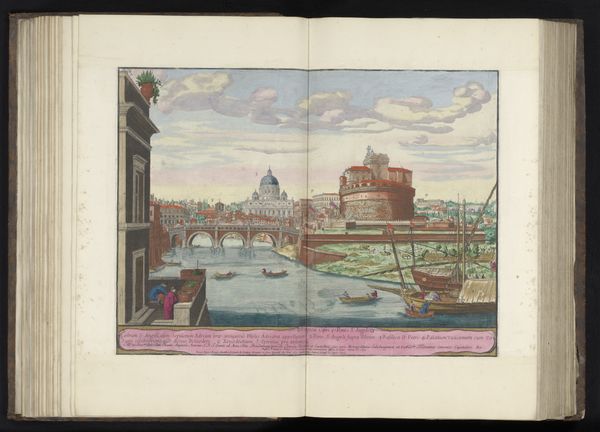
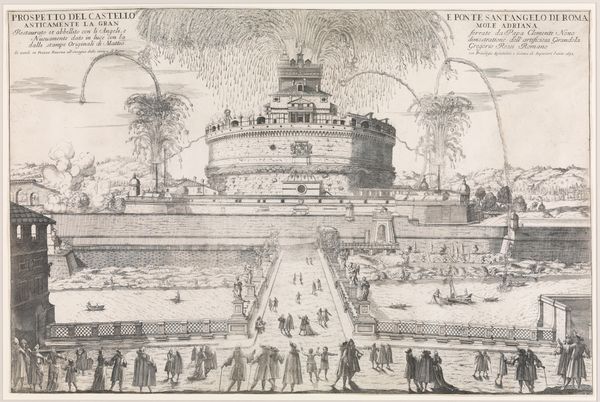
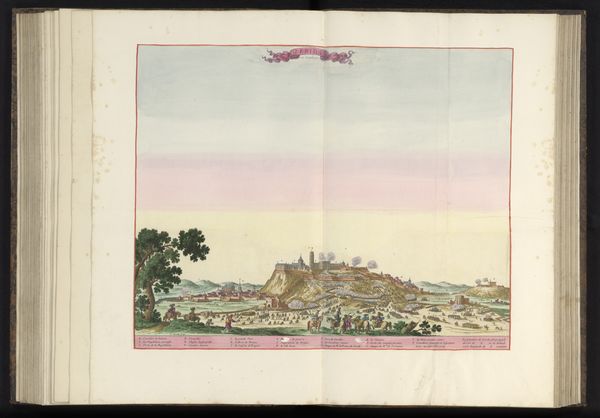
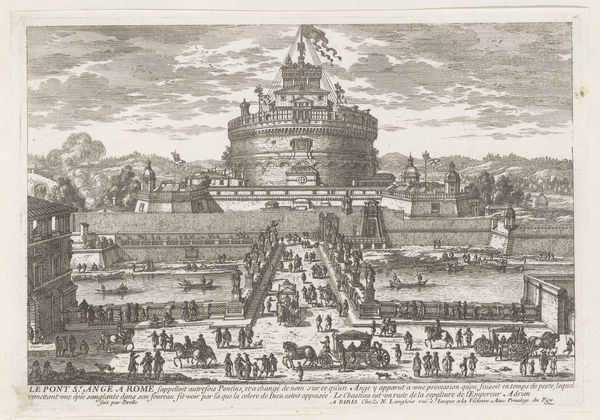
Curator: Today, we're looking at Pieter Schenk’s print, "Engelenburcht aan de rivier de Tiber te Rome," dating back to possibly between 1675 and 1717. It depicts a bustling cityscape with the Castel Sant'Angelo as its focal point, set along the Tiber River. Editor: It’s striking how this print, despite being almost monochromatic, conveys a sense of vibrancy. The architecture dominates the landscape, and the details in the figures crossing the bridge and sailing on the river create a strong narrative element. It feels grand and imperial. Curator: Schenk’s work gives us insights into how Rome was perceived and presented in that era. Engravings like this one functioned as visual documents, showcasing the city's power, religious authority, and artistic achievements, all circulated as prints for a growing public audience. Editor: It’s fascinating to consider the public that would consume this image. How did their existing power dynamics influence how such a visual document might have been interpreted? Who had access to this image? It would be a statement of privilege in so many ways. Curator: Absolutely, prints had broad appeal, yet affordability certainly impacted accessibility and how the messages within the prints might resonate. The cityscape, with its architectural marvels and implied movement, reflects a desire to document not only place, but its socio-political climate as well. Editor: It raises questions about how the artist may have constructed an image of authority for consumption, what details they chose to include or exclude, and how that affects our reading today. The very choice to portray it from this specific viewpoint has meaning. Curator: The placement and dominance of Castel Sant’Angelo signifies, without doubt, the stronghold of papal authority over Rome during the late 17th and early 18th centuries. But look closely—aren’t those military cannons being fired in the background? The implied violence underscores this symbolic domination even further. Editor: Exactly, art serves a public role, both then and now. Studying it helps reveal those layered meanings and inherent power structures. I wonder how the perception of this print would shift across various viewers even today. Curator: That’s the lasting power of art. These images can speak to us across centuries, continuing to challenge our perceptions and assumptions about history and its relation to our present. Editor: I couldn't agree more. It highlights the value of looking at historical narratives, of power, identity and politics, so we can consider the dialogue this art prompts us to continue.
Comments
No comments
Be the first to comment and join the conversation on the ultimate creative platform.
 Collect
 React
React Comment
More like this