About this artwork
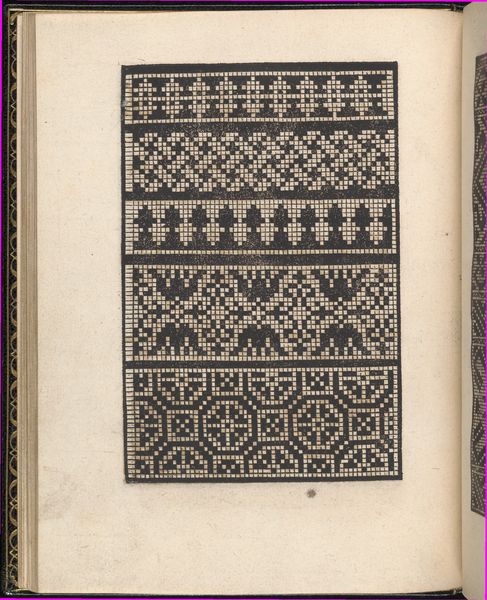
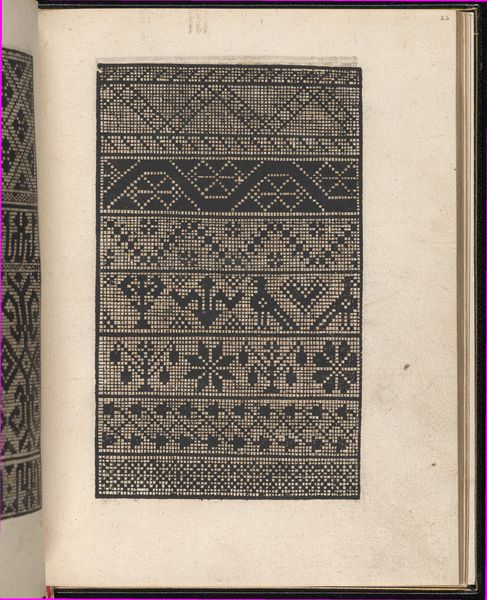
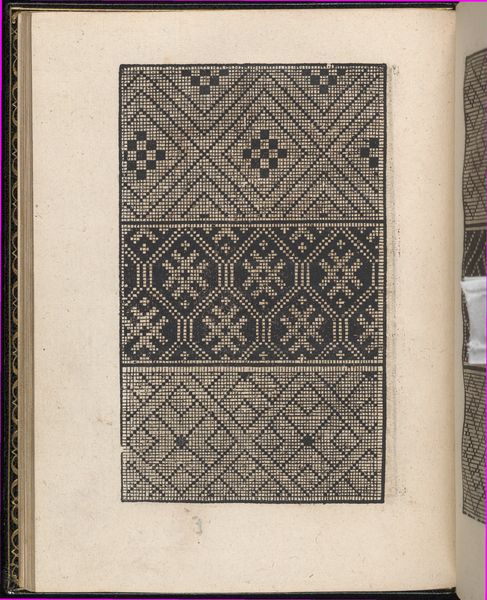
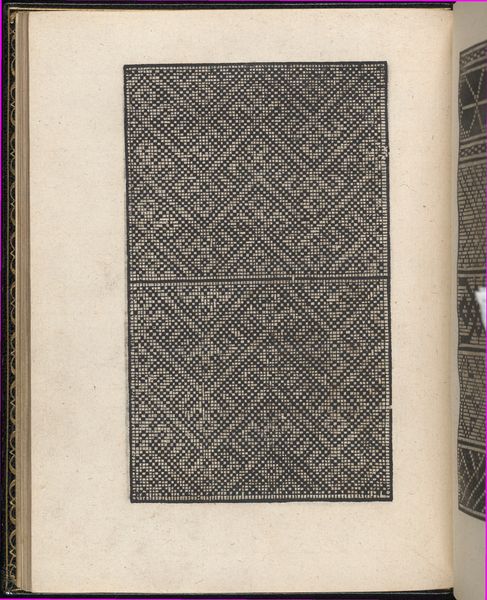
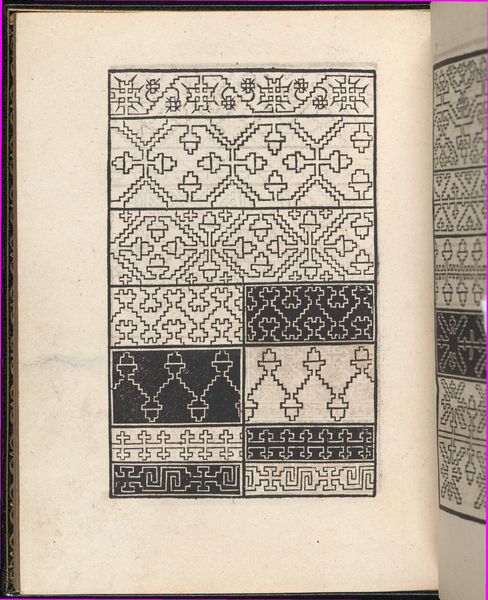
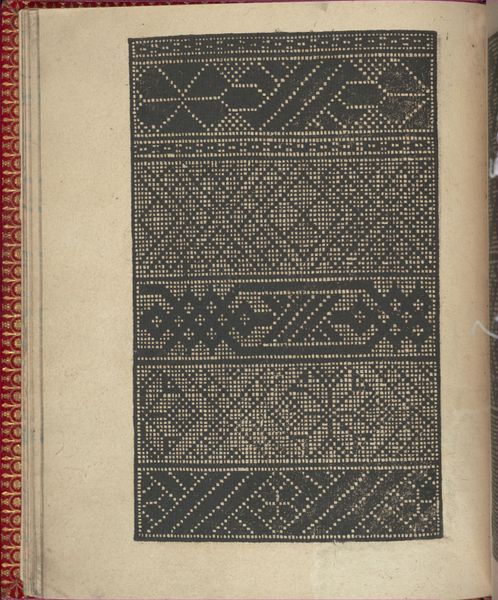
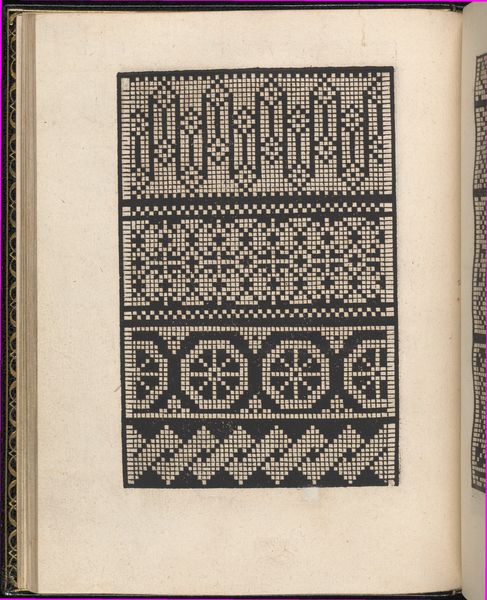
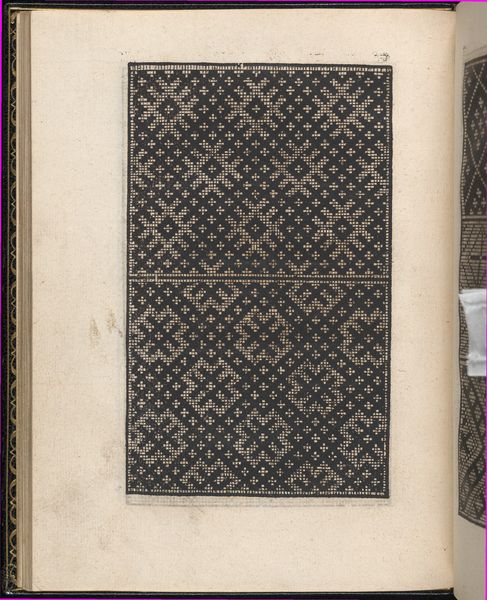
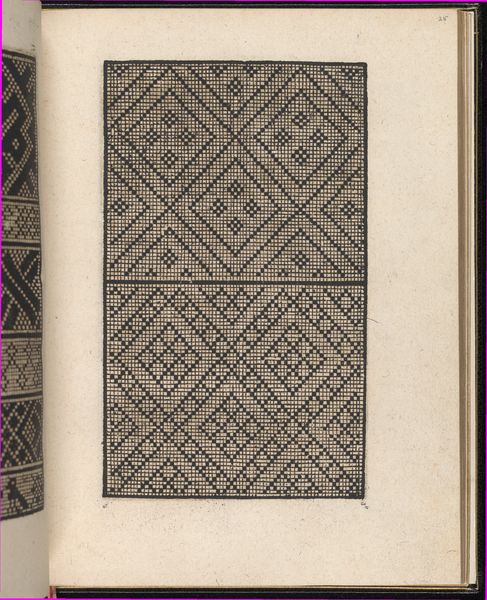
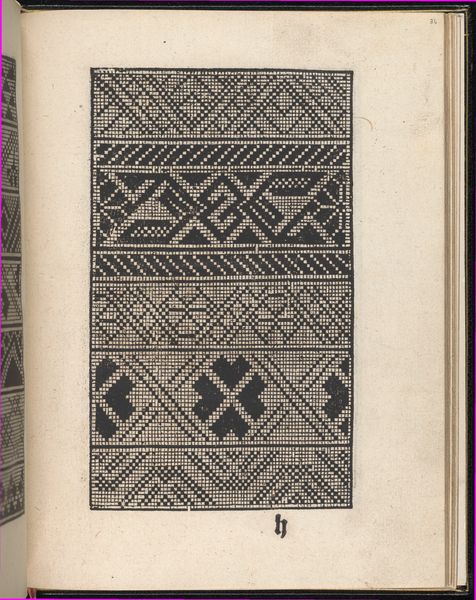
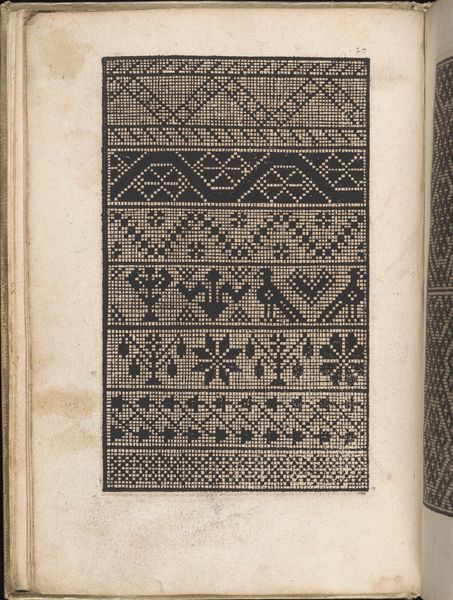
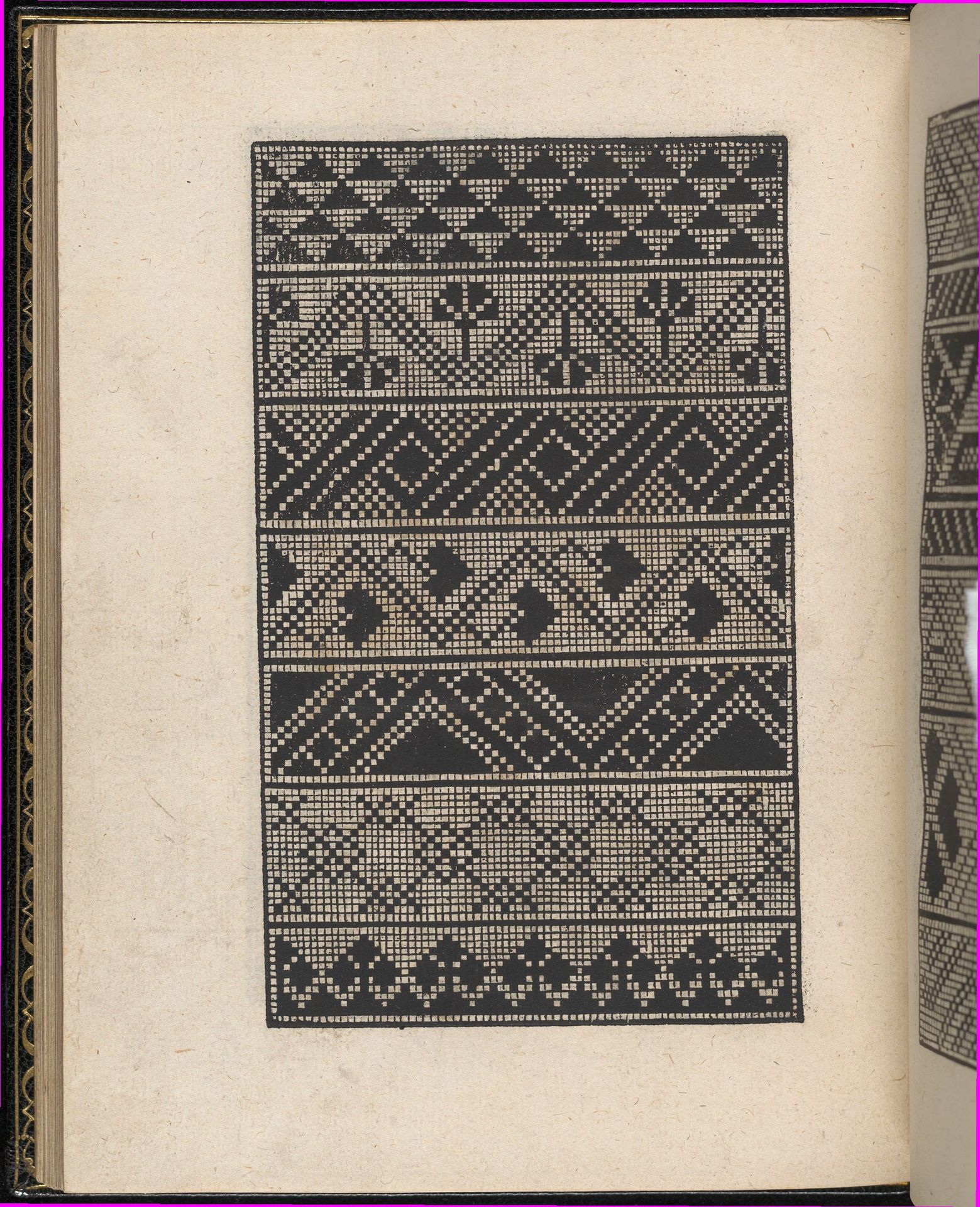
This page, from Peter Quentel's model book, showcases intricate geometric patterns rendered in woodcut. The designs, common in 16th-century textiles, feature motifs such as the lozenge and the cross, symbols deeply rooted in cultural memory. Note the lozenge, or diamond shape, often associated with fertility and the womb in ancient cultures. It appears here in varying arrangements, each echoing ancestral meanings. These symbols, however, are never static. Think of the cross, a symbol of sacrifice and redemption, yet here it merges into a decorative element. The recurrence of these patterns across centuries speaks to the enduring power of symbols. Just as ancient symbols find new life in Renaissance designs, they engage viewers, sparking a powerful, subconscious connection to our collective past. They resurface, evolve, and take on new meanings in different historical contexts.
Page from Ein new kunstlich Modelbuch...(Page 35v)
1544


Artwork details
- Medium
- drawing, print, paper, woodcut
- Dimensions
- Overall: 7 11/16 x 5 7/8 in. (19.5 x 15 cm)
- Location
- Metropolitan Museum of Art, New York, NY
- Copyright
- Public Domain
Tags
drawing
toned paper
book
pattern
decorative
paper
11_renaissance
personal sketchbook
coloured pencil
geometric
woodcut
line
northern-renaissance
decorative-art
Comments
Be the first to share your thoughts about this work.
About this artwork
This page, from Peter Quentel's model book, showcases intricate geometric patterns rendered in woodcut. The designs, common in 16th-century textiles, feature motifs such as the lozenge and the cross, symbols deeply rooted in cultural memory. Note the lozenge, or diamond shape, often associated with fertility and the womb in ancient cultures. It appears here in varying arrangements, each echoing ancestral meanings. These symbols, however, are never static. Think of the cross, a symbol of sacrifice and redemption, yet here it merges into a decorative element. The recurrence of these patterns across centuries speaks to the enduring power of symbols. Just as ancient symbols find new life in Renaissance designs, they engage viewers, sparking a powerful, subconscious connection to our collective past. They resurface, evolve, and take on new meanings in different historical contexts.
Comments
Be the first to share your thoughts about this work.