1748
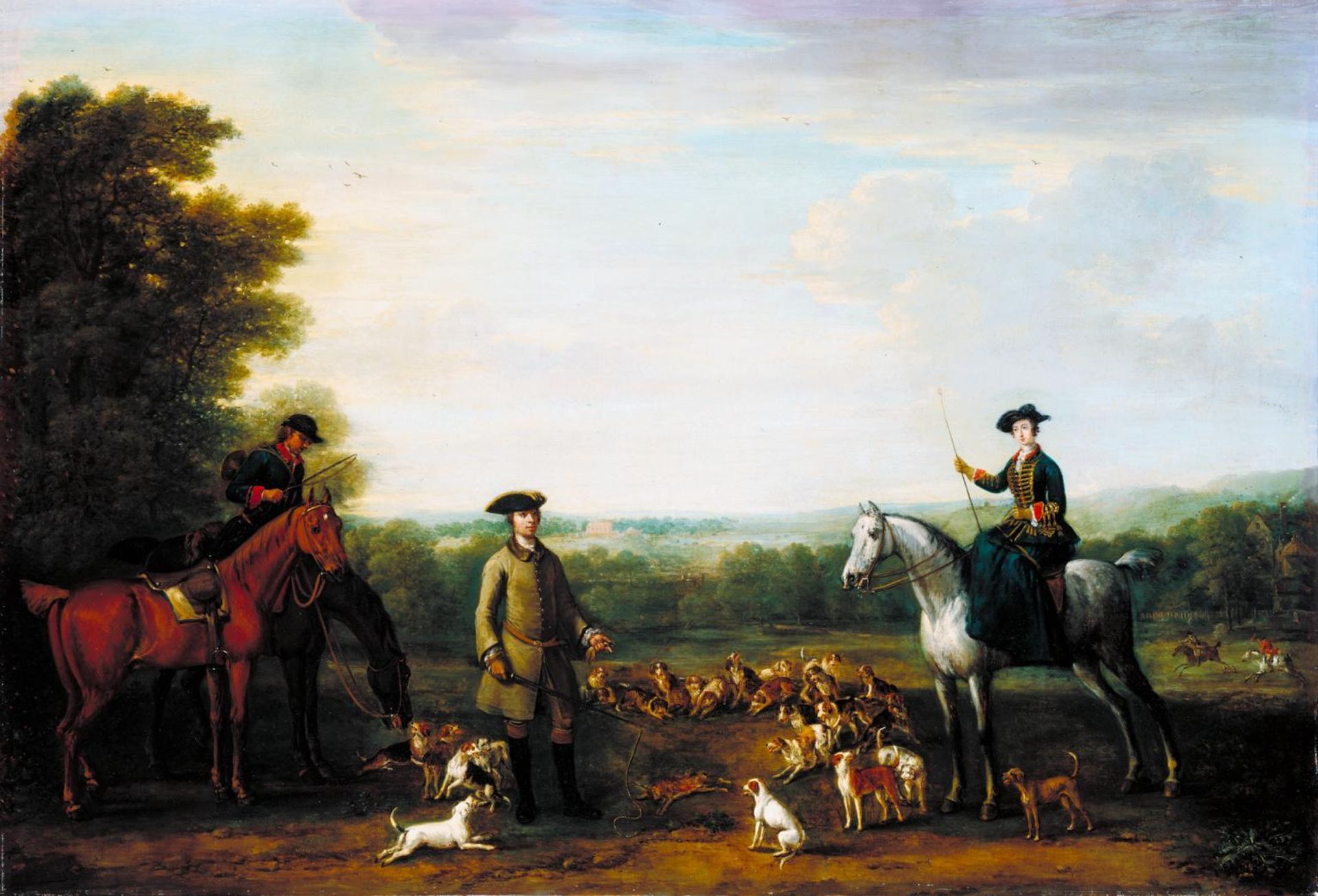
Lady Mary Churchill at the Death of the Hare


Listen to curator's interpretation
Curatorial notes
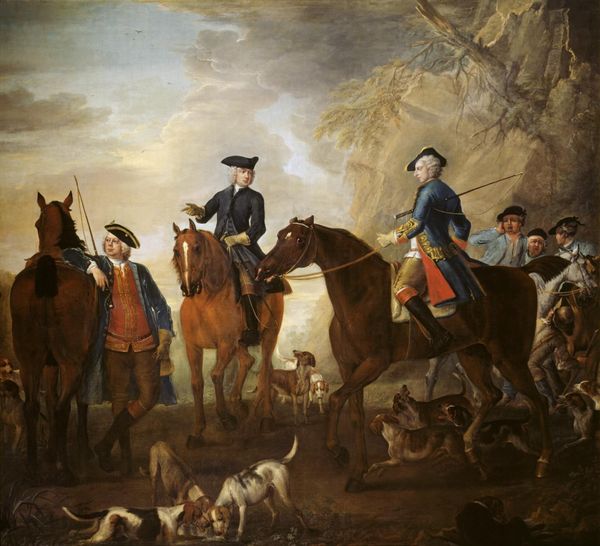
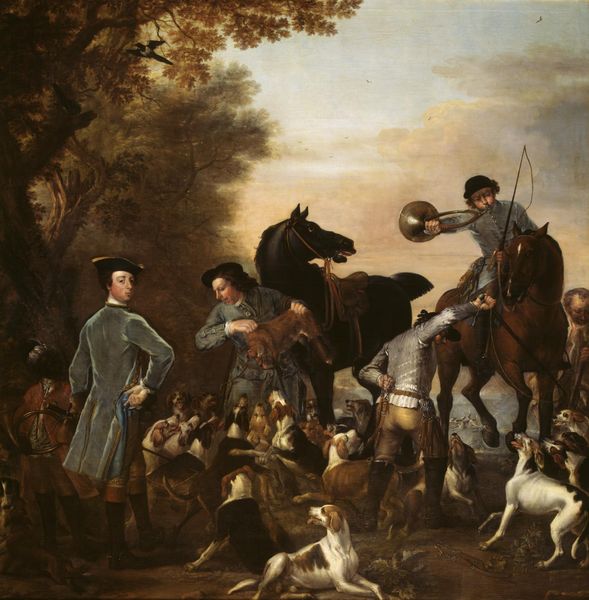
Curator: John Wootton, active in the first half of the 18th century, likely painted this piece, "Lady Mary Churchill at the Death of the Hare," sometime during his career, rendered on a canvas of just over a meter high. Editor: The scene feels immediately celebratory, albeit tinged with a certain melancholy. It’s all wide open sky, rolling hills, and a large assembly of figures. Curator: The work is a fascinating commentary on gender and power, as we see Lady Mary positioned centrally on her white horse. The "death of the hare" becomes a symbol of aristocratic privilege and the gendering of leisure activities. Editor: Hunting imagery almost always evokes notions of dominance. The hare, so often a symbol of vulnerability, meets its end. The dogs form a semi-circle around the fallen animal, their postures suggesting fulfillment. Curator: Absolutely, and we can also read this through a lens of class. The painting normalizes the relationship between the ruling classes and the natural world, and it reflects a very specific hierarchy. Editor: It’s hard to ignore the painting's connection to traditional displays of power and status, but also the complex meanings that can be extracted from this seemingly simple scene.