About this artwork
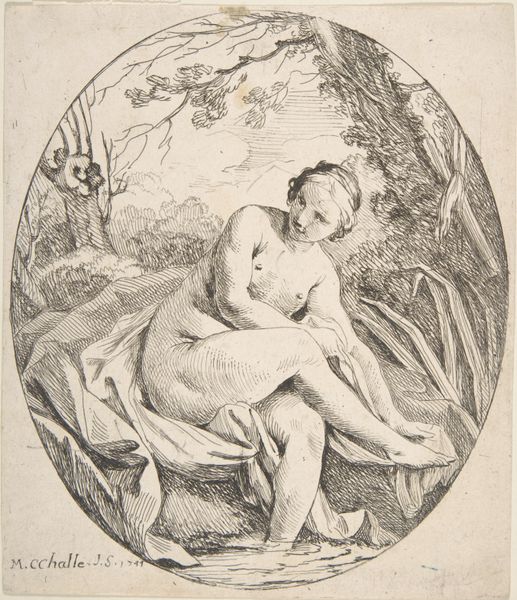
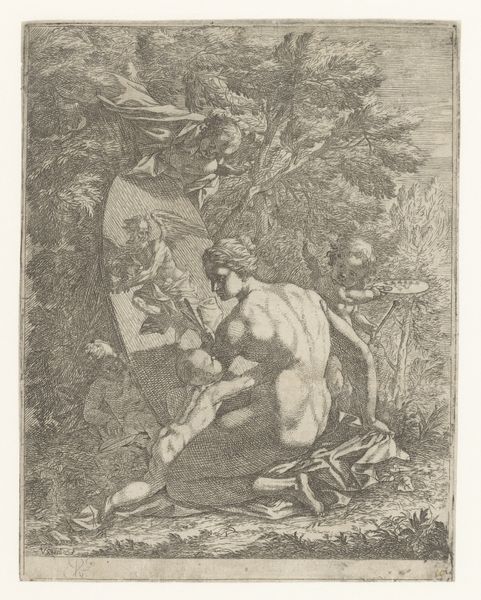
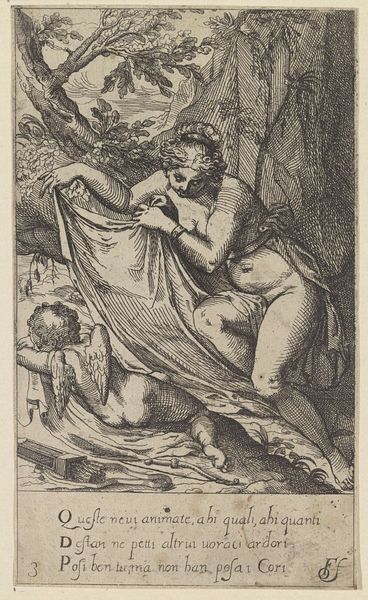
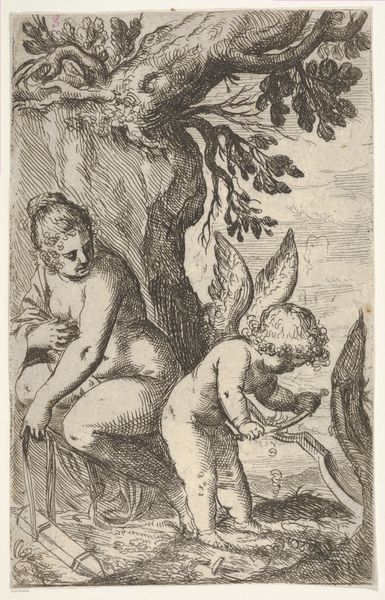
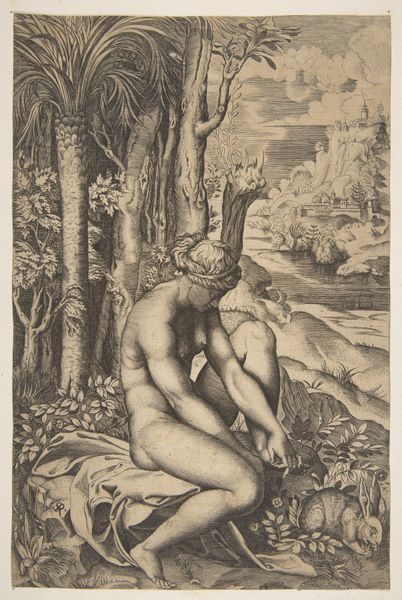
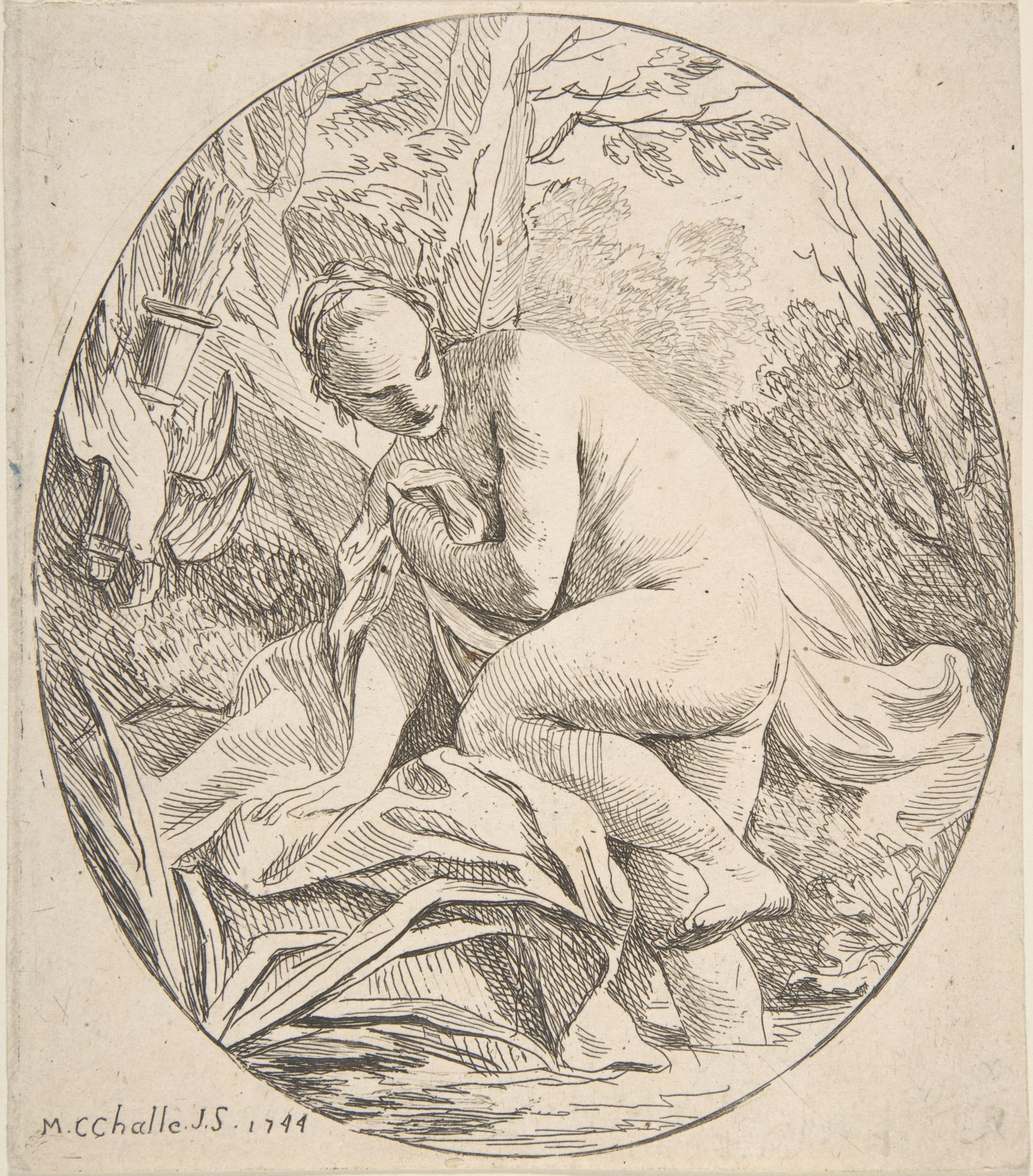
Charles Michel Ange Challe created this print, Diana at the Bath, in 1744. It depicts the goddess Diana, a mythological figure often associated with chastity, the hunt, and the moon. The print emerges from a historical context steeped in the artistic conventions of the French Rococo period, known for its ornate and sensual depictions. Yet, Challe's Diana introduces a different narrative. Rather than accentuating her divinity or power, we see a moment of vulnerability and intimacy as she prepares for a bath. The print invites us to reflect on the ways in which women have been portrayed in art, caught between the ideals of purity and the realities of human existence. It presents us with a Diana who is neither idealized nor sexualized, but rather captured in a private moment of repose. This scene resonates with the deeply personal experience of seeing oneself as both powerful and fragile. Challe seems to be asking us to reconcile the different aspects of femininity.
Diana at the Bath
1744

Charles Michel Ange Challe
1718 - 1778
The Metropolitan Museum of Art
Metropolitan Museum of Art, New York, NYArtwork details
- Medium
- drawing, print, etching
- Dimensions
- Sheet (trimmed): 6 1/8 × 5 3/8 in. (15.5 × 13.7 cm)
- Location
- Metropolitan Museum of Art, New York, NY
- Copyright
- Public Domain
Tags
Comments
Share your thoughts
About this artwork
Charles Michel Ange Challe created this print, Diana at the Bath, in 1744. It depicts the goddess Diana, a mythological figure often associated with chastity, the hunt, and the moon. The print emerges from a historical context steeped in the artistic conventions of the French Rococo period, known for its ornate and sensual depictions. Yet, Challe's Diana introduces a different narrative. Rather than accentuating her divinity or power, we see a moment of vulnerability and intimacy as she prepares for a bath. The print invites us to reflect on the ways in which women have been portrayed in art, caught between the ideals of purity and the realities of human existence. It presents us with a Diana who is neither idealized nor sexualized, but rather captured in a private moment of repose. This scene resonates with the deeply personal experience of seeing oneself as both powerful and fragile. Challe seems to be asking us to reconcile the different aspects of femininity.
Comments
Share your thoughts