1641 - 1658
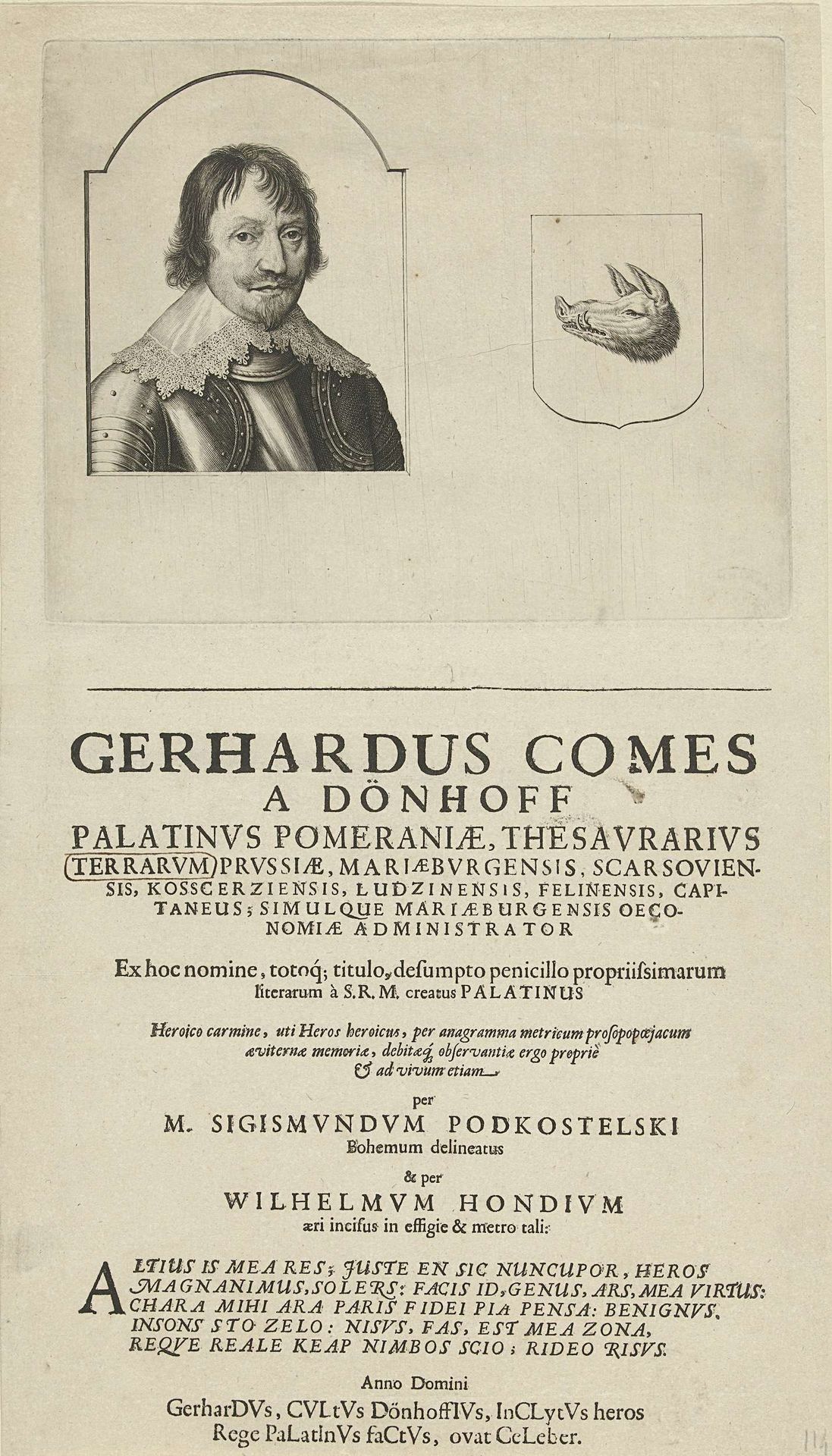
Portret van Gerard, graaf van Dönhoff

Willem Hondius
1597 - 1660Location
RijksmuseumListen to curator's interpretation
Curatorial notes
Curator: What a fascinating print! This is "Portret van Gerard, graaf van Dönhoff," made between 1641 and 1658. Willem Hondius created this engraving, now held in the Rijksmuseum. Editor: It's certainly striking. My first impression is of its formality. The elaborate collar, the stern gaze—everything about it suggests a man of power and importance. And those lines! So precise, yet they seem to hint at the man's vulnerability. Curator: Exactly! The image, combined with the inscription, conveys so much. Dönhoff, as the text emphasizes, was a Palatine of Pomerania, holding numerous administrative titles. That boar's head on the shield must speak to an emblem for the family and is worth researching as well. The armor that Gerard is wearing would indicate prestige in protecting territory during times of battle and the lace shows his noble affiliation. Editor: It makes me think about the printing process itself. Hondius meticulously etched those lines, repeatedly dipping the plate in acid to achieve different depths. Imagine the skill involved in rendering that delicate lace collar, the texture of the armor, with such unforgiving materials! Also interesting is how the Latin phrases below would be consumed in households of nobles during the baroque period. Curator: Absolutely. Hondius wasn't just documenting; he was constructing an image, crafting Dönhoff's legacy. Think of the psychological weight such a portrait would carry. It was more than just likeness. It embodied status, lineage, and aspirations. It continues the traditional iconographical strategy of rendering power in the family line. Editor: It also touches on the economic underpinnings of artistic production. Hondius, the engraver, relied on the patronage of individuals like Dönhoff or his family to create and disseminate these images. How were these prints used? Were they widely circulated, reinforcing Dönhoff's status among his peers, or were they primarily for family consumption, perpetuating the family's narrative across generations? Curator: Possibly both, I’d wager. The symbols here go beyond a simple depiction. They contribute to a powerful message about dynasty, office, and the perceived divine right to rule. That is a great point about the tension between private commemoration and the deliberate crafting of public image. Editor: Indeed. Looking at it now, beyond the face, I see how meticulously assembled the print truly is. Thinking through the production of this engraving, as we have, makes me newly appreciate its rich layers. Curator: For me, tracing how these symbolic languages evolved allows for an appreciation of the image across time, which is a fantastic element to contemplate about this print today.