About this artwork
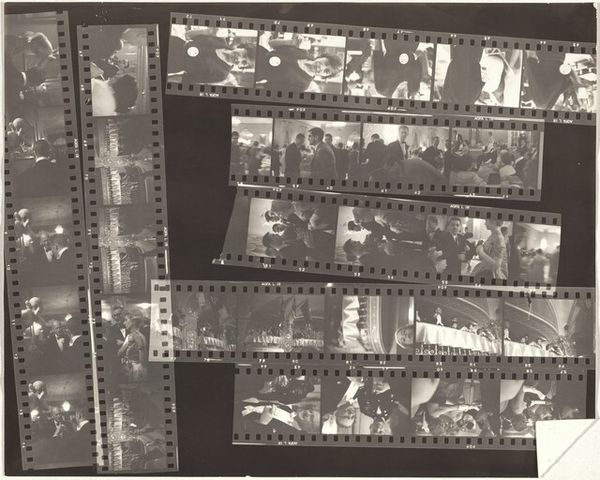
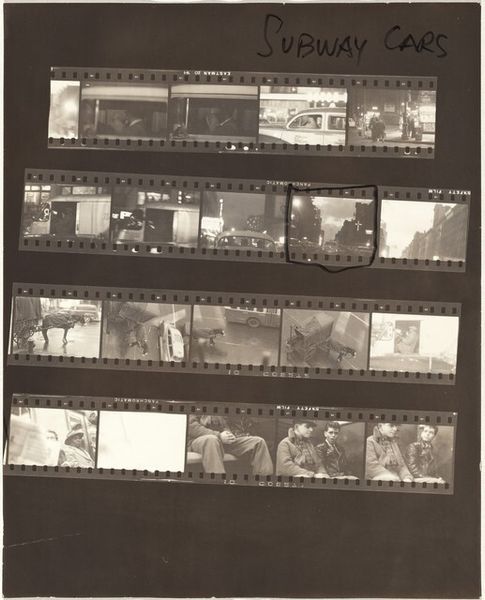
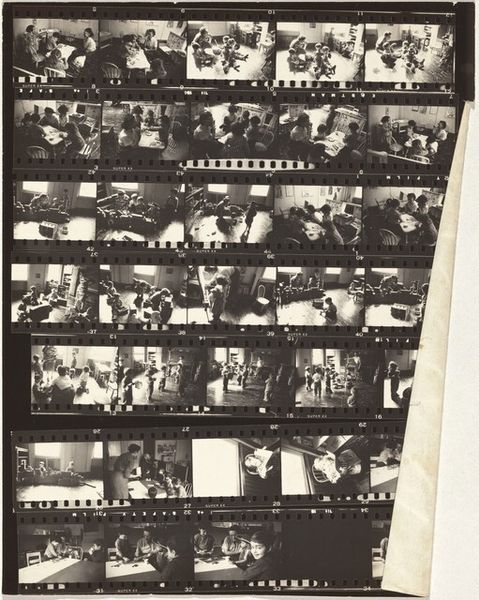
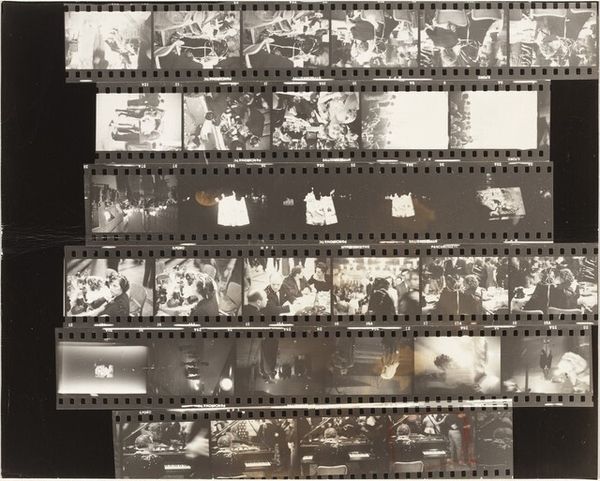
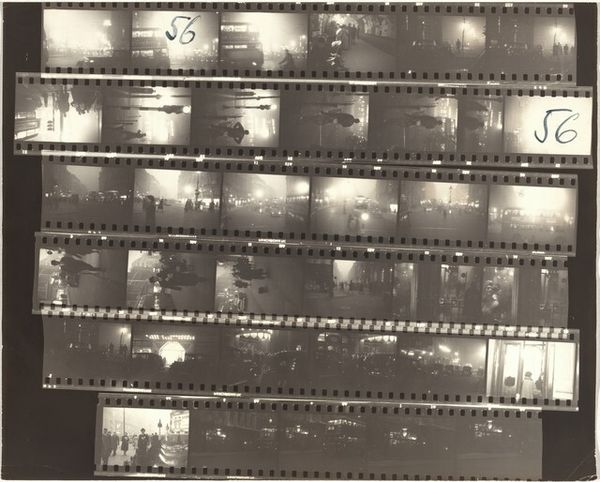
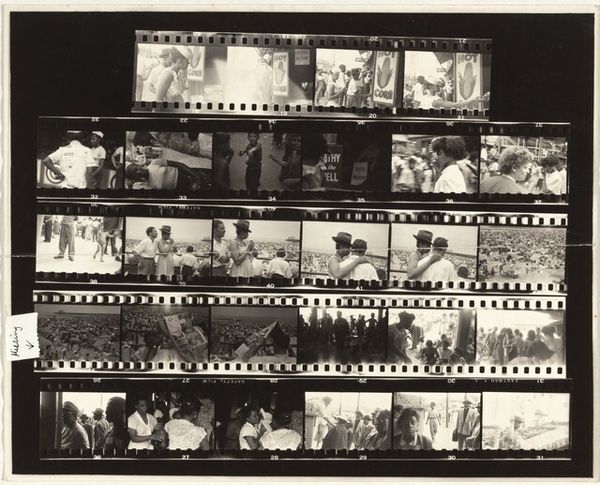
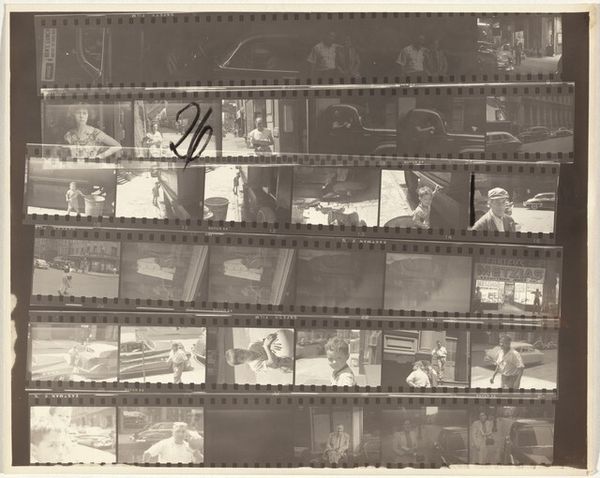
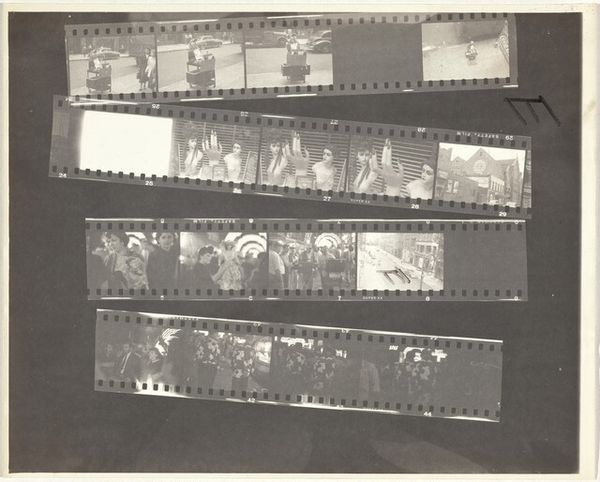
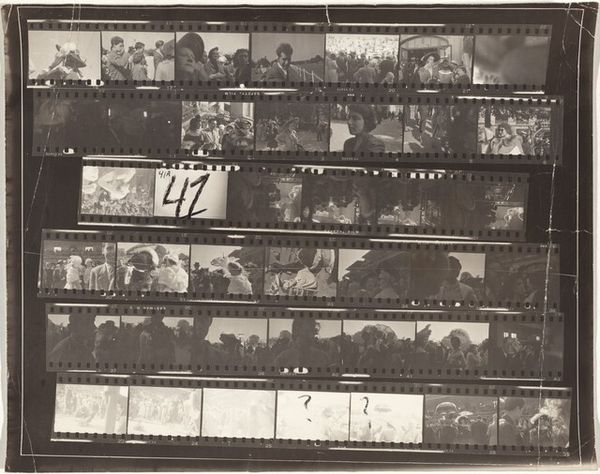
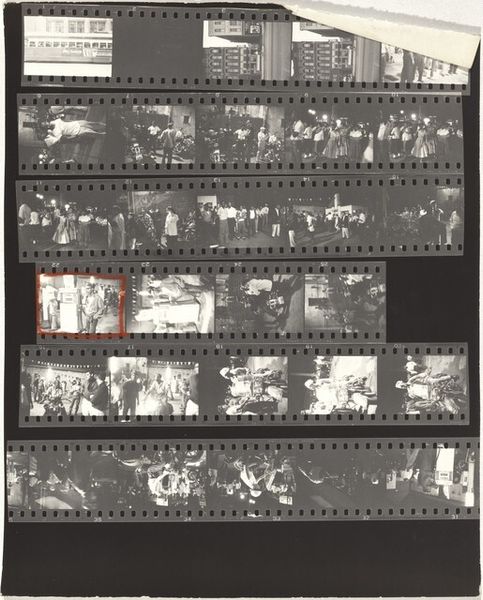
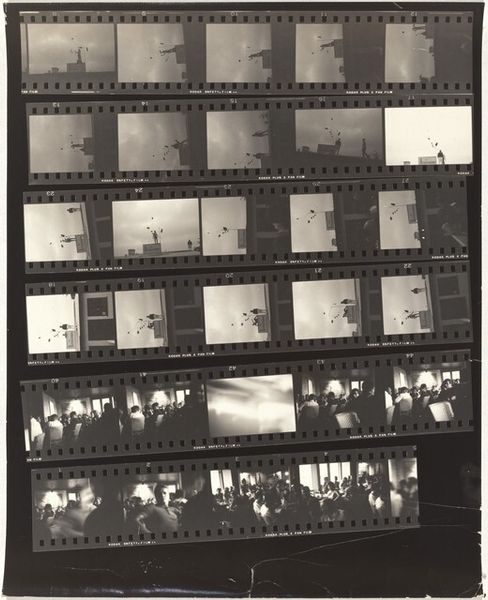
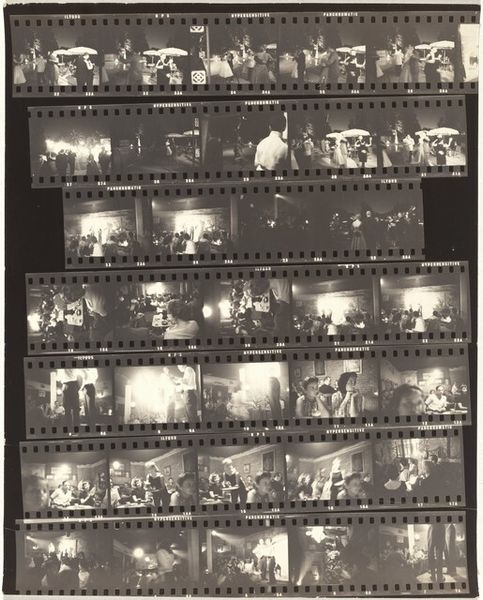
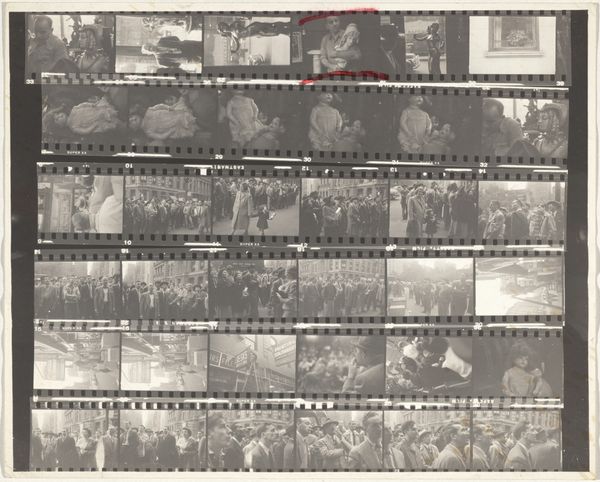
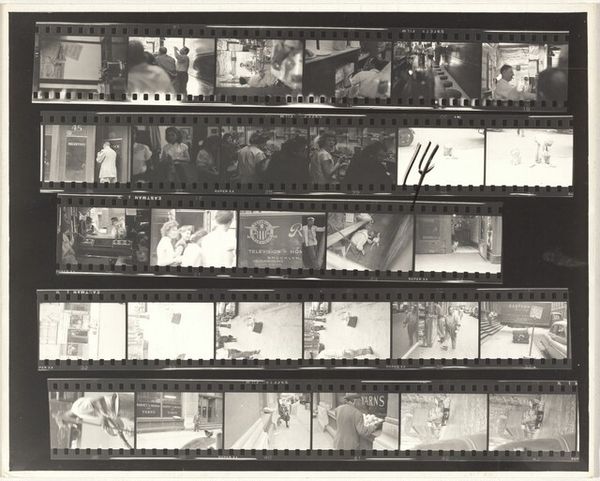
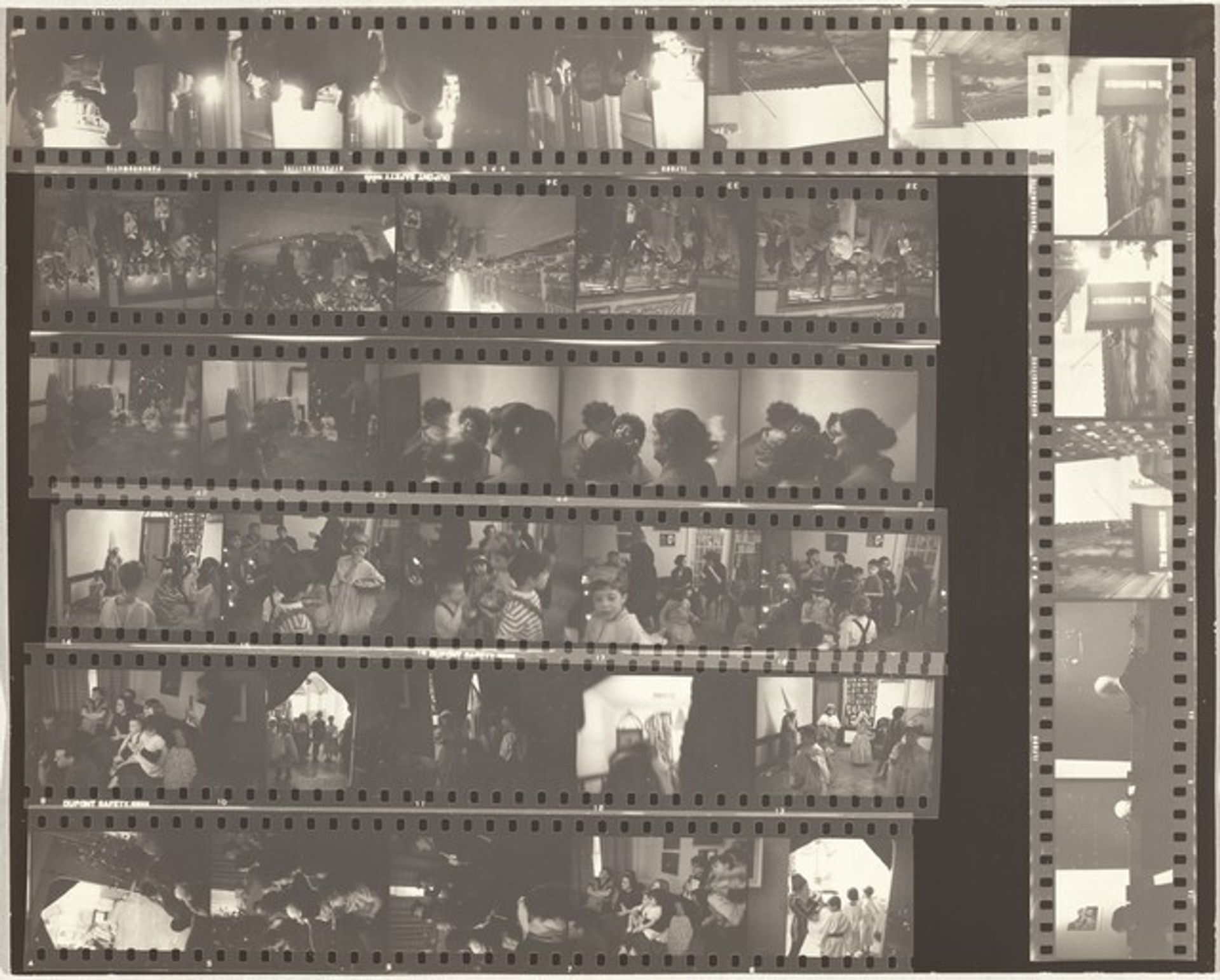
Robert Frank captured this frame of film, titled "Uribe--New York City no number," sometime in the mid-20th century. It's a whole different way of seeing a photograph, because you see the image *as* film, which is its material form. You see the images in sequence, with the sprocket holes aligning the rows, so you get to see the before and after, and it makes you wonder about the artist's process. The images themselves are gritty, contrast-y, and full of everyday life; it's like you're looking through someone's attic or a time capsule. I like how the images on the right have been cut out and rearranged, and that each row has a different sense of place. I find it interesting that Frank chose to present this frame of film as a finished work, maybe like Jasper Johns using humble, everyday imagery, Frank elevated the ordinary into art. It emphasizes the idea that art-making is as much about the journey and choices as the destination.
Uribe--New York City no number
1958


Artwork details
- Medium
- contact-print, photography, gelatin-silver-print
- Dimensions
- sheet: 20.2 x 25.2 cm (7 15/16 x 9 15/16 in.)
- Copyright
- National Gallery of Art: CC0 1.0
Tags
Comments
Share your thoughts
About this artwork
Robert Frank captured this frame of film, titled "Uribe--New York City no number," sometime in the mid-20th century. It's a whole different way of seeing a photograph, because you see the image *as* film, which is its material form. You see the images in sequence, with the sprocket holes aligning the rows, so you get to see the before and after, and it makes you wonder about the artist's process. The images themselves are gritty, contrast-y, and full of everyday life; it's like you're looking through someone's attic or a time capsule. I like how the images on the right have been cut out and rearranged, and that each row has a different sense of place. I find it interesting that Frank chose to present this frame of film as a finished work, maybe like Jasper Johns using humble, everyday imagery, Frank elevated the ordinary into art. It emphasizes the idea that art-making is as much about the journey and choices as the destination.
Comments
Share your thoughts