

1876 - 1924
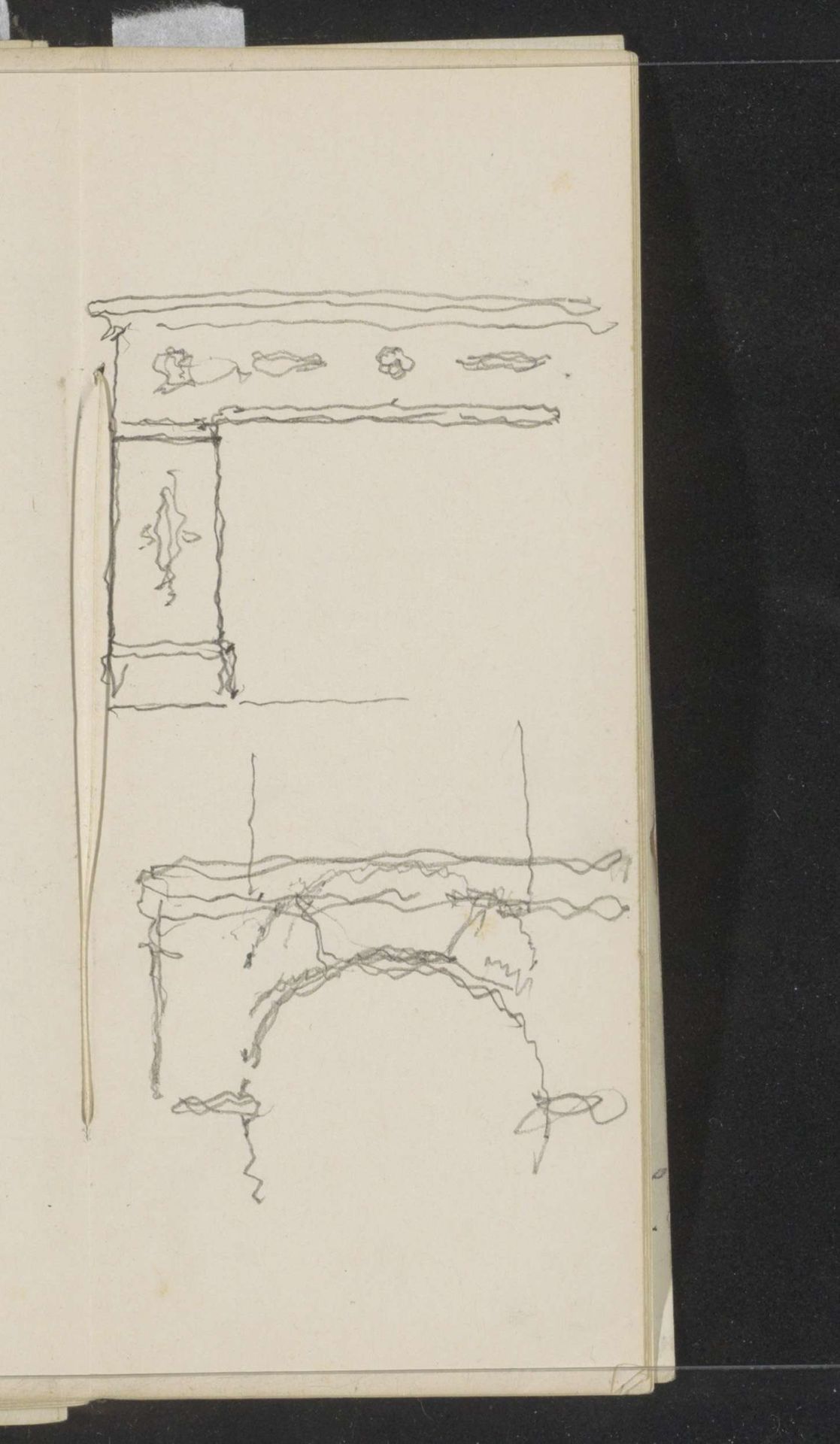
Poort en een stenen boog

Gerrit Willem Dijsselhof
1866 - 1924Location
RijksmuseumListen to curator's interpretation
Curatorial notes
Editor: This is "Poort en een stenen boog," or "Gate and a Stone Arch," a pencil drawing on paper by Gerrit Willem Dijsselhof, dating from around 1876 to 1924. It’s a sketch, almost ephemeral in its lightness. What catches your eye, what do you see in this seemingly simple study of form? Curator: The sketch feels like a coded message, a half-formed memory striving for expression. Consider the arch itself; arches have historically represented transitions, thresholds, the passage from one state to another, even the celestial realm. But here, it’s not a triumphant arch. Does it look more like a ruin? Editor: It does have a slightly ruined quality to it. The lines are hesitant, like a half-remembered dream. Curator: Precisely! The architectural elements, while seemingly straightforward, are rendered with a fragility that suggests the ephemeral nature of memory. Look at the almost floral designs above and beside it; might those be abstracted religious or societal symbols incorporated into this secular structure? Does this archway speak of the passage of time or a lost history? Editor: That's fascinating! I hadn't considered the possibility of hidden symbols within such a preliminary sketch. I was just seeing the shapes themselves, without digging deeper. Curator: And that initial, intuitive response is valid! But art often layers meanings. Dijsselhof is giving us not just a visual record, but a meditation on how we carry history, and perhaps project our own longings, into the structures that surround us. Editor: So, it's not just a gate, it’s a gateway to understanding cultural memory itself! I'll definitely look at sketches with new eyes from now on. Curator: Indeed, the power of suggestion within the simplest lines! The archway invites reflection and to bring the cultural meanings.