About this artwork
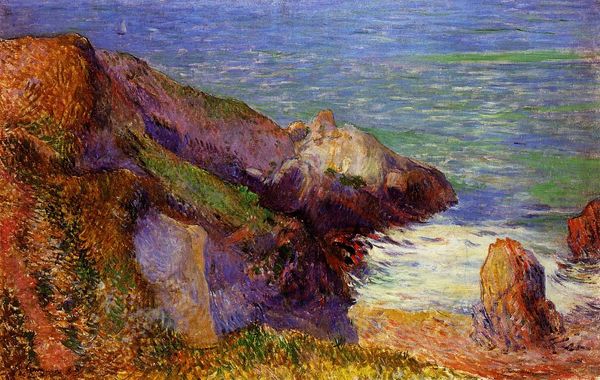
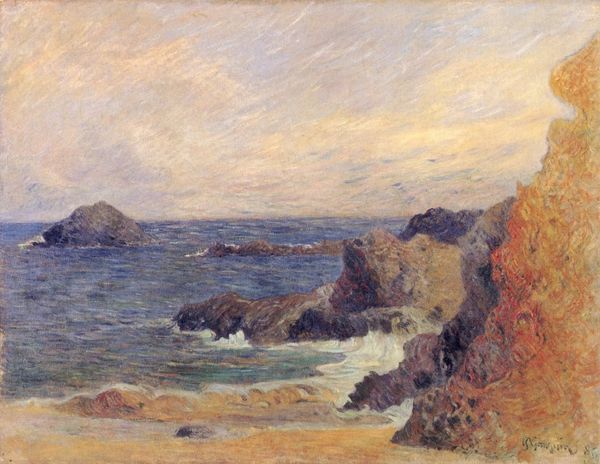
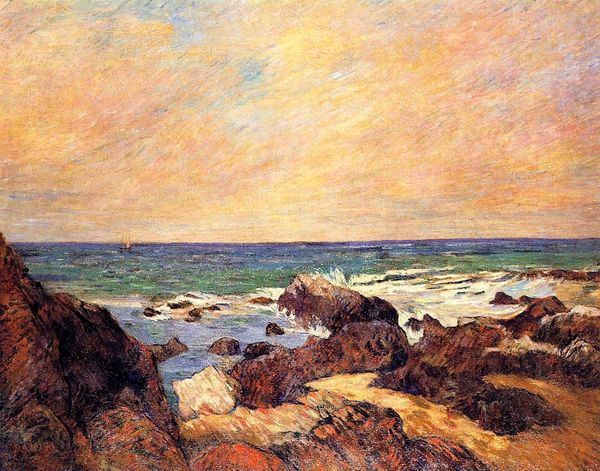
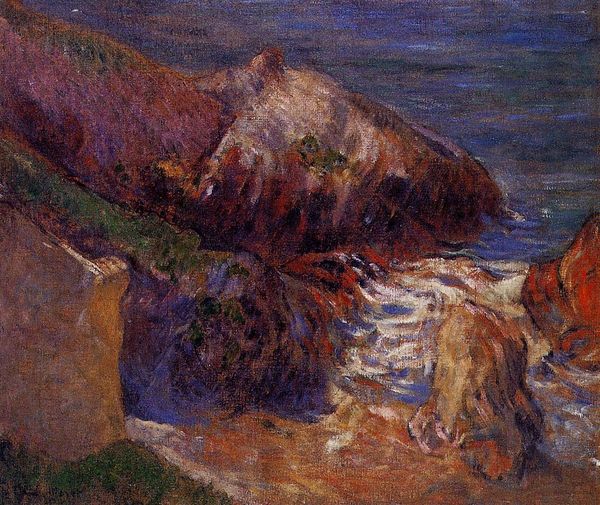
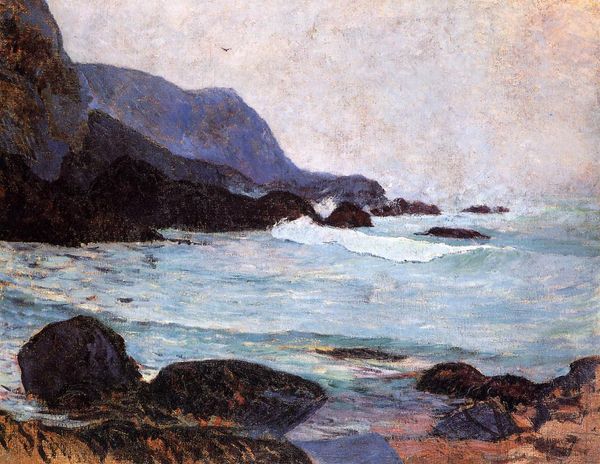
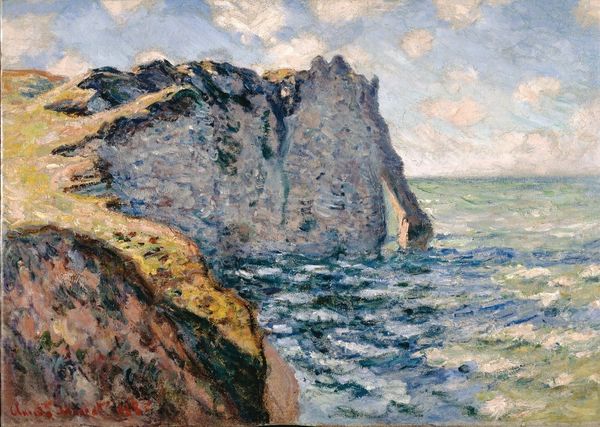
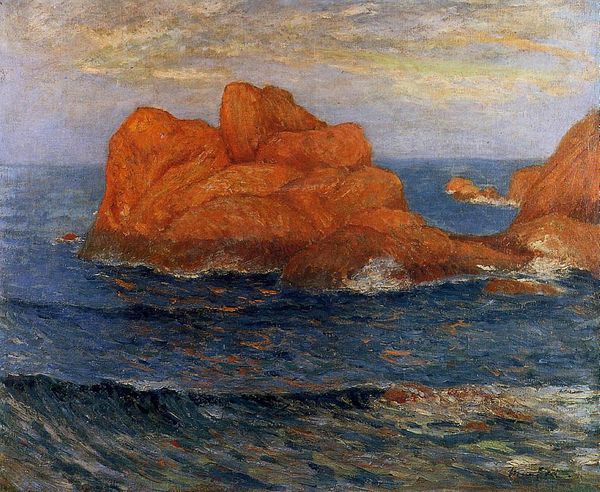
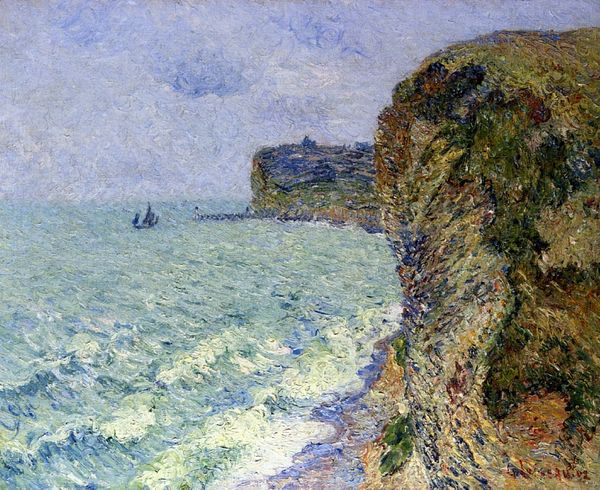
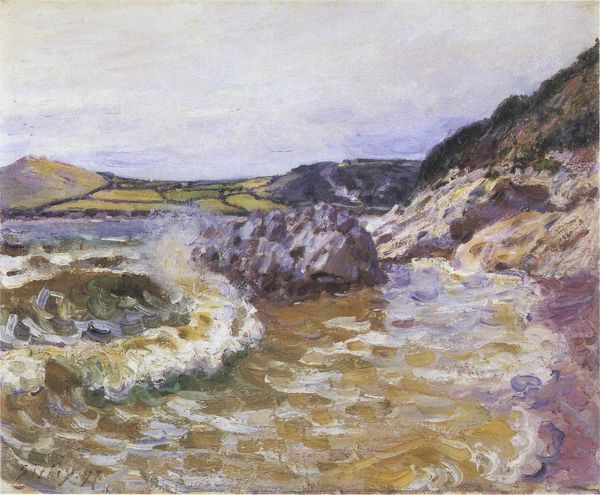
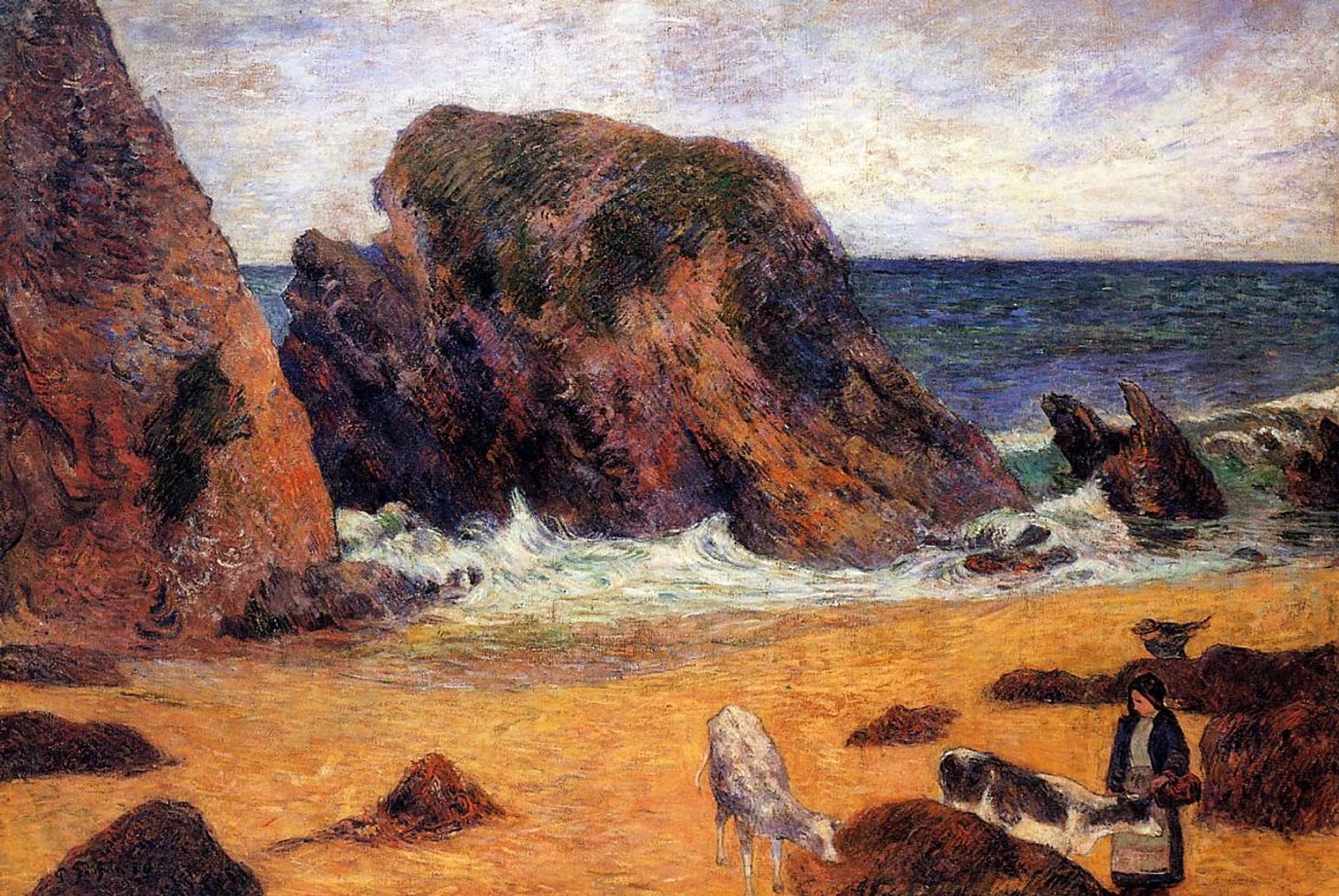
Paul Gauguin created this painting, Cows on the Seashore, using oil on canvas. Gauguin used expressive brushstrokes that captured the light and texture of the scene, a process that was quite new at the time. The rough application of paint contributes to the overall sense of the painting, highlighting the rawness and immediacy of the artist's vision. The texture of the paint mimics the tactile quality of the natural elements depicted, from the rugged rocks to the sandy shore. As you can see, Gauguin loaded up his brush with paint, creating a heavily worked surface that invites close inspection. In Gauguin's time, working ‘alla prima’ or wet-on-wet was a bold new trend, capturing a sense of spontaneity. The thickness of the paint also speaks to the labor involved in the painting's creation, contrasting with the idealized landscapes of earlier academic art. It's important to consider how Gauguin's material choices and application techniques reflect a broader shift in artistic values, emphasizing the physical act of painting and its connection to the natural world.

Artwork details
- Medium
- painting, plein-air, oil-paint
- Dimensions
- 74.9 x 111.8 cm
- Location
- Private Collection
- Copyright
- Public domain
Tags
sky
cliff
animal
painting
impressionism
plein-air
oil-paint
landscape
impressionist landscape
figuration
oil painting
rock
seascape
post-impressionism
realism
Comments
Be the first to share your thoughts about this work.
About this artwork
Paul Gauguin created this painting, Cows on the Seashore, using oil on canvas. Gauguin used expressive brushstrokes that captured the light and texture of the scene, a process that was quite new at the time. The rough application of paint contributes to the overall sense of the painting, highlighting the rawness and immediacy of the artist's vision. The texture of the paint mimics the tactile quality of the natural elements depicted, from the rugged rocks to the sandy shore. As you can see, Gauguin loaded up his brush with paint, creating a heavily worked surface that invites close inspection. In Gauguin's time, working ‘alla prima’ or wet-on-wet was a bold new trend, capturing a sense of spontaneity. The thickness of the paint also speaks to the labor involved in the painting's creation, contrasting with the idealized landscapes of earlier academic art. It's important to consider how Gauguin's material choices and application techniques reflect a broader shift in artistic values, emphasizing the physical act of painting and its connection to the natural world.
Comments
Be the first to share your thoughts about this work.