About this artwork
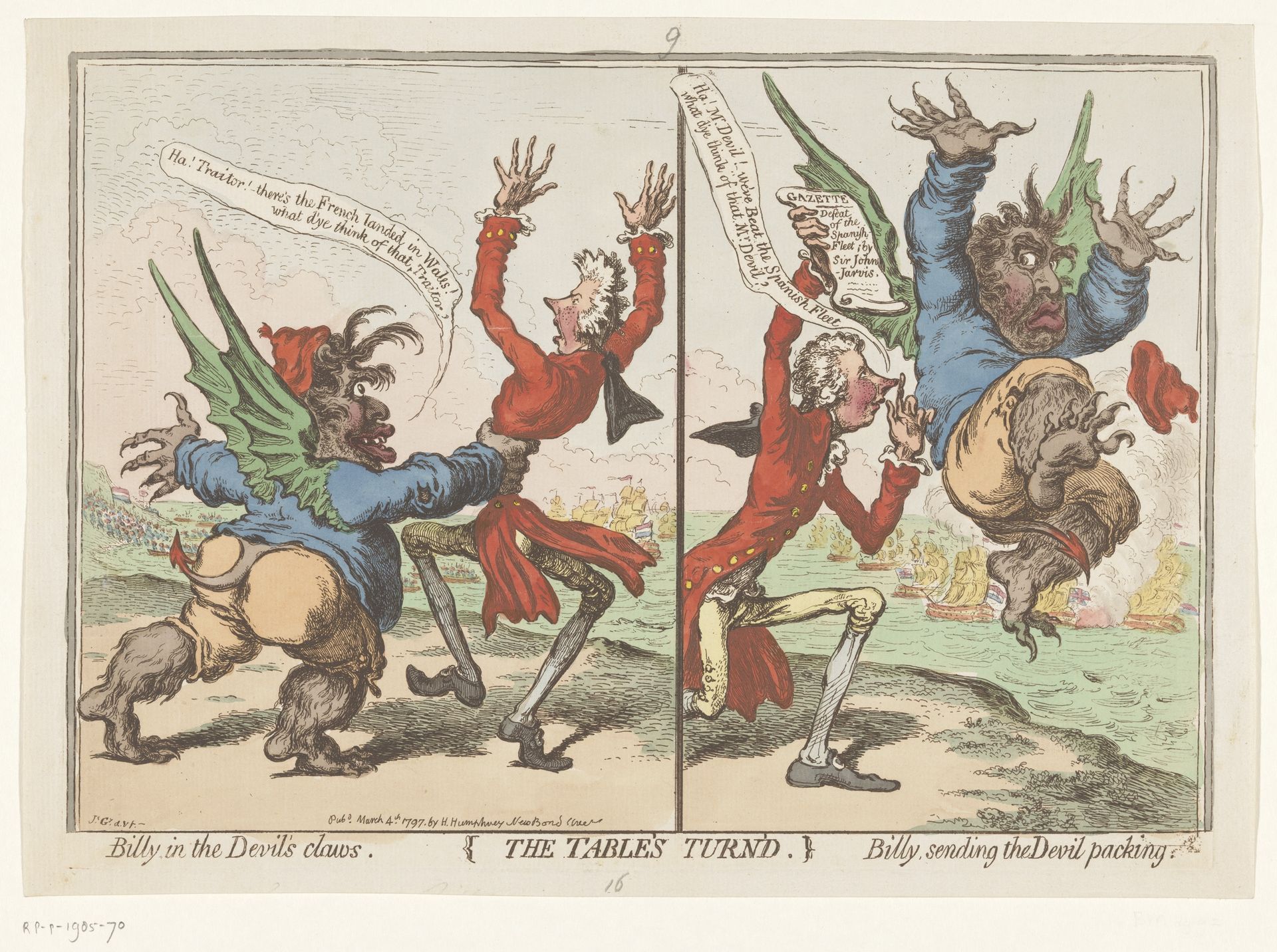
Editor: So, here we have a print, likely from 1797, by James Gillray titled "Spotprent op William Pitt en Charles Fox," though it's labeled "The Tables Turnd." It's an etching and presents two scenes, a satirical take on political figures being carried off, or *sending off* a devil. I'm curious, what layers of meaning do you find within this historical caricature? Curator: This piece provides a potent commentary on the socio-political tensions of its time. Gillray, known for his cutting wit, uses caricature to critique William Pitt the Younger and Charles Fox. What I see is how Gillray uses these monstrous figures to express popular anxieties about power, political allegiances, and perhaps even the blurring lines between good and evil within governance itself. Editor: That makes sense. So the figures literally embody public anxieties? How does the print comment on those power dynamics specifically? Curator: The "turning of the tables" alludes to shifts in political fortunes and public opinion. Who are these "devils" in this situation? We must consider who had access to this print, who it spoke to, and what agenda Gillray himself may have had. What feelings do those monstrous figures on either side of the composition conjure up? Editor: I guess that while they seem monstrous, in each half they have control and aren't actually afraid. One comments "Ha! Traitor!" The other holds a document stating he has "Beat the Spanish Fleet". They almost wield this supposed devilish influence for their benefit. Curator: Precisely. Think of the symbolic implications! Gillray implicates these leaders, showing how political actors exploit, and even *create,* chaos and division to serve their own agendas. In what ways can caricature itself become a tool for both reflecting *and* shaping public sentiment in volatile times? Editor: I hadn't considered that art could shape public sentiment too. Now I'm left thinking about the use of satire today and whether it has the same impact. Thank you! Curator: My pleasure!
Spotprent op William Pitt en Charles Fox, 1797
Possibly 1797

James Gillray
1756 - 1815Location
RijksmuseumArtwork details
- Medium
- print, etching
- Dimensions
- height 255 mm, width 355 mm
- Location
- Rijksmuseum
- Copyright
- Rijks Museum: Open Domain
Tags
etching
caricature
romanticism
history-painting
Comments
Be the first to share your thoughts about this work.
About this artwork
Editor: So, here we have a print, likely from 1797, by James Gillray titled "Spotprent op William Pitt en Charles Fox," though it's labeled "The Tables Turnd." It's an etching and presents two scenes, a satirical take on political figures being carried off, or *sending off* a devil. I'm curious, what layers of meaning do you find within this historical caricature? Curator: This piece provides a potent commentary on the socio-political tensions of its time. Gillray, known for his cutting wit, uses caricature to critique William Pitt the Younger and Charles Fox. What I see is how Gillray uses these monstrous figures to express popular anxieties about power, political allegiances, and perhaps even the blurring lines between good and evil within governance itself. Editor: That makes sense. So the figures literally embody public anxieties? How does the print comment on those power dynamics specifically? Curator: The "turning of the tables" alludes to shifts in political fortunes and public opinion. Who are these "devils" in this situation? We must consider who had access to this print, who it spoke to, and what agenda Gillray himself may have had. What feelings do those monstrous figures on either side of the composition conjure up? Editor: I guess that while they seem monstrous, in each half they have control and aren't actually afraid. One comments "Ha! Traitor!" The other holds a document stating he has "Beat the Spanish Fleet". They almost wield this supposed devilish influence for their benefit. Curator: Precisely. Think of the symbolic implications! Gillray implicates these leaders, showing how political actors exploit, and even *create,* chaos and division to serve their own agendas. In what ways can caricature itself become a tool for both reflecting *and* shaping public sentiment in volatile times? Editor: I hadn't considered that art could shape public sentiment too. Now I'm left thinking about the use of satire today and whether it has the same impact. Thank you! Curator: My pleasure!
Comments
Be the first to share your thoughts about this work.