About this artwork
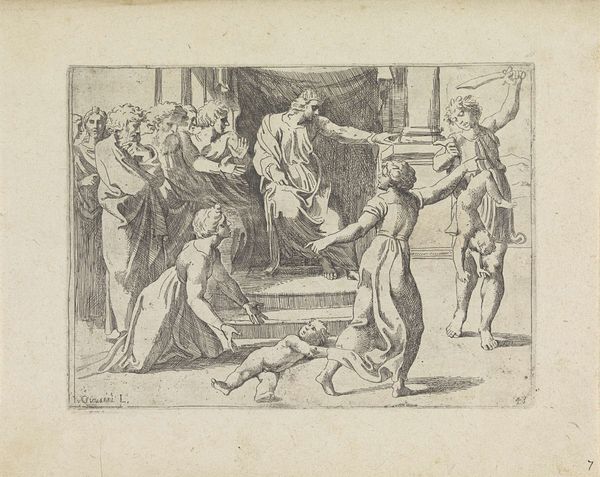
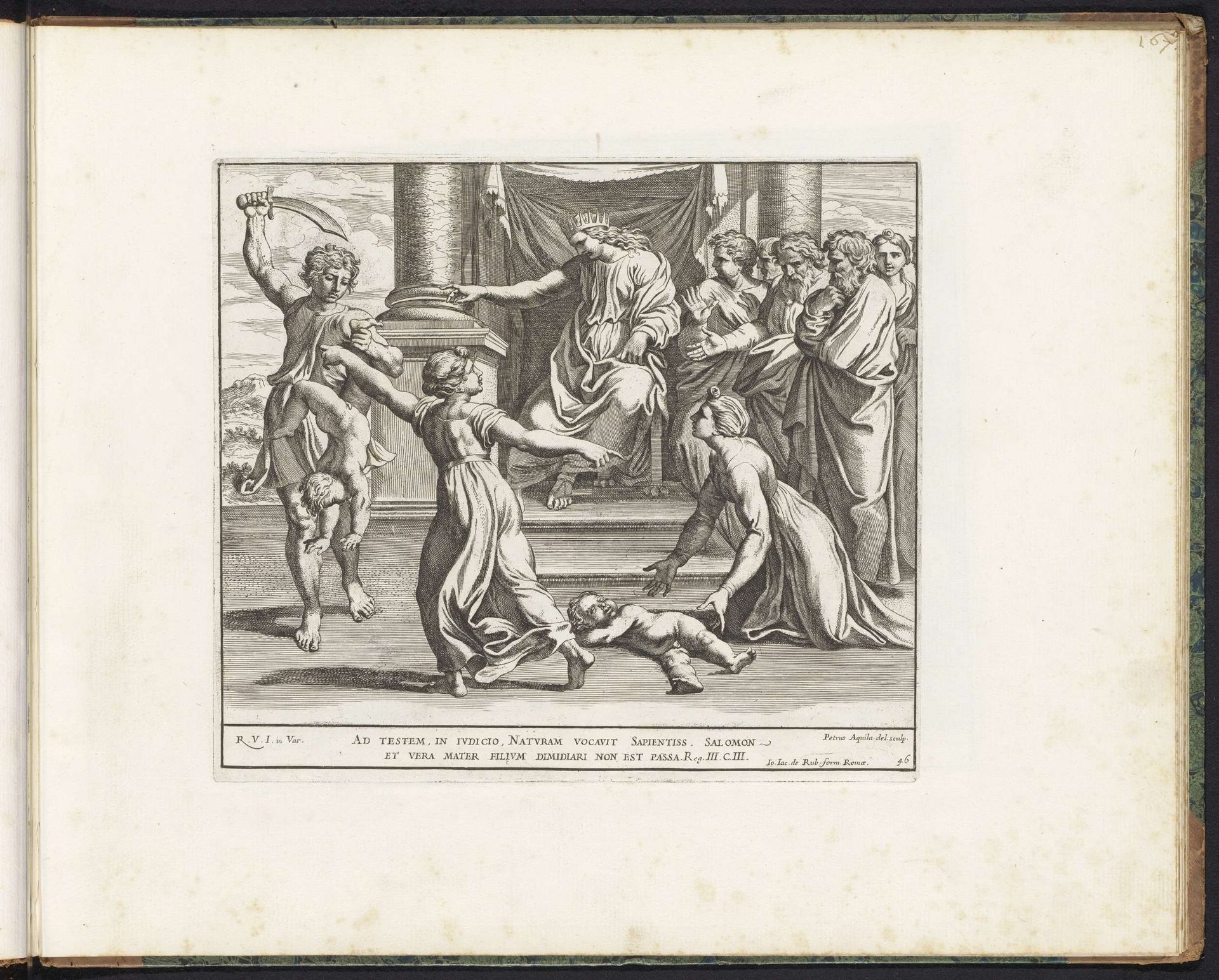
Pietro Aquila created this engraving titled "Oordeel van Salomo" sometime between 1650 and 1700. The scene is dominated by a stark contrast between the static, almost theatrical composition of King Solomon on his throne and the dynamic, emotionally charged figures in the foreground. Note how the artist uses line and form to create a sense of drama. The sharp, decisive lines of the executioner's sword and the anguished gestures of the women create movement and tension. Solomon's figure, framed by architectural elements, provides a stable, central point around which the chaos unfolds. The composition invites us to consider the interplay between justice, performance, and truth. Is Solomon's judgment a display of power, or a genuine quest for justice? Aquila's formal choices leave the question open, encouraging us to actively engage with the underlying themes of the artwork.

Artwork details
- Medium
- print, ink, engraving
- Dimensions
- height 239 mm, width 271 mm
- Copyright
- Rijks Museum: Open Domain
Tags
Comments
Share your thoughts
About this artwork
Pietro Aquila created this engraving titled "Oordeel van Salomo" sometime between 1650 and 1700. The scene is dominated by a stark contrast between the static, almost theatrical composition of King Solomon on his throne and the dynamic, emotionally charged figures in the foreground. Note how the artist uses line and form to create a sense of drama. The sharp, decisive lines of the executioner's sword and the anguished gestures of the women create movement and tension. Solomon's figure, framed by architectural elements, provides a stable, central point around which the chaos unfolds. The composition invites us to consider the interplay between justice, performance, and truth. Is Solomon's judgment a display of power, or a genuine quest for justice? Aquila's formal choices leave the question open, encouraging us to actively engage with the underlying themes of the artwork.
Comments
Share your thoughts