Copyright: National Gallery of Art: CC0 1.0
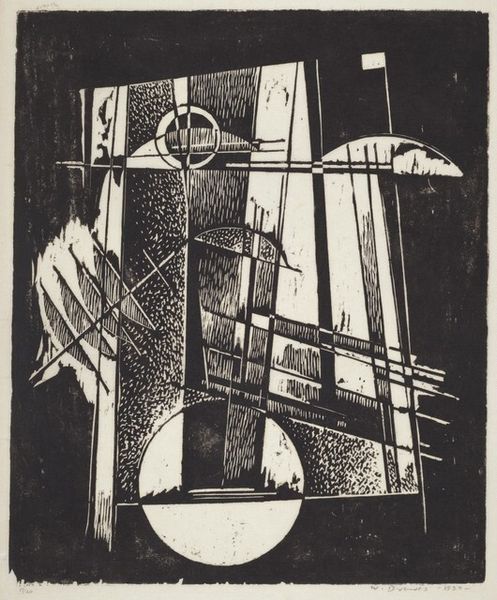
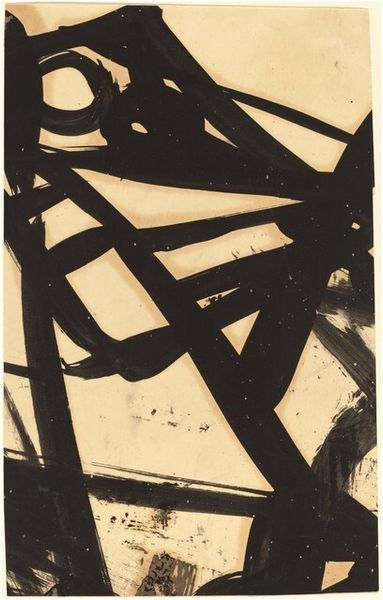
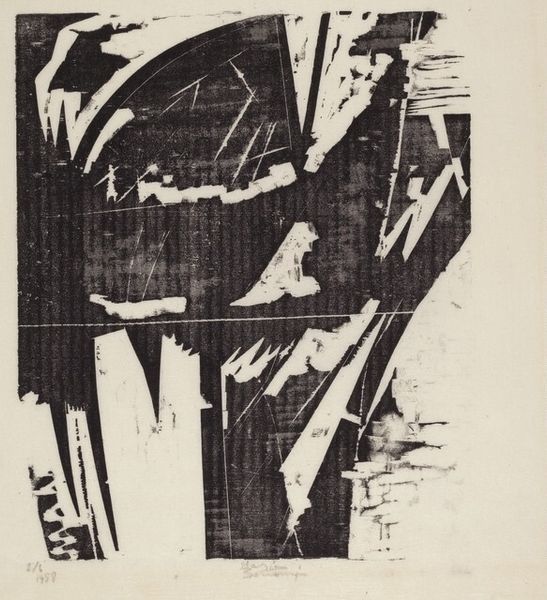
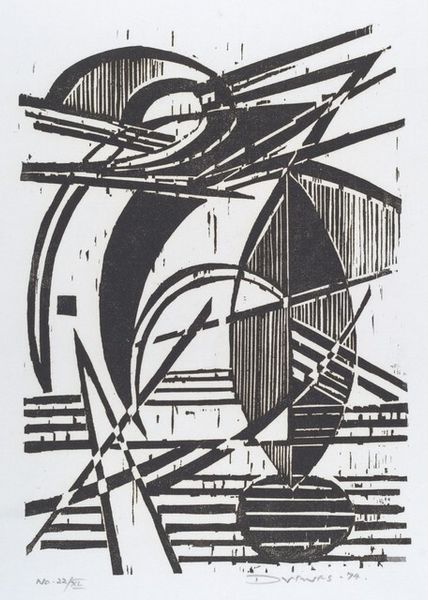
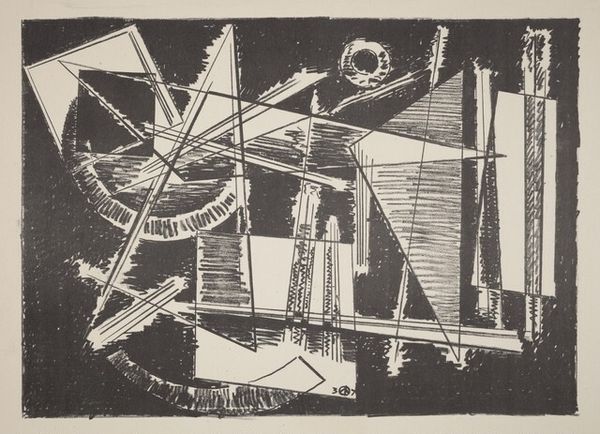
Curator: Werner Drewes’ woodcut, "Composition No. 2 (Window)," created in 1934. It’s a powerful example of German Expressionism. Editor: Stark! The high contrast creates immediate tension. The sharp, jutting lines and stark shapes are almost aggressive. Curator: Drewes emigrated to the US, where his style was informed by interactions with the Bauhaus, and particularly the socio-political anxieties roiling Germany during the interwar period. Editor: Exactly. Seeing this as a 'window'-- perhaps a fractured window—offers a glimpse into the disquiet of that time. This feels almost like a distorted, unstable reality. We see these shapes, trapped but also struggling against their constraints. It reflects broader political restrictions of expression at the time, both artistically and socially. Curator: He’s playing with Constructivist and Cubist vocabularies too, the window as both a physical barrier and a transparent medium. The print medium lends itself to the graphic feel; its flatness also plays into a reading as a window, flattened into near invisibility. The use of negative space creates an interesting tension with the heavy blacks as well. Editor: Absolutely. This push and pull is definitely deliberate and incredibly evocative. You can practically hear the scream embedded within the carefully structured chaos. And this visual conflict reflects an inner tension – artistic struggle. I wonder how his exile affected the interpretation, the artistic intentions themselves. Curator: Exile is certainly at the forefront here, and these angular geometries definitely imply being hemmed in. Thinking about this image, it is also the beginning of artistic growth, a time capsule. It represents his state, but, in time, it shows the development of German Expressionism as it moved West. Editor: Looking at it, I appreciate this collision of form and emotion, knowing the turmoil that inspired its creation, and I find the image newly powerful for it. Curator: And perhaps the best takeaway is the endurance of the piece to affect emotions still to this day, especially with this historical understanding and awareness.
Comments
No comments
Be the first to comment and join the conversation on the ultimate creative platform.
 Collect
 React
React Comment
More like this