Dimensions: height 87 mm, width 118 mm
Copyright: Rijks Museum: Open Domain
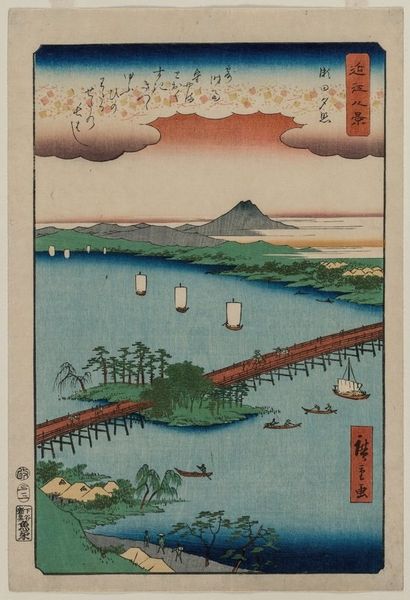
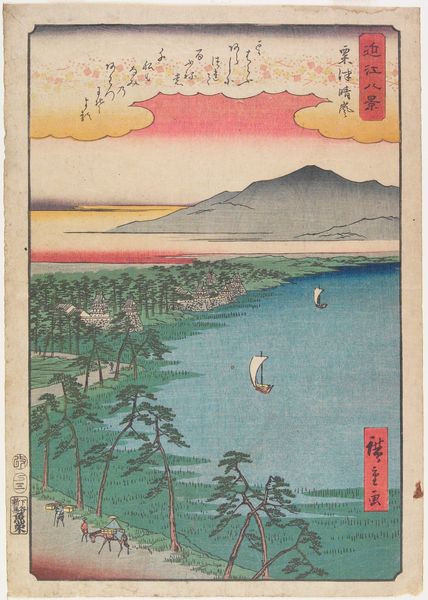
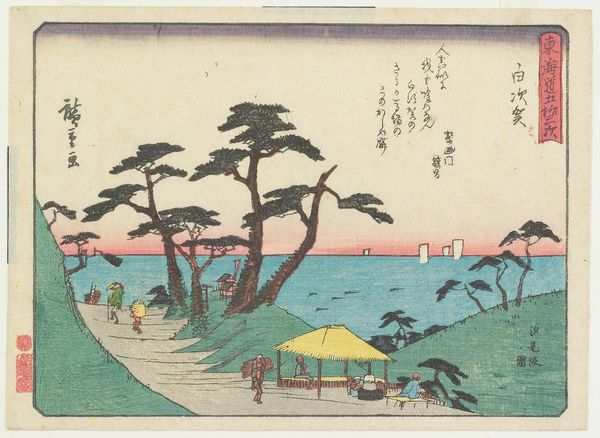
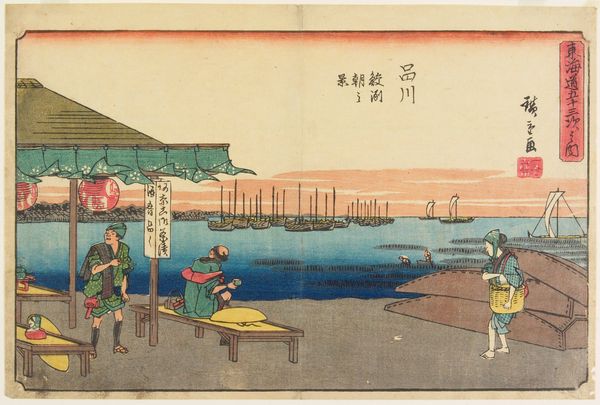
Curator: What a charming little thing. It’s called "Visitekaartje van uitgever Takemura", made sometime between 1920 and 1950. It’s a printed card – graphic art really – meant to be a business card for Takemura publishers. Editor: It's funny, at first glance, it looks like a typical landscape print, but then the Western-style text snaps you back to the reality of it being a commercial piece. What is your read of the image, and this cultural hybridity? Curator: Oh, the beauty of cultural fusion! For me, the serene ukiyo-e landscape jostling with the bold, blocky typeface is like a visual conversation. The miniature landscape becomes this promise of the "exotic Orient" for Western buyers. You see Mt. Fuji – so iconic. But the woman? The suggestion is perhaps that the viewer has also been able to acquire this exotic object too. How does it speak to you on a deeper level? Does it reveal secrets about desire, commodity, or trade? Editor: Well, I find the combination pretty effective in communicating what Takemura does as a business. You have a classical artistic style on one side, juxtaposed with an advert that could appeal to early 20th-century western consumers on the other. It feels really innovative in how it’s leveraging this visual language. Curator: Precisely. The genius is in not hiding its intention. It acknowledges and then dissolves boundaries between art and commerce. And to think all this compressed on one little card, proof that even miniature objects can contain a whole world, wouldn't you agree? Editor: I agree! It’s given me a lot to think about in terms of how art and business interact, even today. Thank you for sharing your insights!
Comments
No comments
Be the first to comment and join the conversation on the ultimate creative platform.
 React
React Comment