print, engraving
#
portrait
#
baroque
# print
#
caricature
#
old engraving style
#
caricature
#
engraving
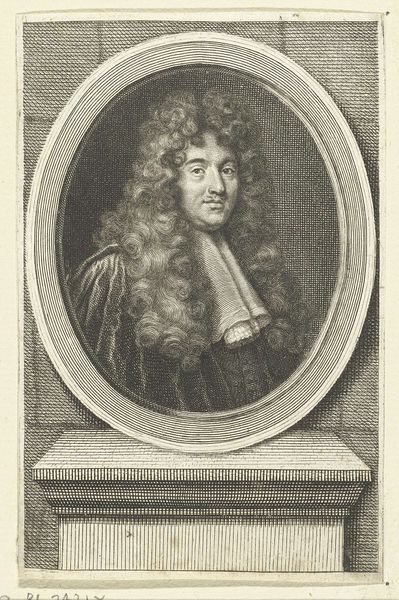
Dimensions: height 140 mm, width 84 mm
Copyright: Rijks Museum: Open Domain
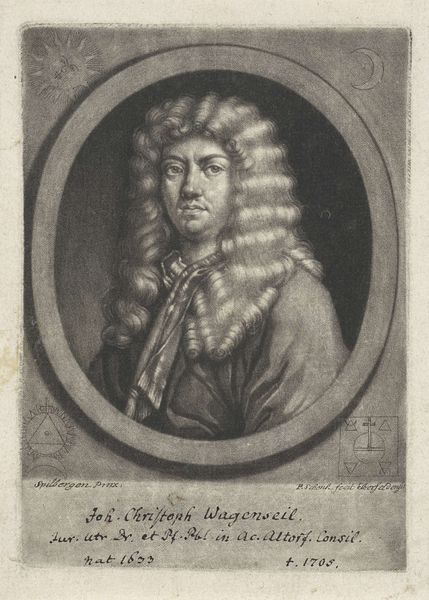
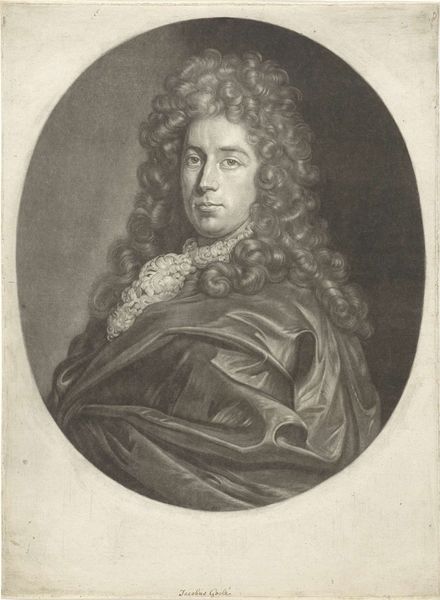
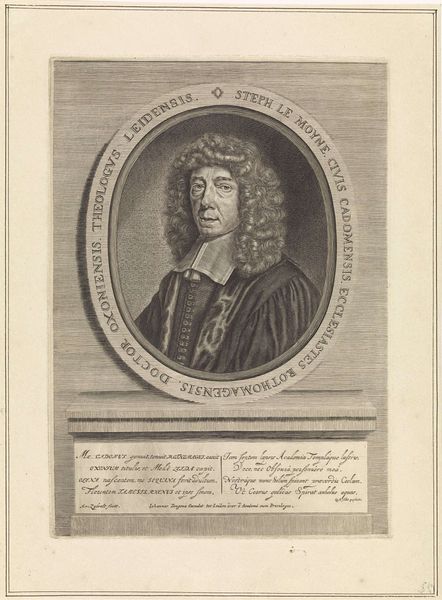
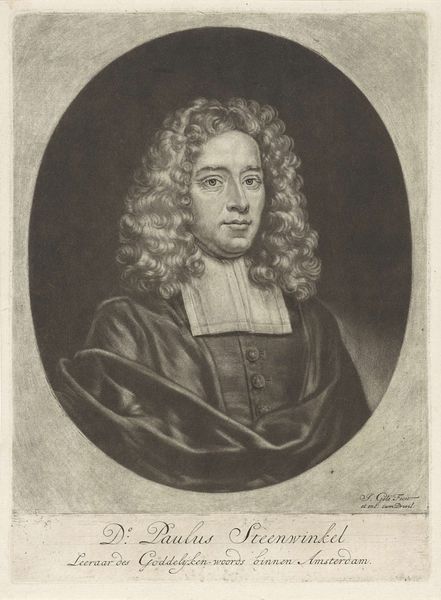
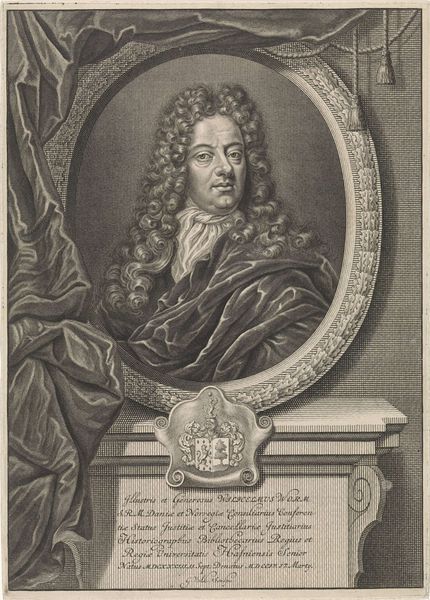
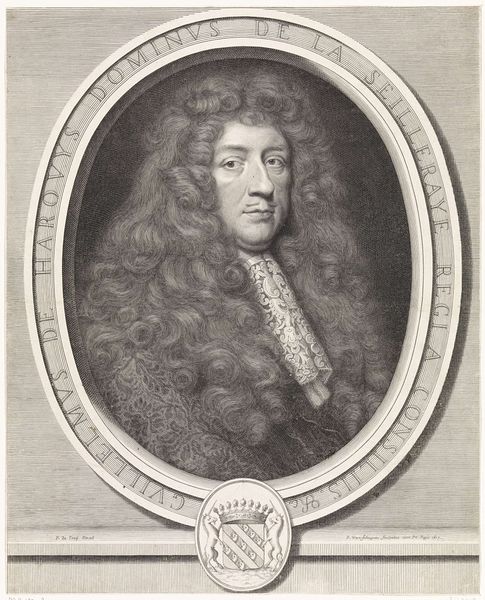
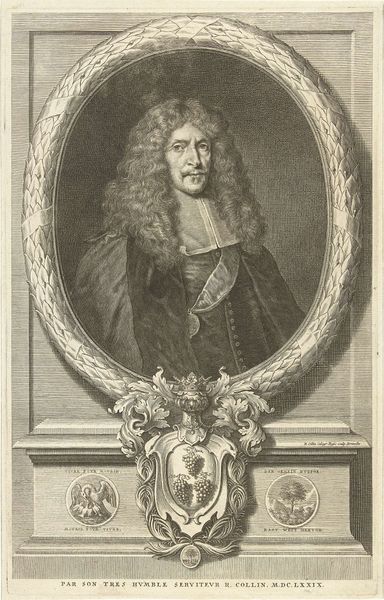
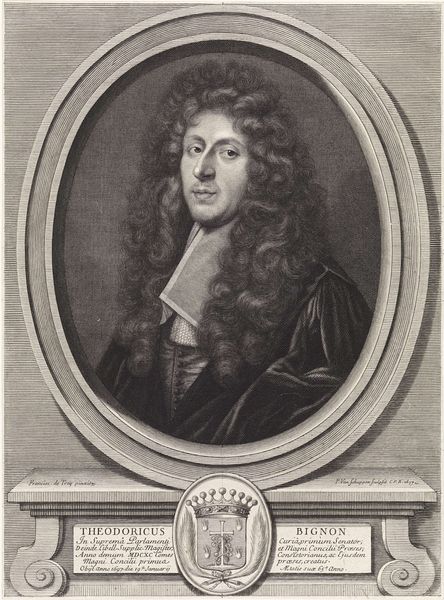
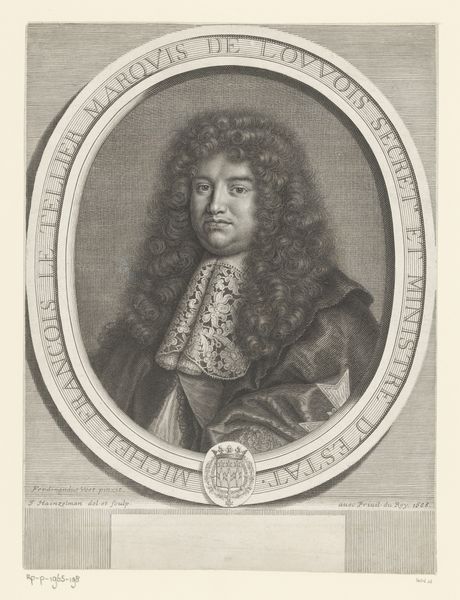
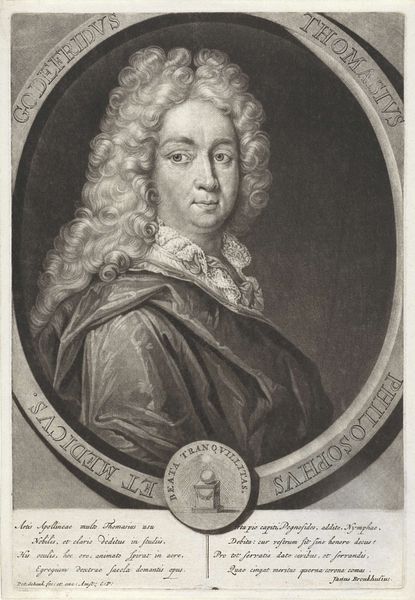
Bernard Picart created this portrait of Jean de la Bruyère using engraving, a printmaking process that was widespread in the 17th and 18th centuries. The image is made by carefully incising lines into a metal plate, which is then inked and printed. Look closely, and you’ll see how the density and direction of these lines create areas of light and shadow, defining the sitter's features and clothing. The engraver uses a tool called a burin to carve lines into the metal, displaying skill in translating a likeness into a series of precise marks. Each line contributes to the overall composition. The texture of the paper also plays a role, as the ink is absorbed into its fibers, creating a slightly blurred effect. Engraving was an essential means of disseminating images and ideas. The creation of prints was a laborious process. Through it, Picart captured de la Bruyère’s likeness in multiple, showing how artistry, labor, and technology intertwine in the production of this portrait. Appreciating the materials and methods used is essential to understanding its historical and cultural significance.
Comments
No comments
Be the first to comment and join the conversation on the ultimate creative platform.
 Collect
 React
React Comment
More like this