About this artwork
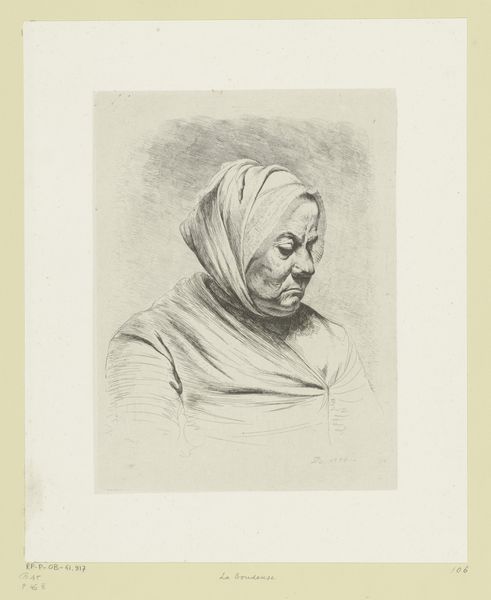
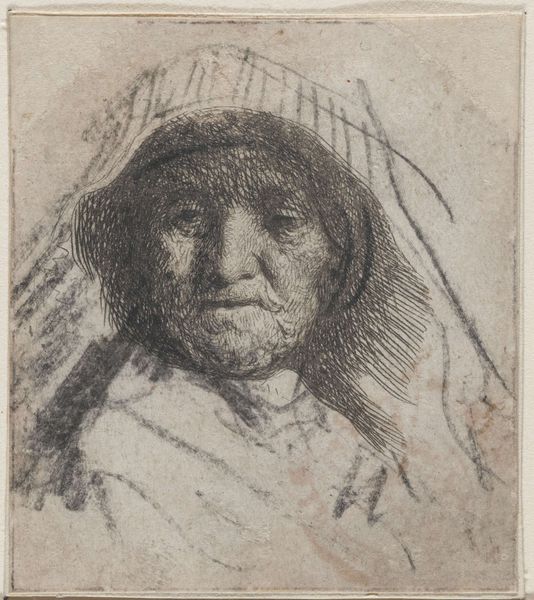
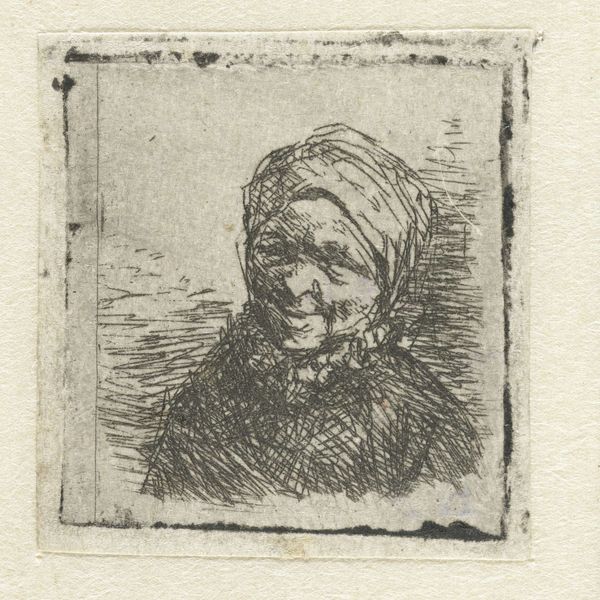
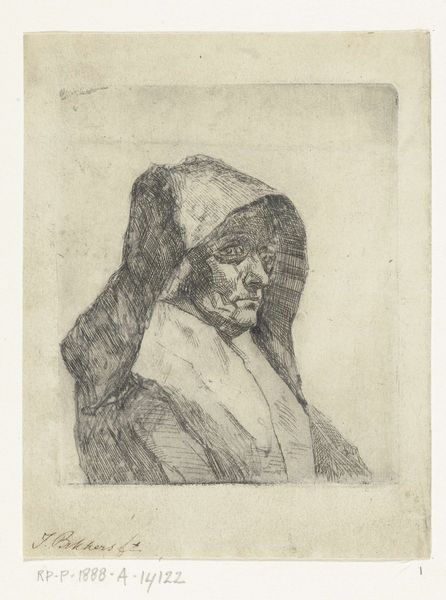
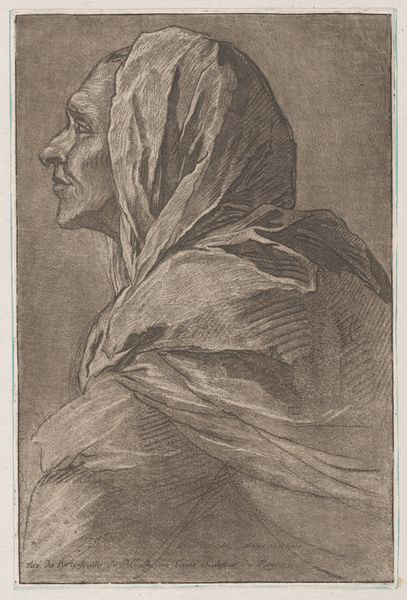
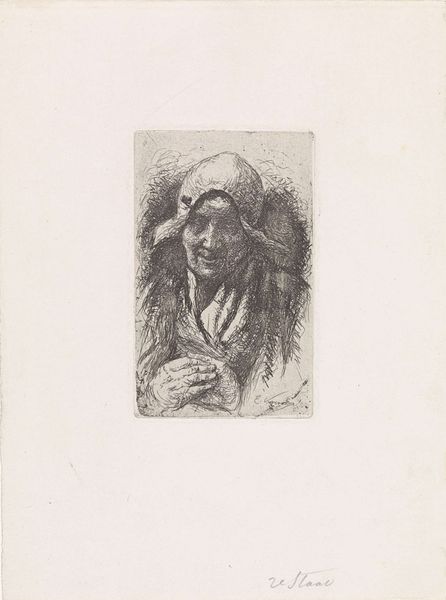
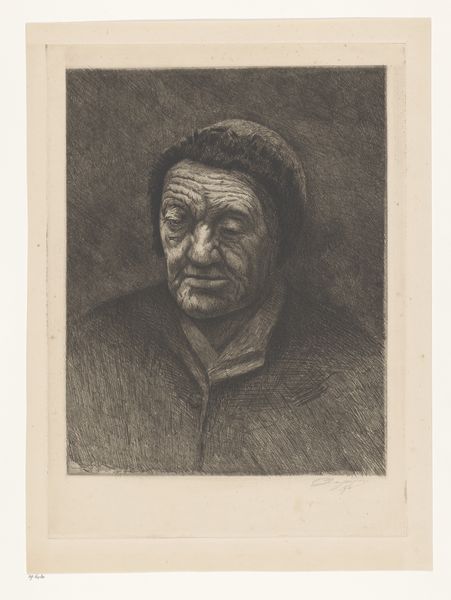
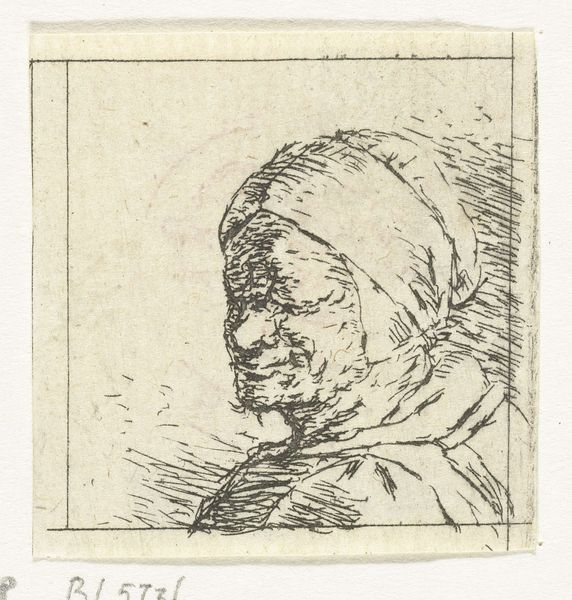
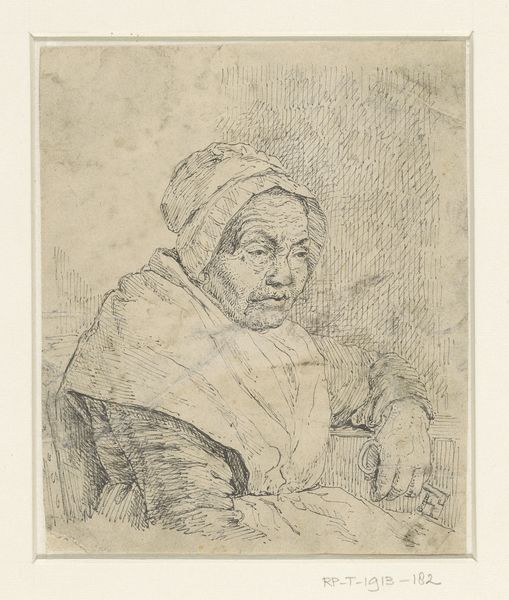
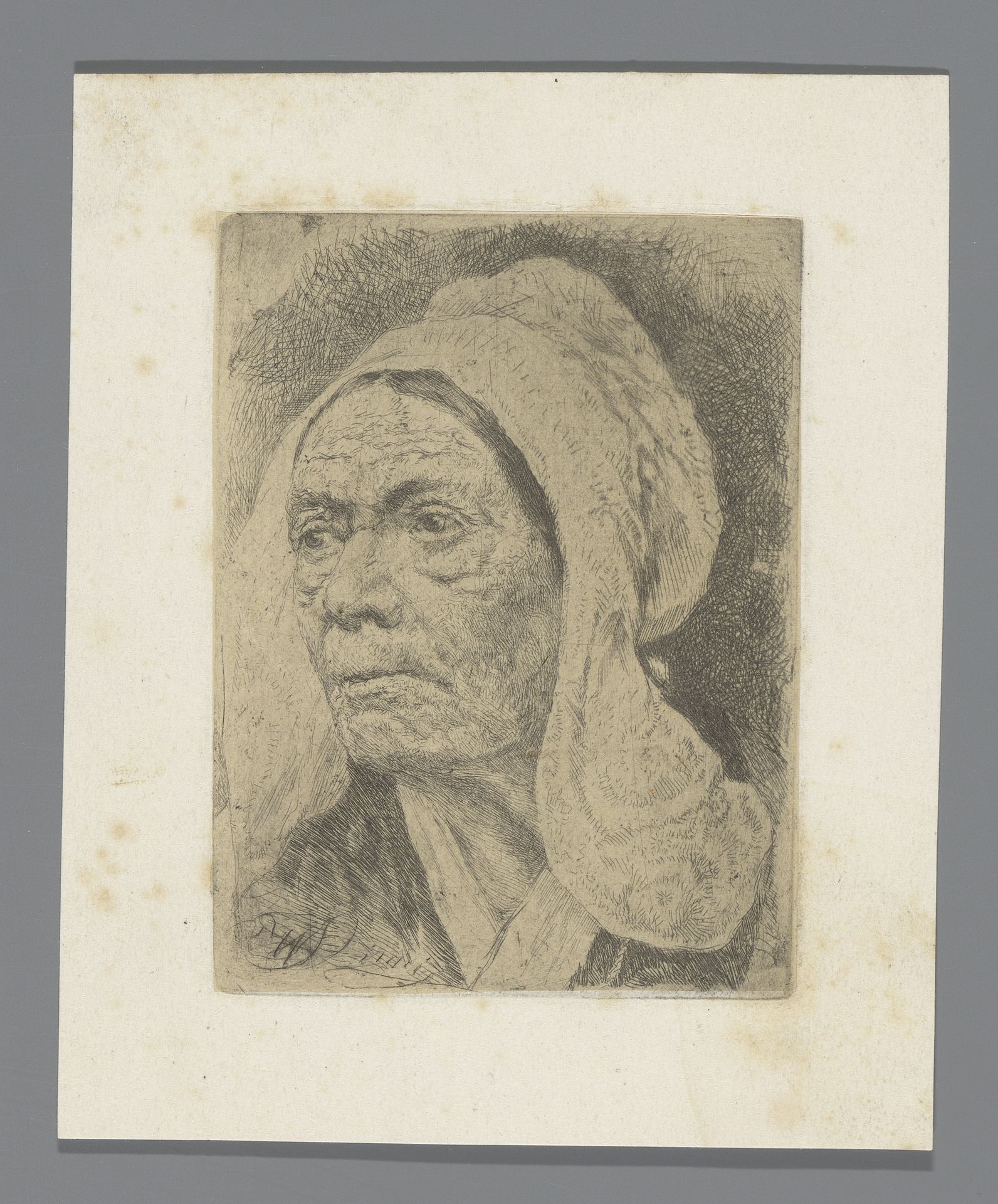
Willem Linnig the Younger created this intimate portrait in the late 19th century using the etching technique. This process involves drawing with a needle on a metal plate covered with wax, then immersing it in acid, which bites into the exposed lines, and finally inking and printing the plate. Linnig masterfully utilizes etching to capture the textures and details of the woman’s face and head covering. The dense network of fine lines creates a sense of depth and realism. The sharp lines convey the dignity of labor, as her age is etched into her skin. The tonal range achieved through varied line density brings forth a palpable presence. The social significance lies in Linnig's choice to depict an ordinary, older woman, granting her a presence usually reserved for the elite. By employing this meticulous printmaking technique, Linnig elevates the everyday, inviting us to consider the value and beauty inherent in the lives of ordinary people, and question the traditional hierarchies between fine art and craft.
Portret van een onbekende oude vrouw
1852 - 1890

Willem (II) Linnig
1842 - 1890Location
RijksmuseumArtwork details
- Medium
- drawing, paper
- Dimensions
- height 97 mm, width 72 mm
- Location
- Rijksmuseum
- Copyright
- Rijks Museum: Open Domain
Tags
Comments
Share your thoughts
About this artwork
Willem Linnig the Younger created this intimate portrait in the late 19th century using the etching technique. This process involves drawing with a needle on a metal plate covered with wax, then immersing it in acid, which bites into the exposed lines, and finally inking and printing the plate. Linnig masterfully utilizes etching to capture the textures and details of the woman’s face and head covering. The dense network of fine lines creates a sense of depth and realism. The sharp lines convey the dignity of labor, as her age is etched into her skin. The tonal range achieved through varied line density brings forth a palpable presence. The social significance lies in Linnig's choice to depict an ordinary, older woman, granting her a presence usually reserved for the elite. By employing this meticulous printmaking technique, Linnig elevates the everyday, inviting us to consider the value and beauty inherent in the lives of ordinary people, and question the traditional hierarchies between fine art and craft.
Comments
Share your thoughts