ceramic, sculpture, terracotta
#
sculpture
#
ceramic
#
figuration
#
sculpture
#
terracotta
#
indigenous-americas
Dimensions: Diam. 24.1 cm (9 1/2 in.)
Copyright: Public Domain
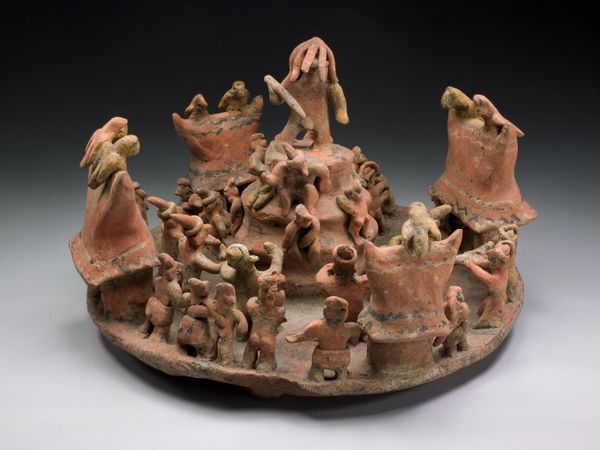
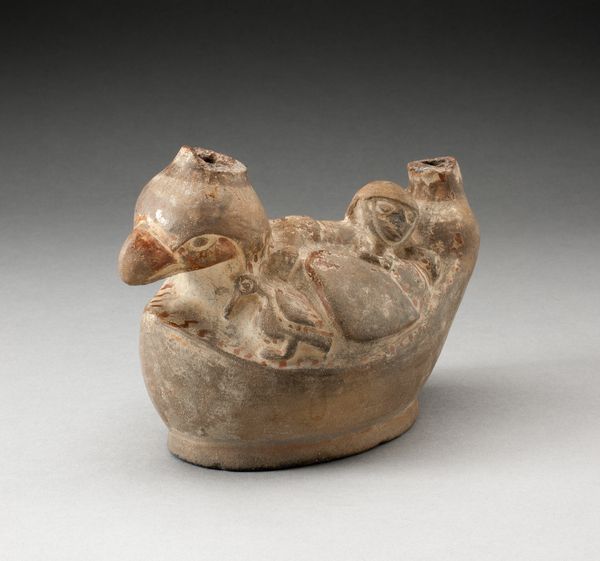
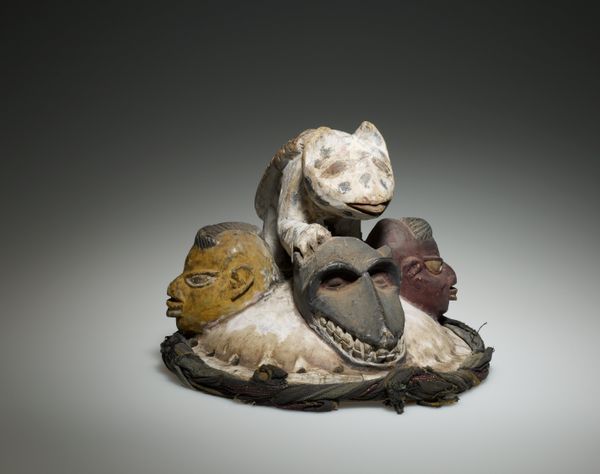
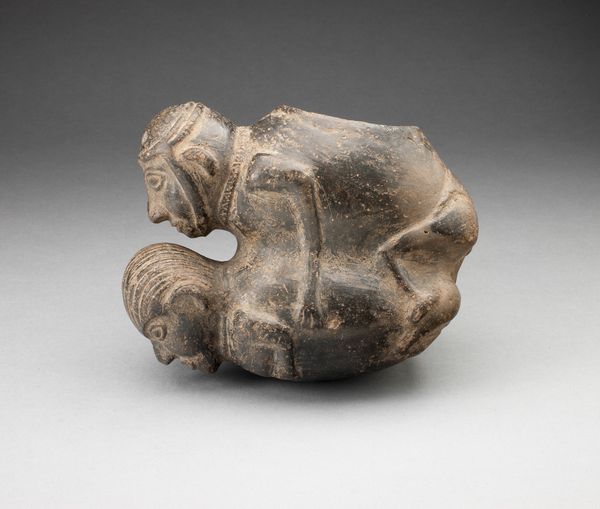
Curator: Well, look at this—"Funerary Cheek-Piercing Ritual," crafted around 200-300 AD by the Nayarit people. It's made of ceramic. Editor: Gosh, what a scene! It has such an uncanny energy. Is that a boat filled with... little heads? Are they playing a morbid game of peek-a-boo? Curator: More than likely they're depictions of a burial scene. Figures cluster around a container, which could be a representation of a tomb, enacting some kind of ritual—maybe cheek piercing, as the title suggests. The Nayarit were masters of ceramics; they often created these detailed miniature worlds to accompany the deceased. Editor: It's both gruesome and strangely compelling. I find it hard to look away. The surface textures of the piece create a very organic and immediate feeling. Are they connected by their action of grief and the promise of remembrance and support for the deceased? Curator: Exactly! The figures have a beautiful round, somewhat abstracted shape, that connects them—but they have strong individuality too. This adds a wonderful contrast to the piece. In that sense, you have to think about it as a cohesive whole, an investigation into social bonds and funerary beliefs during the period. It invites interpretation through shape, pattern, and tactile presence. Editor: Well said! In its visual rhythms, the rounded shape gives it the same feeling I get from looking into deep space. Makes me wonder who were the real subjects— and whether we truly grasp the essence of ritual. Curator: It reminds us that there's always a dialogue between materials and meanings, right? "Funerary Cheek-Piercing Ritual" is a powerful testament to that relationship. Editor: Agreed. I mean, what better material for honoring what lasts? And here it lasts millennia later still stirring conversations on culture, memory, and form.
Comments
No comments
Be the first to comment and join the conversation on the ultimate creative platform.
 Collect
 React
React Comment
More like this