bronze, sculpture
#
portrait
#
sculpture
#
bronze
#
sculpture
#
realism
Dimensions: overall: 19.4 x 11.8 x 14 cm (7 5/8 x 4 5/8 x 5 1/2 in.)
Copyright: National Gallery of Art: CC0 1.0
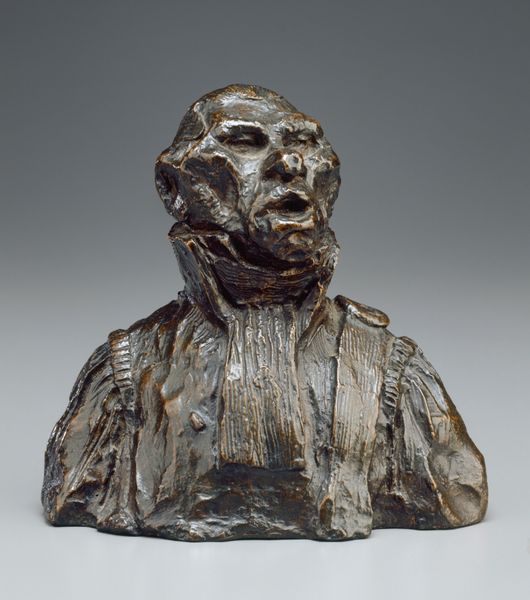
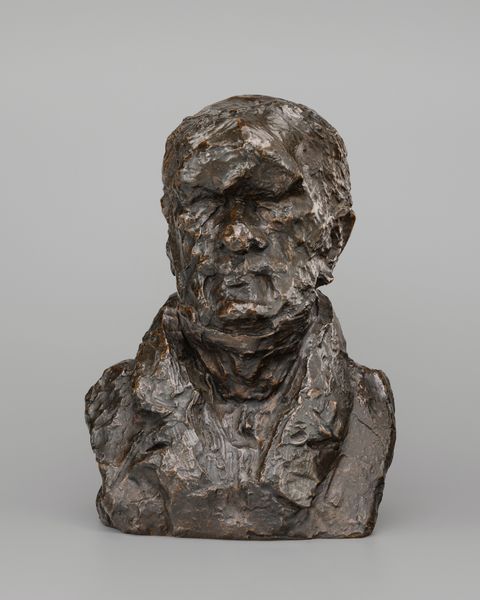
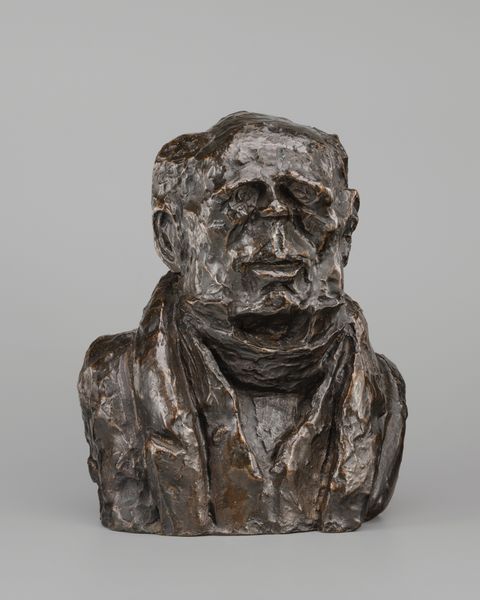
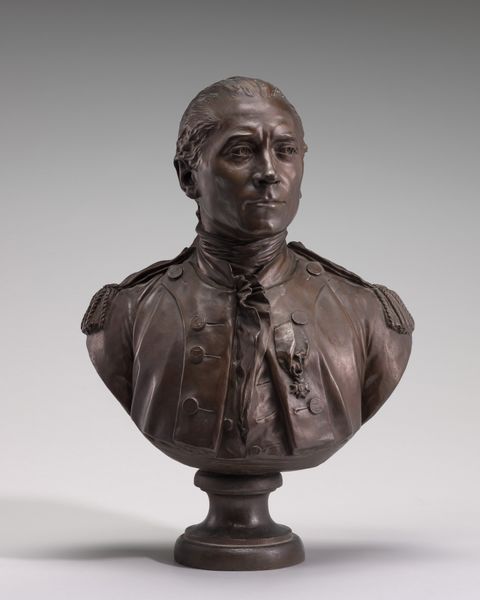
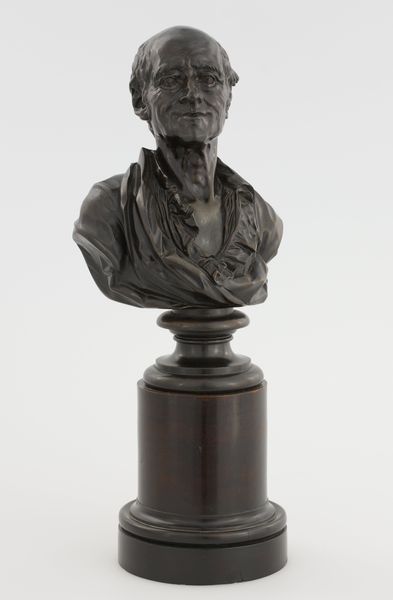
Editor: Here we have Honoré Daumier's bronze sculpture, "Jacques Lefèbvre," dating from around 1832 to 1850. The realism is striking, but there’s almost a caricatured quality, particularly in the nose. How do you interpret this work? Curator: Daumier's sculptures, often overlooked in favor of his lithographs, offer a biting commentary on 19th-century French society. He wasn't just representing Jacques Lefèbvre; he was scrutinizing the bourgeoisie, the emerging power structures, and their self-importance. Look at how the realism verges on the grotesque. What might that exaggeration signify within the social and political landscape of the time? Editor: It seems like more than just a portrait. Is it a critique of power, then? Was Lefèbvre a prominent figure? Curator: Precisely. Think about what Daumier, as a social critic and republican sympathizer, would observe in Lefèbvre's position. How might Lefèbvre’s social standing be subtly lampooned through Daumier's artistic choices? The slightly puffed-up chest, the stern expression… even the almost comical nose seems to subtly undermine his authority. Daumier's realism is a tool. Editor: So, it's not just about accurately depicting someone’s likeness, but about using that likeness to convey a message about the person’s role and perhaps, their failings within the broader societal framework. I’m starting to see this less as just a portrait and more as a statement. Curator: Exactly! Daumier's work reminds us that art is never neutral. It's always embedded in a complex web of power, politics, and social commentary. Consider, then, how art can be used to both reflect and challenge dominant ideologies. Editor: That really shifts my understanding. It’s given me a much broader perspective on how to approach portraits. Thank you. Curator: And it's through this lens that we understand not only the artist’s intention, but also our own relationship to the art and the world around us.
Comments
No comments
Be the first to comment and join the conversation on the ultimate creative platform.
 Collect
 React
React Comment
More like this