1891
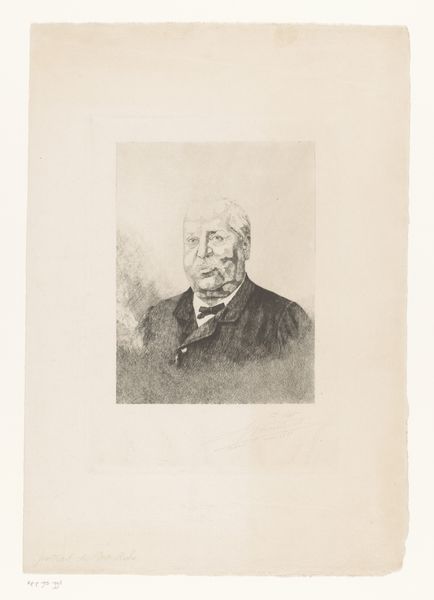
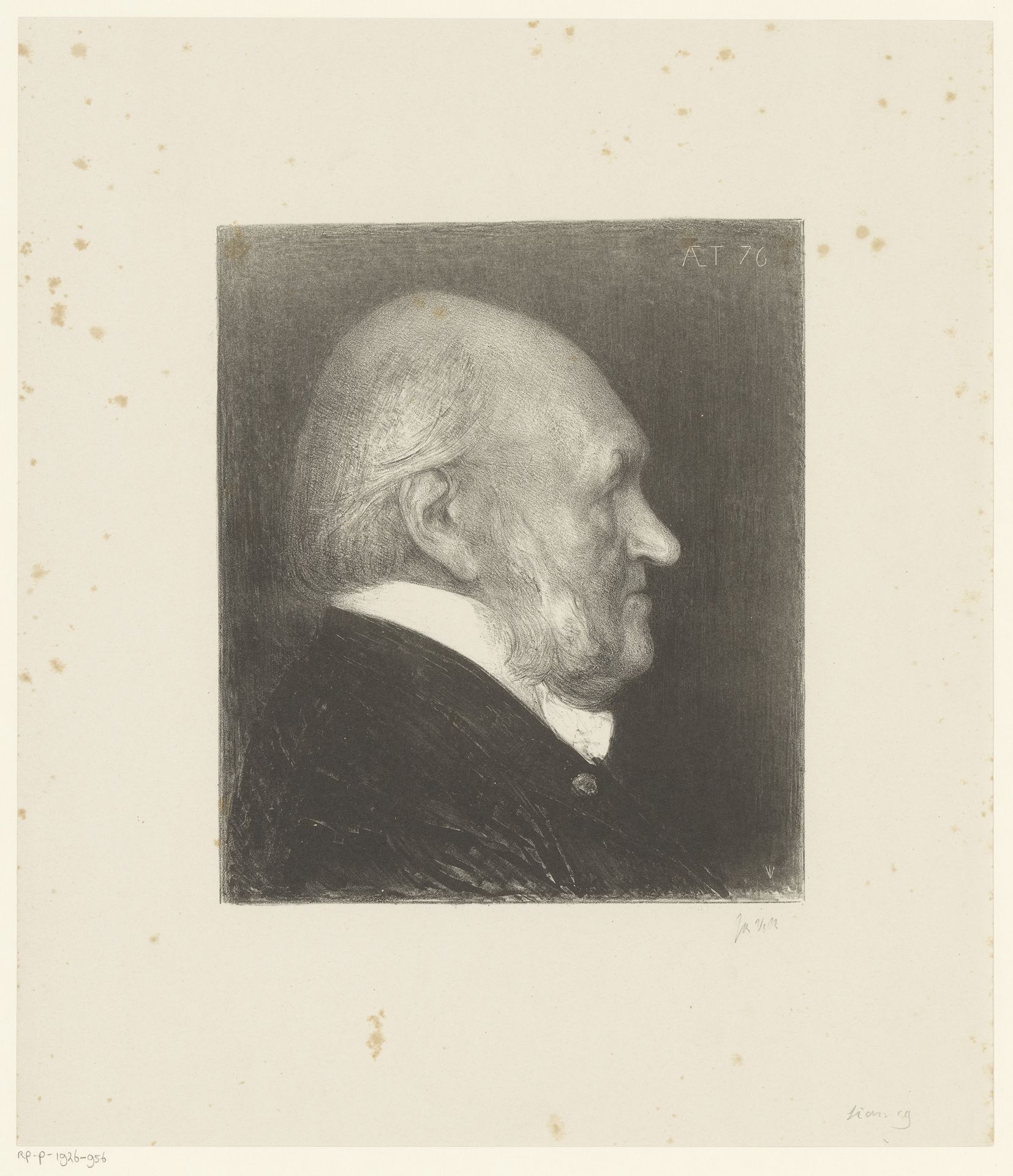
Portret van Nicolaas Beets

Jan Veth
1864 - 1925Location
RijksmuseumListen to curator's interpretation
Curatorial notes
Editor: This is a portrait of Nicolaas Beets, made in 1891 by Jan Veth using charcoal on paper. The shading gives the subject a very solemn air. What stands out to you? Curator: The profile, stark and unidealized, suggests a man of contemplation and perhaps a hint of weariness. But look closer at the button on his jacket, small, but a potent symbol of civic or academic belonging. It suggests his integration into the cultural institutions of the time, doesn't it? Editor: That’s a good point; I missed that at first. Is that something common for portraits of the era? Curator: Precisely. It reflects a period of consolidating national identity, where belonging and contribution were visually codified, even in something as subtle as a button. What psychological weight did those symbols hold then, compared to now? How do you think people interpreted that at the time? Editor: It adds a layer of context, makes him a participant in a larger narrative. The drawing technique too - the charcoal seems very immediate. Curator: The choice of charcoal is significant, lending a certain rawness and immediacy to the representation. Veth avoids idealization, presenting Beets with honesty. What continuities can you draw between this honest approach and artistic practices today? Editor: I hadn’t really thought about how those visual symbols connect to cultural memory before. It definitely enriches my reading of the portrait. Curator: Exactly, by unraveling layers of cultural symbols we can deepen our knowledge and unlock stories within the portrait itself, bridging the past with our present.