photography, gelatin-silver-print
#
portrait
#
photography
#
historical fashion
#
gelatin-silver-print
Dimensions: height 84 mm, width 119 mm
Copyright: Rijks Museum: Open Domain
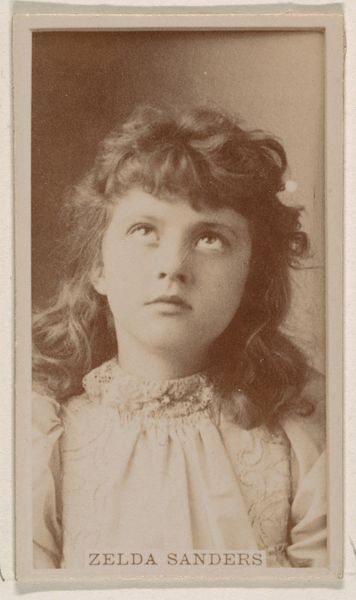
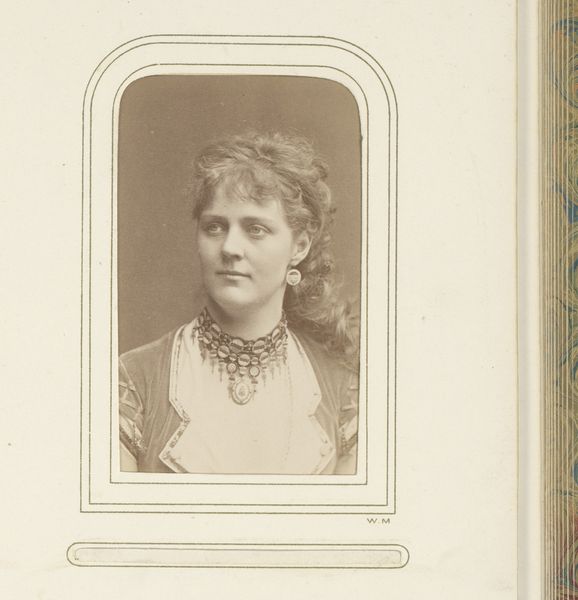
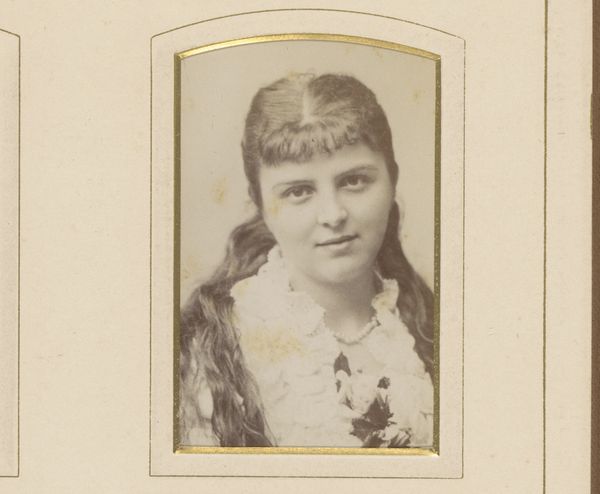
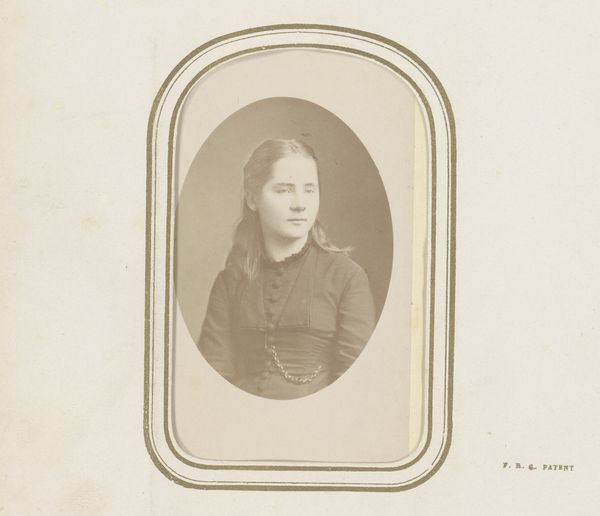
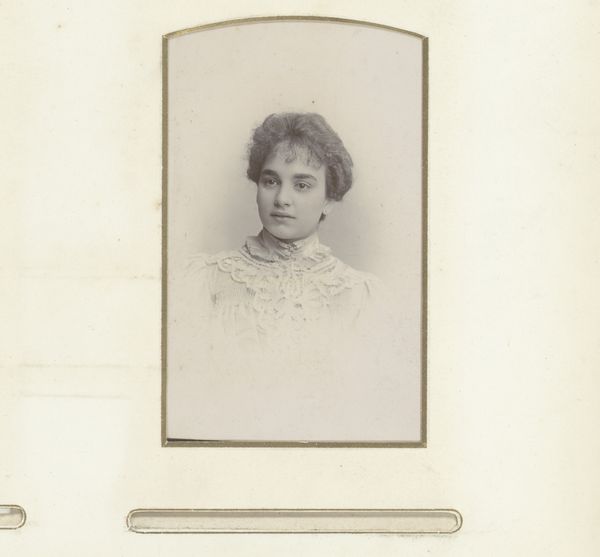
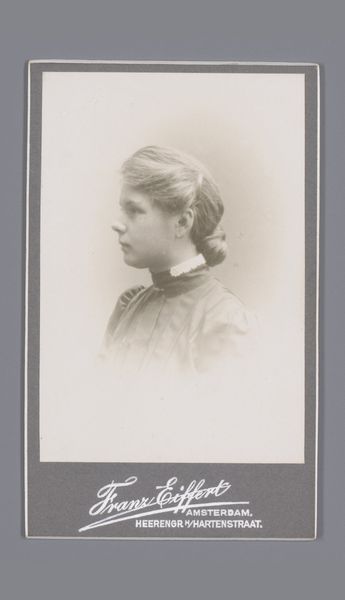
Editor: Here we have a gelatin-silver print from before 1899, titled "Portret van een onbekend meisje," by W. Weiss. It's a very straightforward portrait, but the dress with its pleats and lace looks particularly fragile. What stands out to you in this photograph? Curator: Considering its original context, the image was reproduced as an "Autotypie in Kupfer" by Meisenbach Riffarth & Co., a firm based in Leipzig. What kind of labor and processes are involved in turning an original photographic image into a reproducible print for mass distribution, bound into a Jahrbuch? Editor: So, it’s not just the portrait itself but also thinking about how it became a printed image. The texture does seem different from modern printing techniques. Curator: Exactly! The inscription points to specific craft knowledge of the artisans involved, such as the skills of those manipulating light-sensitive gelatin emulsions, copperplate autotype, and printing press operators. Each step leaves a trace of material practice. How does thinking about these processes change your understanding of the portrait itself? Editor: I suppose it makes me realize the girl and her family may have paid for this photographic session, which then became… almost like stock imagery, democratized and mass-produced to some extent. What was this Jahrbuch, anyway? Curator: Eder’s Jahrbuch was a leading photography publication; the insertion points toward an emerging photo industry finding ways to disseminate images and build a readership beyond wealthy patrons. The print’s existence suggests a commodification of portraiture, distributed via industrial print processes and subscription models. Editor: I didn't even consider all that context hidden in the printing notes. Curator: Seeing art through the lens of its material production opens up entirely new avenues for understanding its role in society and commerce, wouldn’t you agree?
Comments
No comments
Be the first to comment and join the conversation on the ultimate creative platform.
 Collect
 React
React Comment
More like this