About this artwork
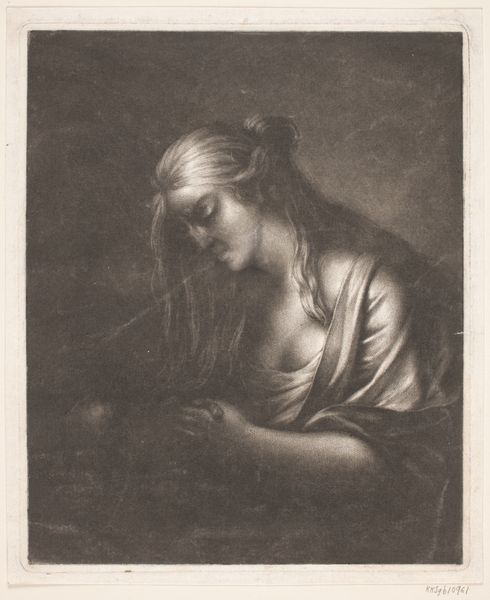
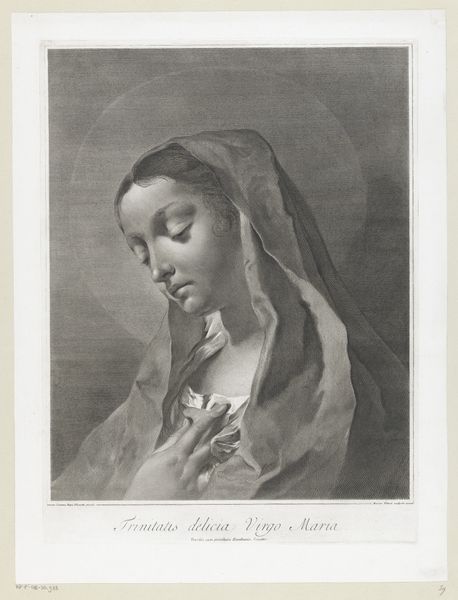
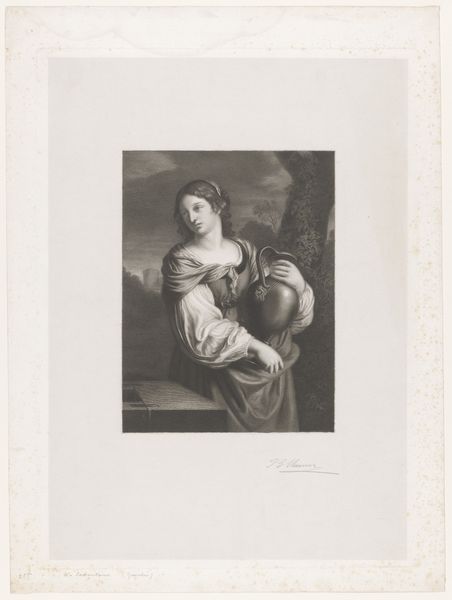
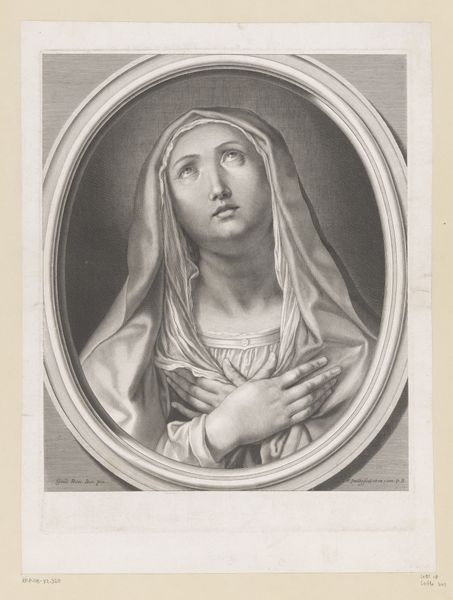
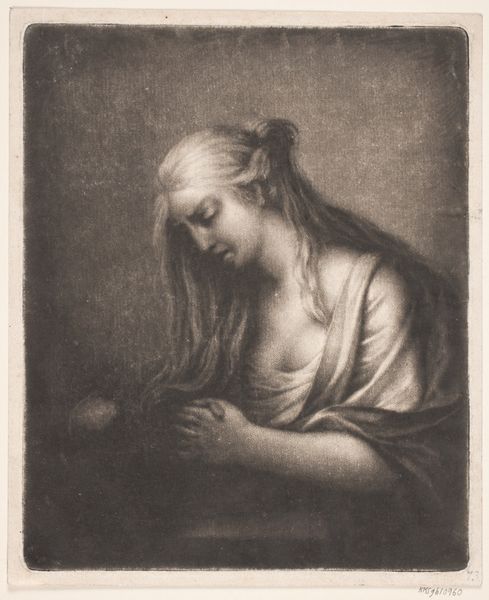
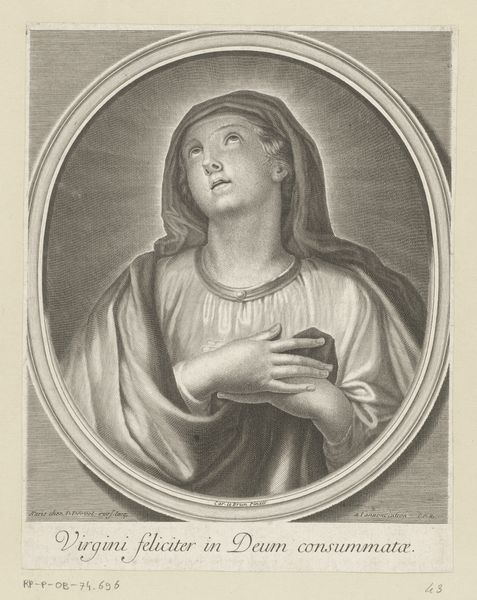
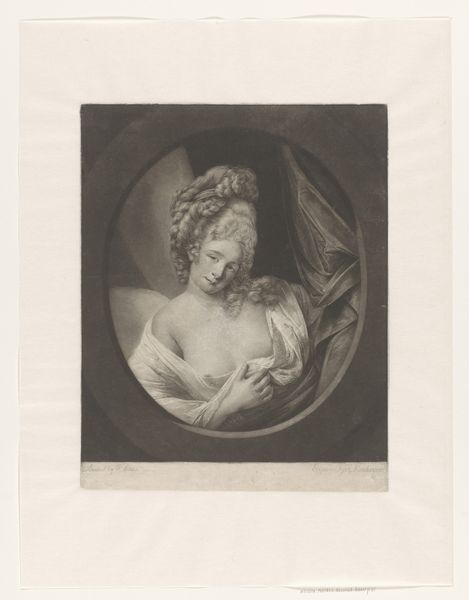
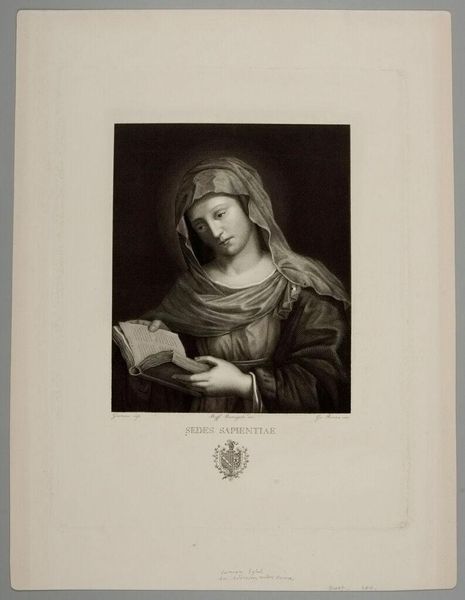
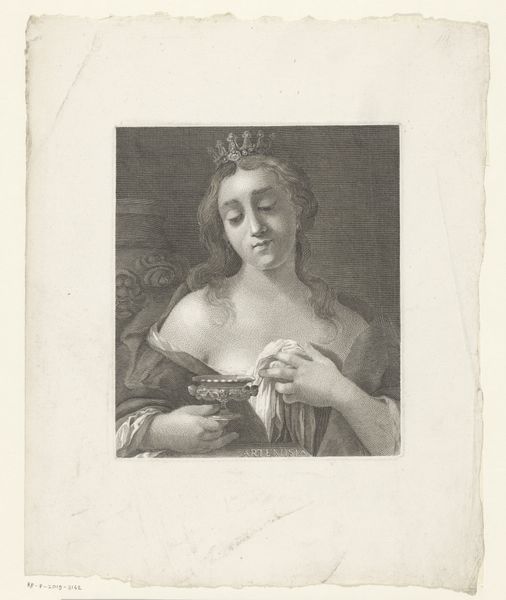
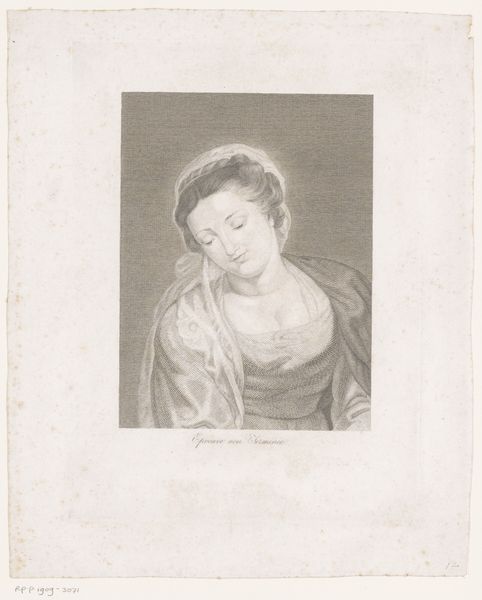
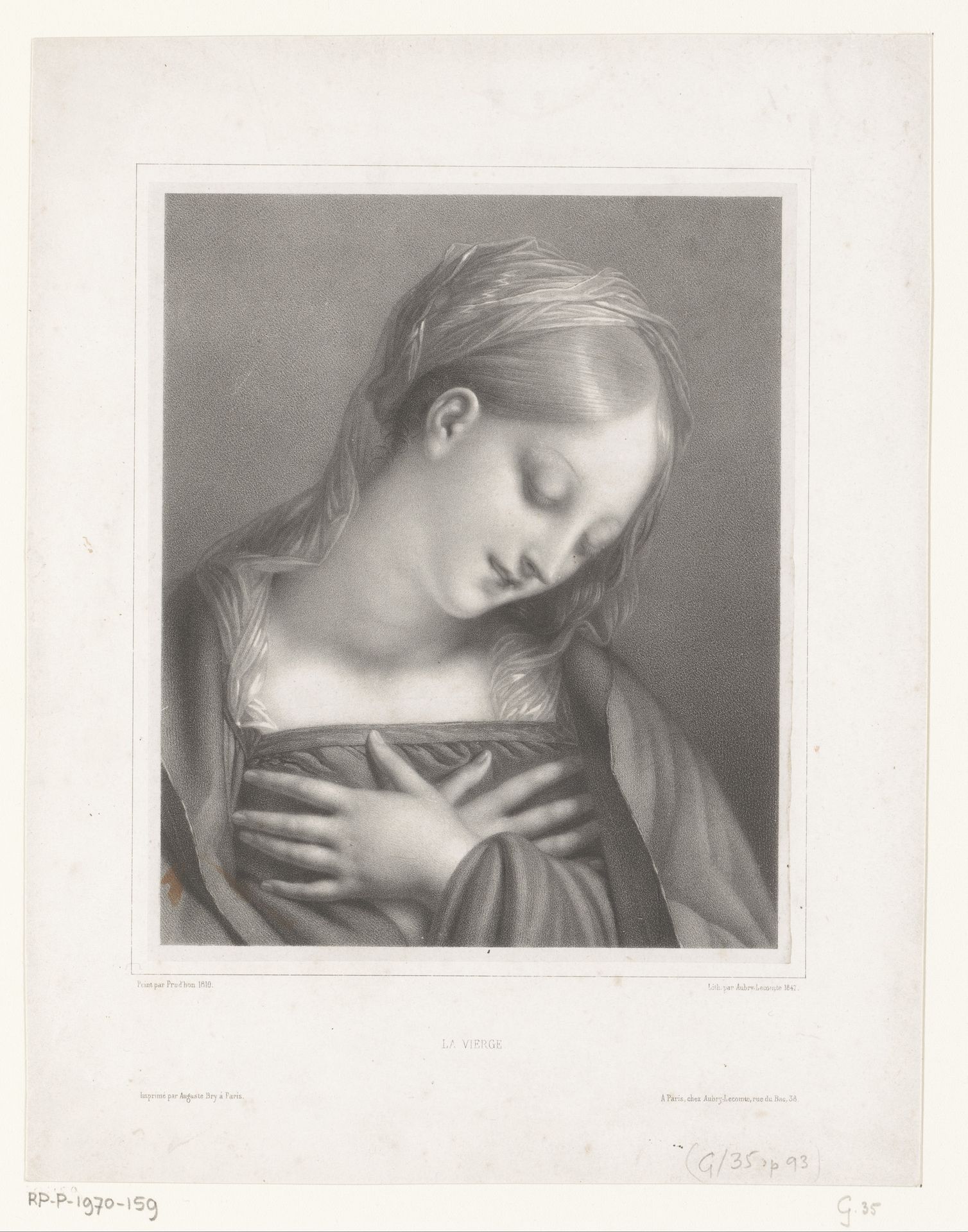
Hyacinthe-Louis-Victor-Jean-Baptiste Aubry-Lecomte made this print of Maria using a lithographic process. Lithography allows for the creation of multiple images on a flat stone or metal plate. The artist would have drawn on the surface with a greasy crayon, then treated the plate so that ink only adhered to the drawing. This method democratized image-making in the 19th century, allowing for mass production and wider distribution of artworks. Prints like this one made art more accessible and affordable, reaching audiences beyond the elite. The subtle gradations of light and shadow, achieved through careful manipulation of the lithographic crayon, give the image a soft, almost ethereal quality. Consider how this reproductive medium, once considered 'craft,' brought art to a broader public, blurring the lines between high art and popular culture.

Artwork details
- Medium
- print, engraving
- Dimensions
- height 282 mm, width 220 mm
- Location
- Rijksmuseum
- Copyright
- Rijks Museum: Open Domain
Tags
Comments
Share your thoughts
About this artwork
Hyacinthe-Louis-Victor-Jean-Baptiste Aubry-Lecomte made this print of Maria using a lithographic process. Lithography allows for the creation of multiple images on a flat stone or metal plate. The artist would have drawn on the surface with a greasy crayon, then treated the plate so that ink only adhered to the drawing. This method democratized image-making in the 19th century, allowing for mass production and wider distribution of artworks. Prints like this one made art more accessible and affordable, reaching audiences beyond the elite. The subtle gradations of light and shadow, achieved through careful manipulation of the lithographic crayon, give the image a soft, almost ethereal quality. Consider how this reproductive medium, once considered 'craft,' brought art to a broader public, blurring the lines between high art and popular culture.
Comments
Share your thoughts