1870
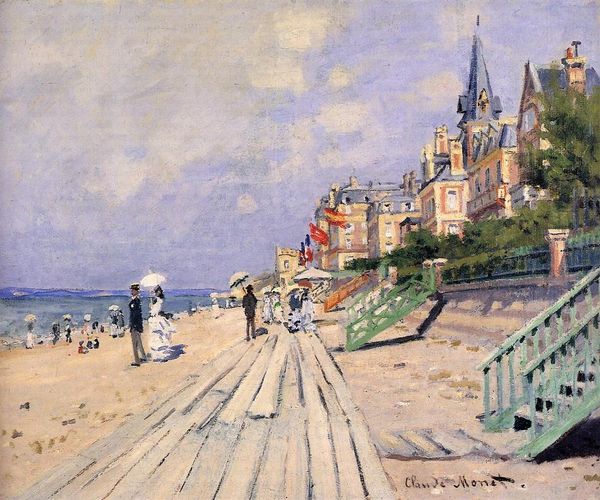
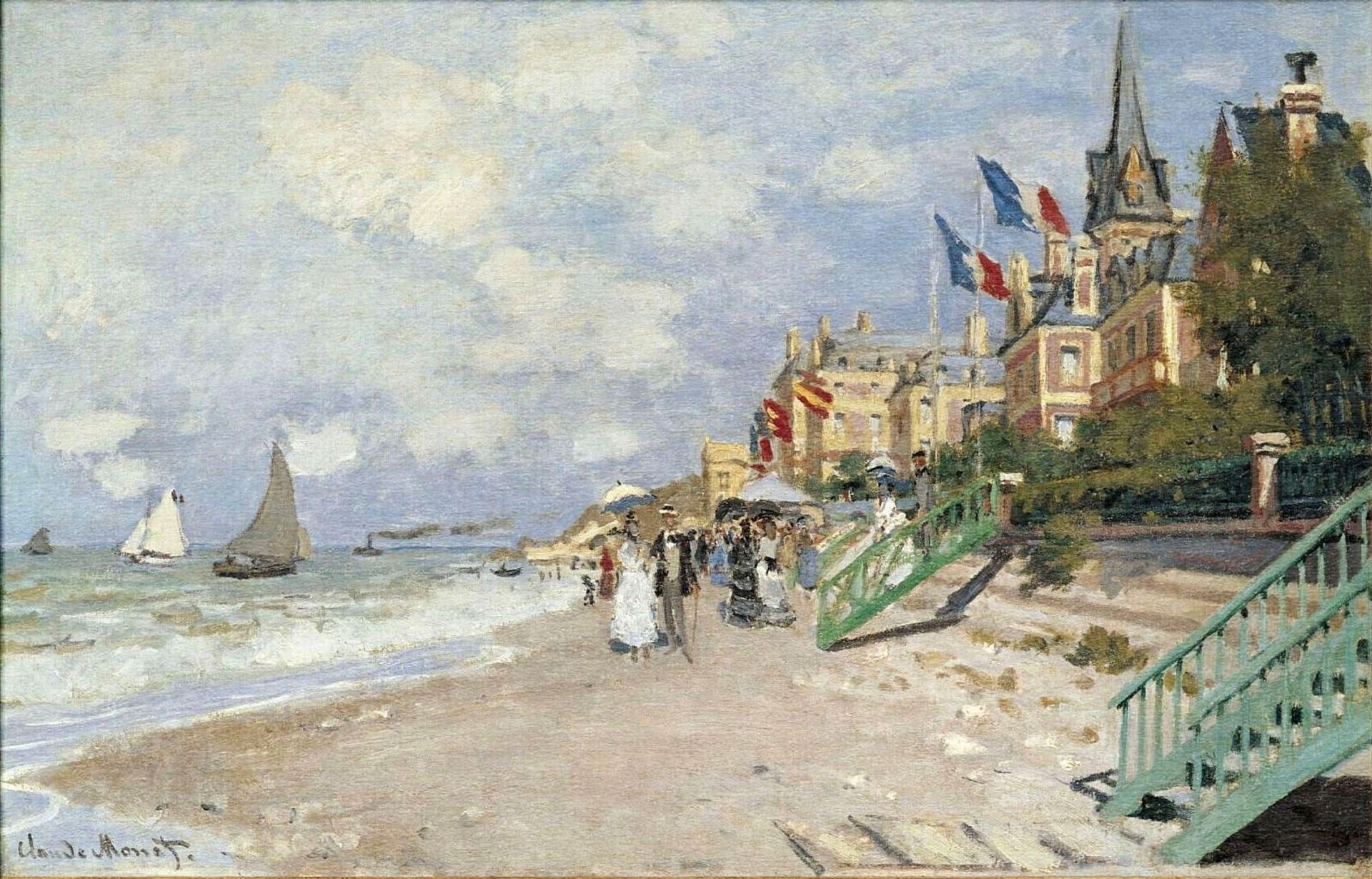
The Boardwalk on the Beach at Trouville

Listen to curator's interpretation
Curatorial notes
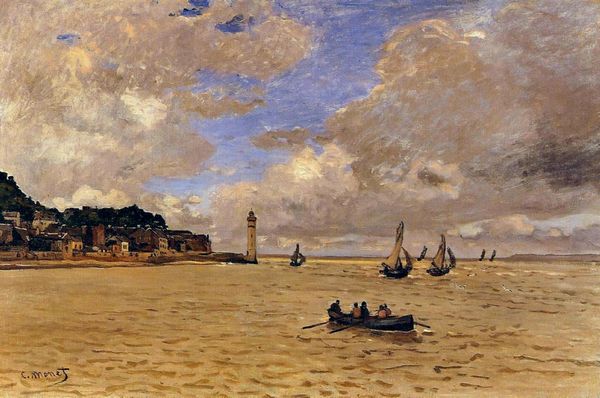
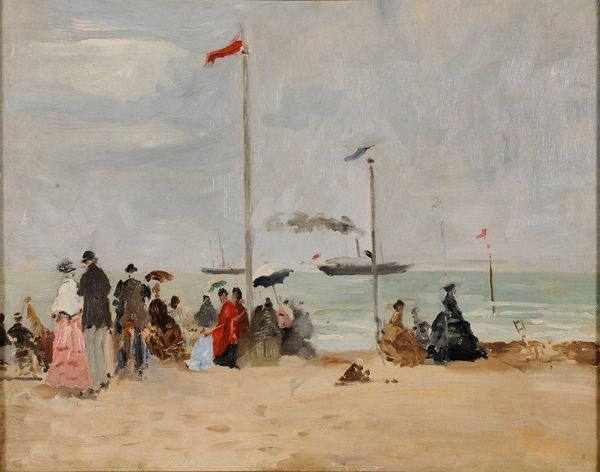
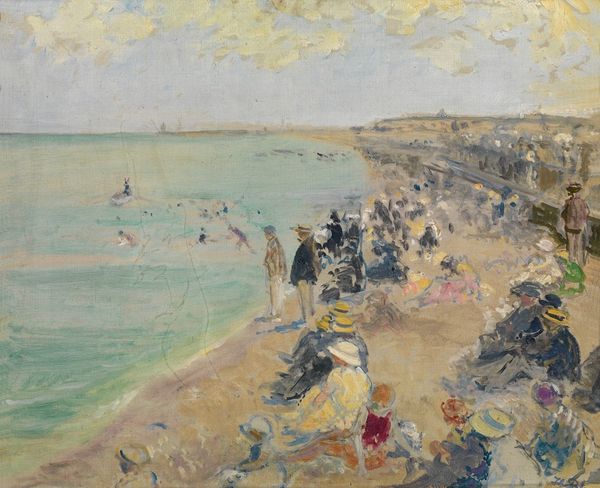
Curator: "The Boardwalk on the Beach at Trouville" painted by Claude Monet in 1870. At first glance, the scene looks like a casual gathering, but given what was happening politically, perhaps there's more than meets the eye. Editor: My first impression is one of fleeting happiness, capturing a beautiful day at the beach. The figures almost blend into the landscape, giving it an ephemeral feel. Curator: Yes, but notice the French flags fluttering prominently atop the buildings. Monet painted this during the Franco-Prussian War, when many Parisians, including himself, sought refuge from the conflict. Editor: Ah, I see it now. The flags aren’t merely decorative. They signal national pride, perhaps even a defiance amid the uncertainty and turmoil of war. The beach becomes a stage for patriotism. Curator: Absolutely. Consider how genre painting elevated scenes from modern life into significant cultural artifacts. Think about the dresses of the women and men: does it appear nostalgic at all to you, and if so, why? Editor: I'm drawn to the way he captures the light on the water and the texture of the sand. It's more than just representation; it conveys the feeling of being there. The high society element is clear, but their location implies they wanted a casual vacation with family in the French bourgeois. Curator: Indeed, the Impressionists aimed to capture a subjective truth rather than a realistic one, aligning the symbols, like national flags and dresses, to social status with what was occuring socially. Editor: This prompts us to reconsider not just the scene, but also our contemporary understanding of leisure, class, and the subtle expressions of political sentiment in everyday life. Curator: I think Monet succeeds beautifully. Thank you, now I’m seeing the painting with new, historically enriched eyes. Editor: And I feel that grasping the symbolic weight enhances the appreciation of the immediate beauty Monet so effortlessly created on the canvas.