

c. 1786
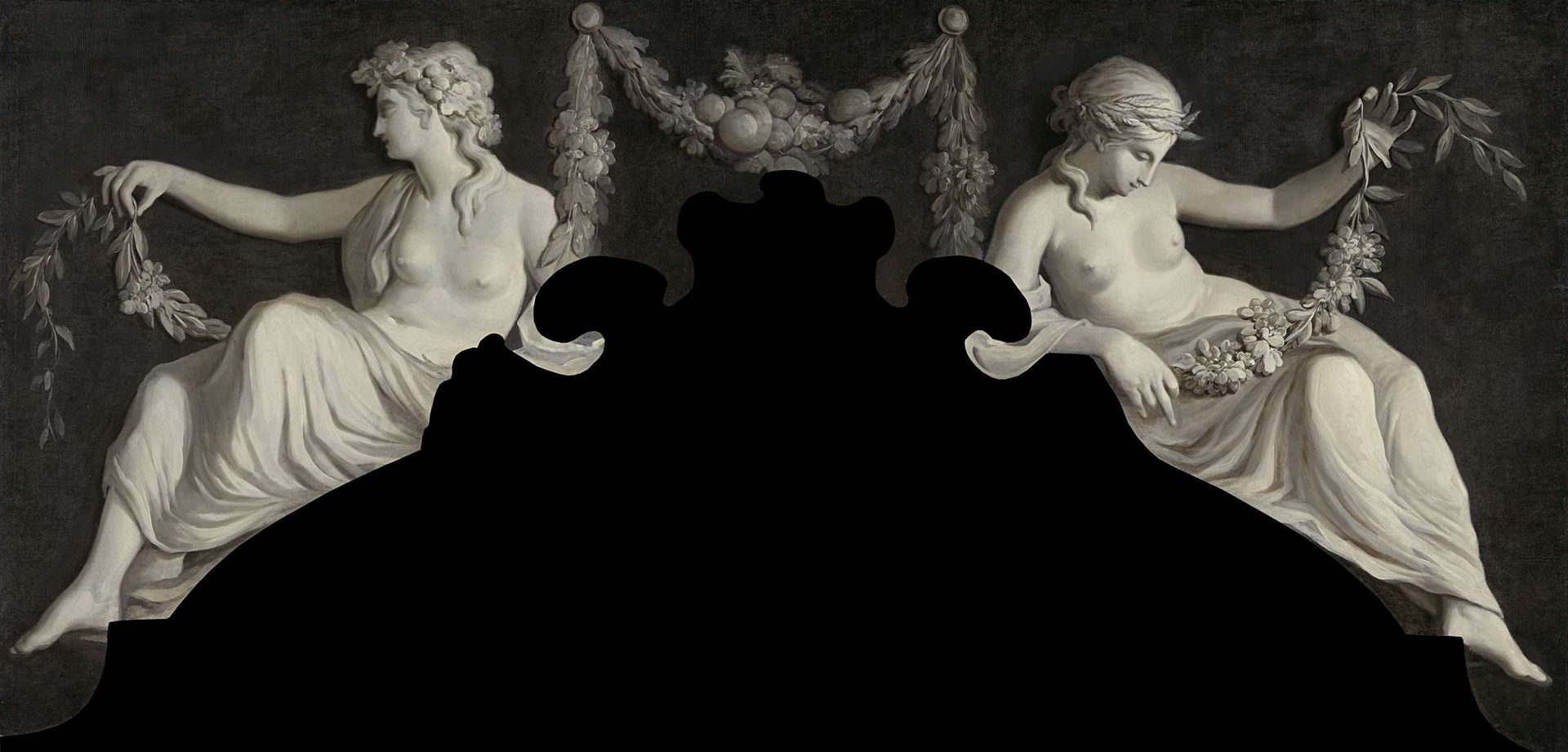
Overdoor with Representation of Two Reclining Women with Garlands

Jurriaan Andriessen
1742 - 1819Location
RijksmuseumListen to curator's interpretation
Curatorial notes
Curator: This overdoor piece, likely designed around 1786 by Jurriaan Andriessen, showcases two reclining women adorned with garlands. Editor: There's an incredible serenity to it, wouldn’t you agree? A graceful languor that’s immediately striking. The grayscale palette lends a timeless, almost sculptural quality. Curator: Andriessen worked within the Neoclassical movement, a period that consciously drew inspiration from the art and culture of classical antiquity. It is so telling about the political climate in revolutionary France that artists began emulating imagery that evoked values such as order, reason and justice, values antithetical to the monarchy in power. Editor: Indeed, we see echoes of ancient Greece and Rome in the women’s draped clothing, the garlands, and their idealized forms. Note the use of garlands-- they aren’t simply decoration, but historically understood as emblems of honor, achievement, and celebration. In ancient Greece, victors were crowned with laurel wreaths. Curator: And let’s not overlook the significance of placing such imagery above a doorway. This wasn’t simply about aesthetics; it was about visually signaling the values and aspirations of those who resided within. These figures—presumably allegorical representations of virtues like Peace or Prosperity—were there to legitimize power through an illusion of virtue. It's a powerful form of cultural capital. Editor: Looking closely, there’s an almost tactile quality despite it being a painted scene; perhaps Andriessen was hinting to stone relief sculpture? The soft gradations of light and shadow suggest a deep understanding of form and material. How were the bodies viewed at the time? Were they idealized types, signifiers, symbols? Curator: Well, these representations reflect a societal fascination with the idealized female form as a symbol of purity and beauty, even of political liberty. Yet, we must acknowledge that this idealization often occurred within patriarchal structures that restricted women’s agency and voices. These are not straightforward celebrations. The historical gaze under which these figures have been interpreted further complicates any understanding of emancipation in the work. Editor: Absolutely. Thinking about these lasting visual motifs and their layered meanings through time gives me pause... Thanks for walking me through this one, what do you make of it now that we've dug in together? Curator: The experience reinforced my conviction that artworks are never neutral; they're always embedded within complex power dynamics and ideological narratives. Editor: For me, it's about remembering that visual language is never static; that even seemingly simple emblems can hold surprisingly potent historical weight.