About this artwork
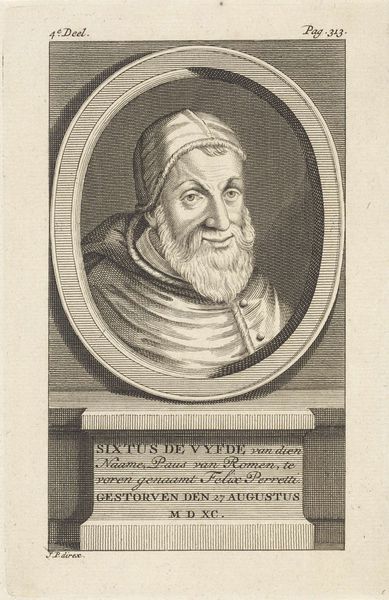
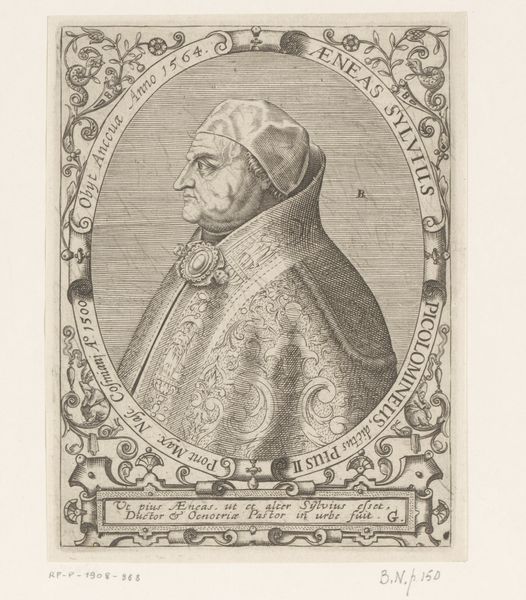
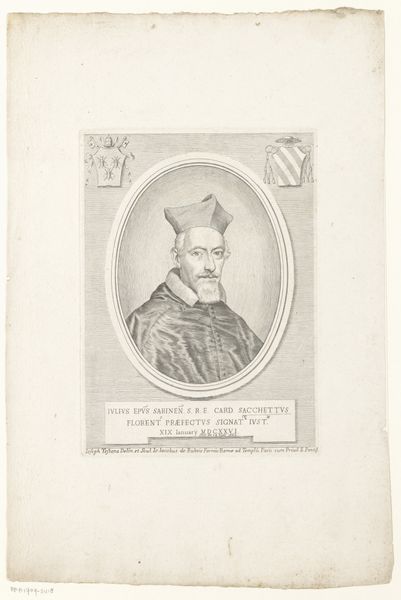
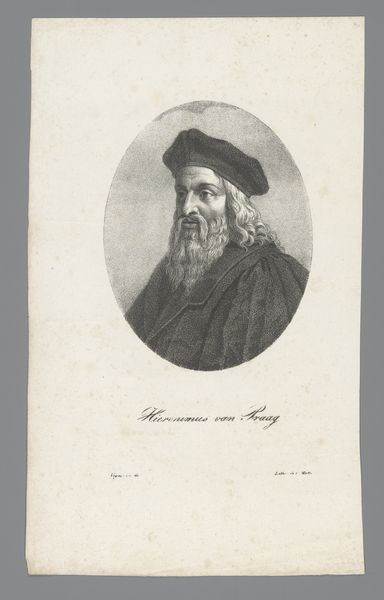
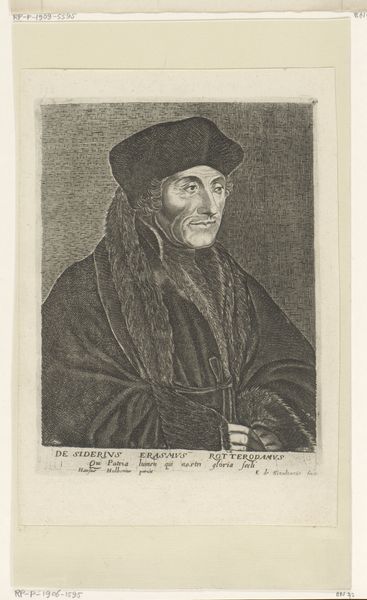
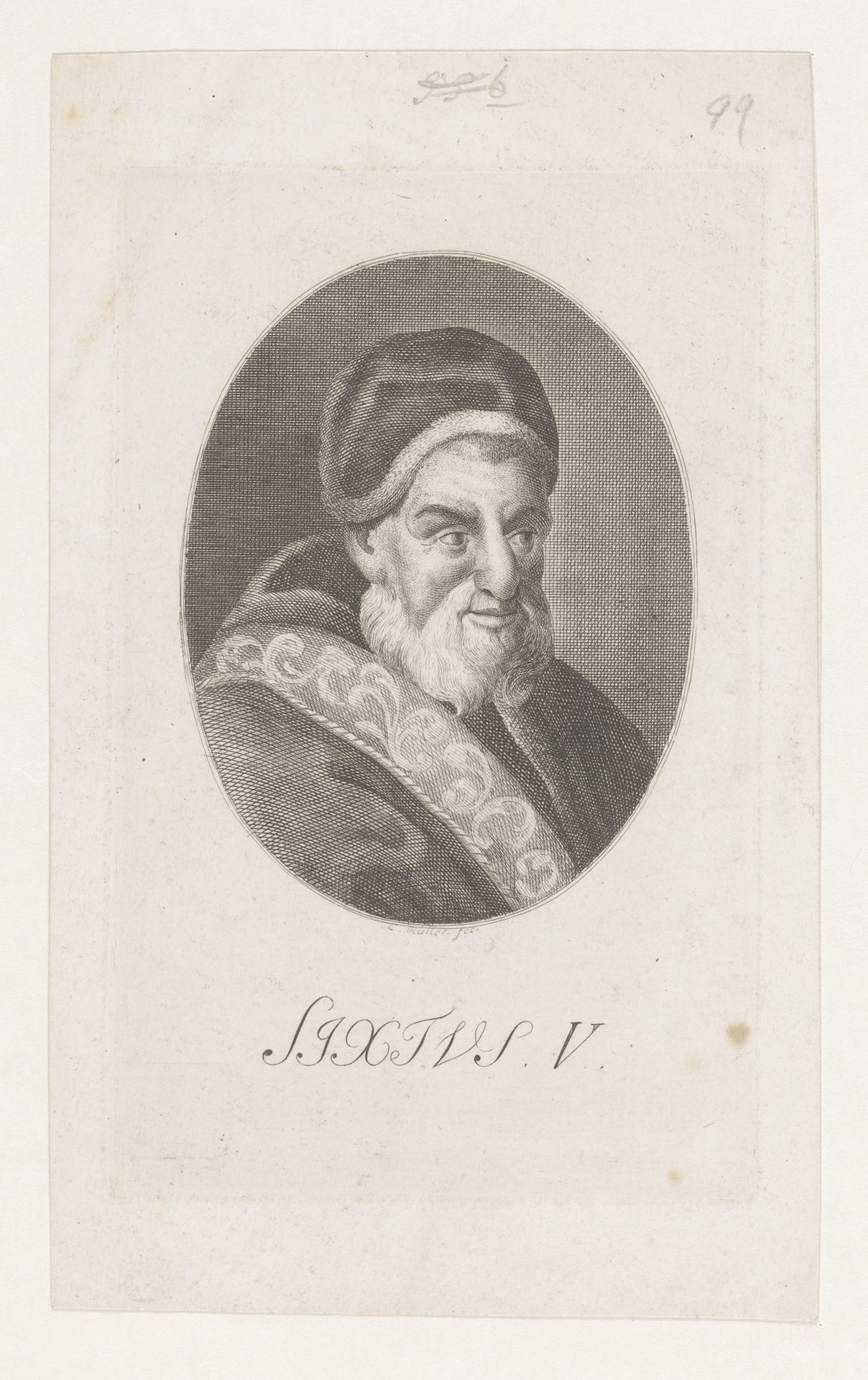
Editor: So this is a portrait of Sixtus V, an engraving by Johann Christian Ernst Müller, made sometime between 1776 and 1824. I'm struck by how much empty space there is around the central oval. How do you read that compositional choice? Curator: It creates a visual hierarchy, wouldn't you agree? The oval acts as a frame, directing our attention to the meticulously rendered details of the Pope's face and vestments. The negative space isn't truly empty; rather, it functions as a critical element in establishing the portrait's formal balance and clarity. Note the density of lines creating chiaroscuro within the oval form, against the near absence outside it. How does that affect your understanding? Editor: I see what you mean. It almost feels like a spotlight. The intense detail inside versus the emptiness outside emphasizes the subject. Is there a theoretical angle on the relationship of frame to image? Curator: One could consider the semiotic implications of the oval. Does it function as a signifier of importance or authority? Is the choice of an oval shape itself meaningful compared to other geometric forms? One can't ignore that the material reality is an engraving - consider how the medium itself limits contrast and tone, yet Muller still achieves strong dimensionality within this constrained format. Editor: That makes me think about the choice of engraving over another printing method. It gives it a very distinct feel. Curator: Exactly. The sharp lines and precise details characteristic of engraving contribute to a sense of formality and historical accuracy, irrespective of the subject of the image itself. Do you notice any inconsistencies or anomalies? Editor: Now that you mention it, there seems to be some handwritten number annotations outside of the oval! I suppose, as a reproductive engraving it was made with distribution as the priority. Curator: Precisely! The annotations offer a unique glimpse into its circulation, disrupting its aesthetic purity. Ultimately, our conversation reinforces the rich detail possible with formal analysis and contextual knowledge.

Artwork details
- Dimensions
- height 165 mm, width 102 mm
- Location
- Rijksmuseum
- Copyright
- Rijks Museum: Open Domain
Comments
Share your thoughts
About this artwork
Editor: So this is a portrait of Sixtus V, an engraving by Johann Christian Ernst Müller, made sometime between 1776 and 1824. I'm struck by how much empty space there is around the central oval. How do you read that compositional choice? Curator: It creates a visual hierarchy, wouldn't you agree? The oval acts as a frame, directing our attention to the meticulously rendered details of the Pope's face and vestments. The negative space isn't truly empty; rather, it functions as a critical element in establishing the portrait's formal balance and clarity. Note the density of lines creating chiaroscuro within the oval form, against the near absence outside it. How does that affect your understanding? Editor: I see what you mean. It almost feels like a spotlight. The intense detail inside versus the emptiness outside emphasizes the subject. Is there a theoretical angle on the relationship of frame to image? Curator: One could consider the semiotic implications of the oval. Does it function as a signifier of importance or authority? Is the choice of an oval shape itself meaningful compared to other geometric forms? One can't ignore that the material reality is an engraving - consider how the medium itself limits contrast and tone, yet Muller still achieves strong dimensionality within this constrained format. Editor: That makes me think about the choice of engraving over another printing method. It gives it a very distinct feel. Curator: Exactly. The sharp lines and precise details characteristic of engraving contribute to a sense of formality and historical accuracy, irrespective of the subject of the image itself. Do you notice any inconsistencies or anomalies? Editor: Now that you mention it, there seems to be some handwritten number annotations outside of the oval! I suppose, as a reproductive engraving it was made with distribution as the priority. Curator: Precisely! The annotations offer a unique glimpse into its circulation, disrupting its aesthetic purity. Ultimately, our conversation reinforces the rich detail possible with formal analysis and contextual knowledge.
Comments
Share your thoughts