About this artwork
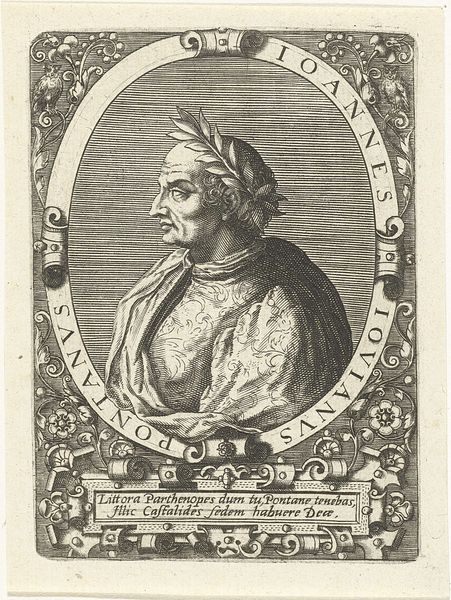
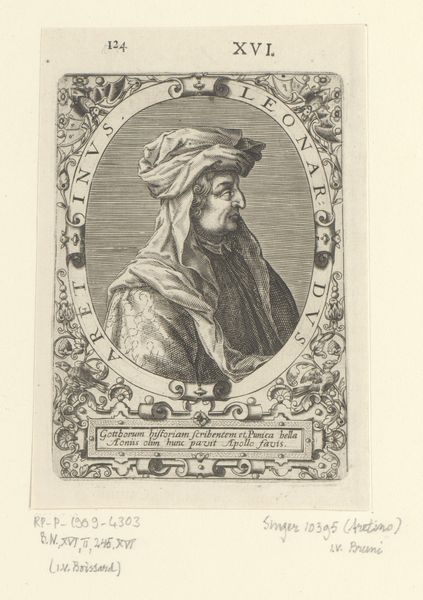
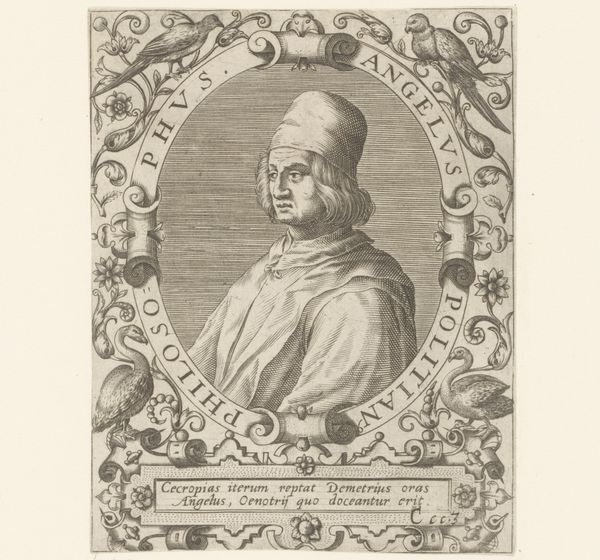
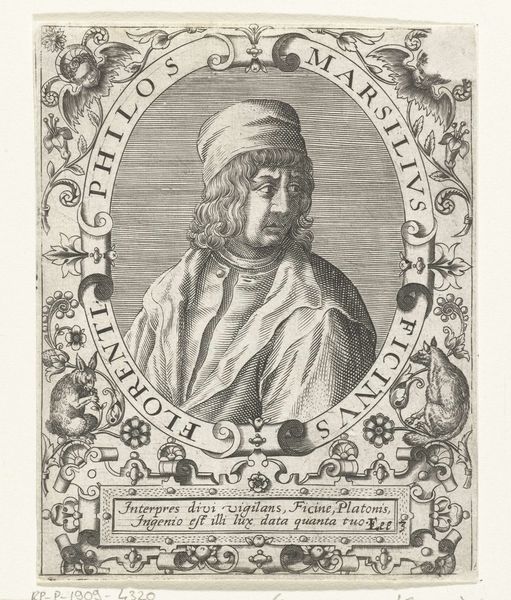
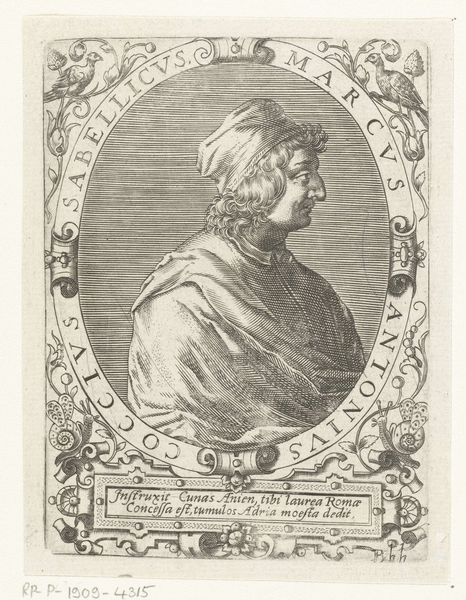
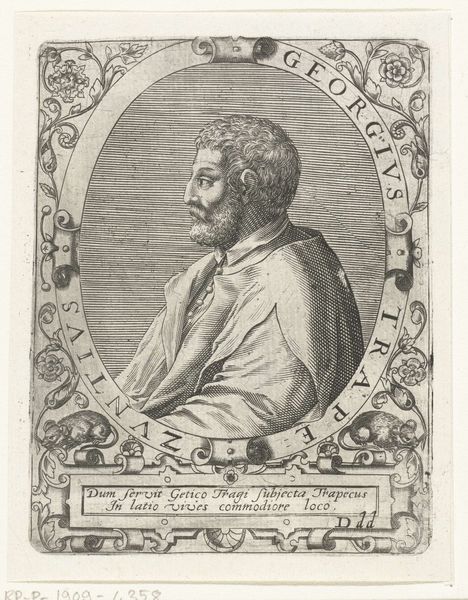
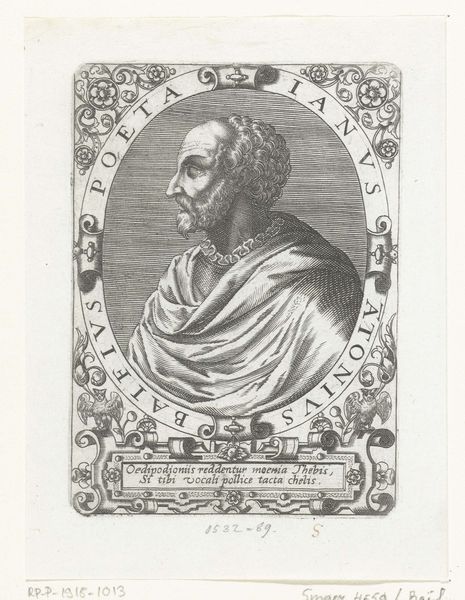
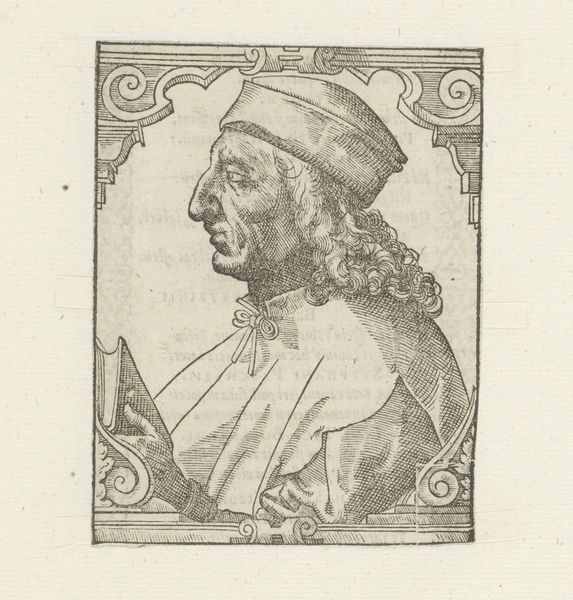
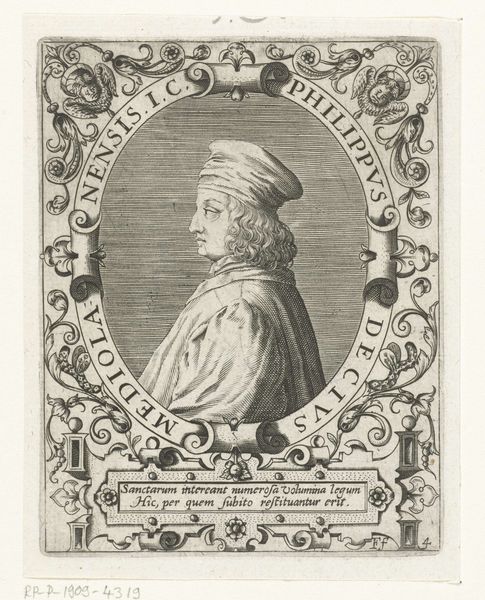
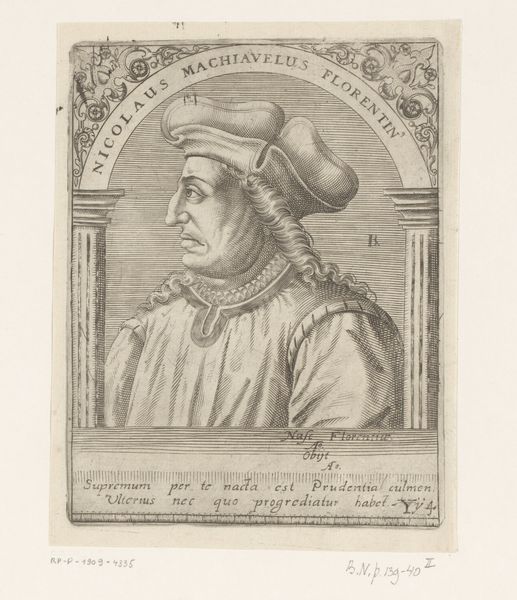
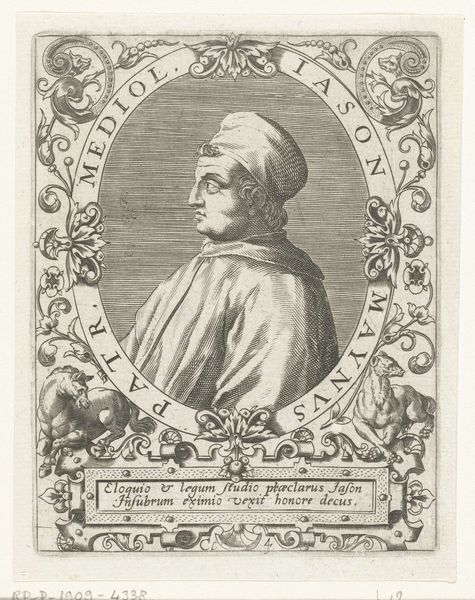
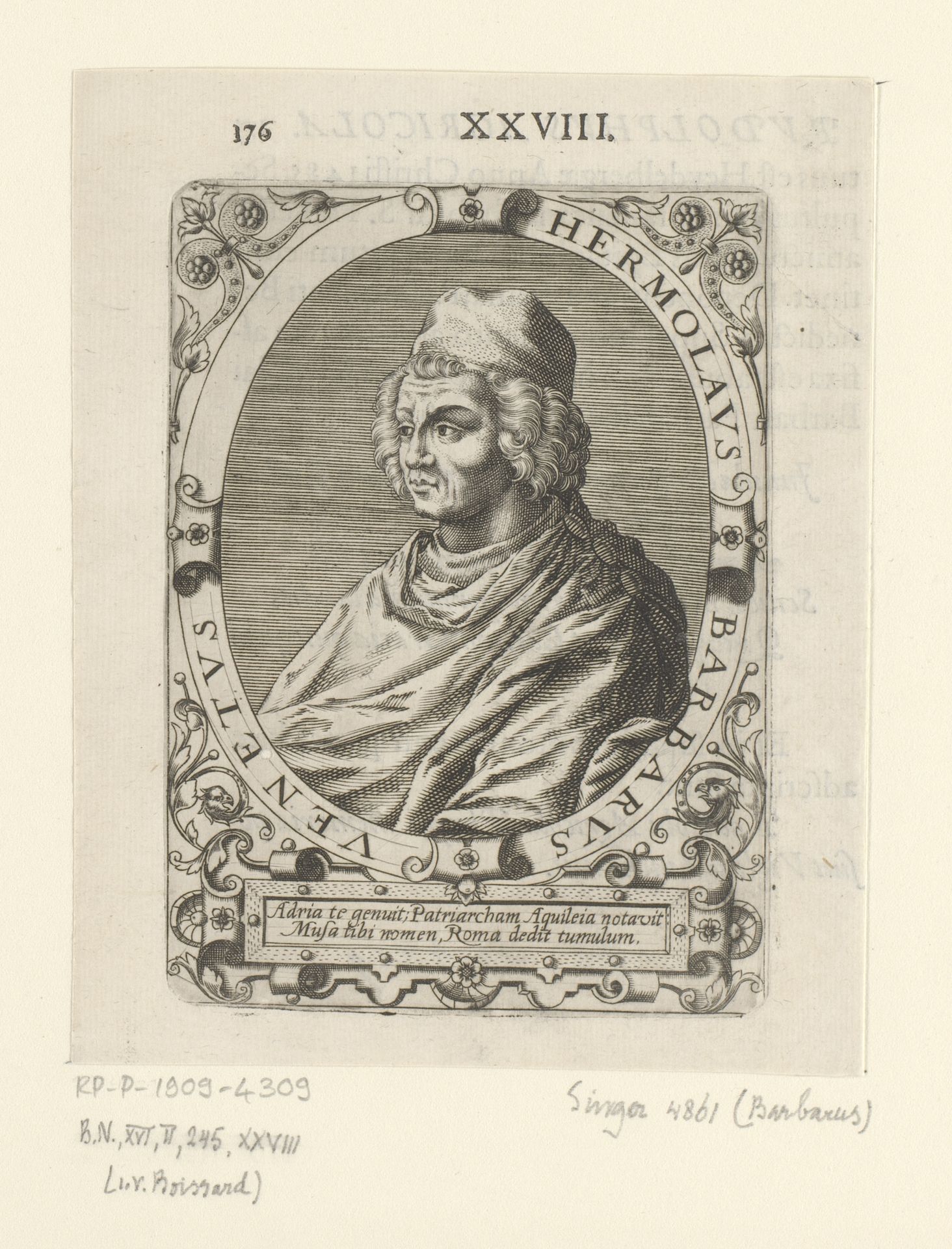
Editor: Here we have "Portret van Ermolao Barbaro" by Theodor de Bry, made around 1597 to 1599. It seems to be an ink or pencil drawing. It's giving me a very formal, almost imposing vibe. What catches your eye about it? Curator: What I see is an intriguing example of how early modern portraiture functioned within a very specific social context. This isn't just about depicting a person, it's about constructing an image of authority. Notice how Ermolao Barbaro, likely a significant figure, is framed within this decorative oval, almost like he’s placed on a coin or medal, meant for distribution. What does the placement suggest to you? Editor: I guess that framing elevates him, makes him seem more important and like, reproducible. Curator: Exactly. These images circulated, reinforcing hierarchies. Prints like this played a key role in shaping public perception of important figures. Think about it – how does this image, meant to be reproduced and widely seen, contribute to our understanding of power dynamics at the time? How are images utilized to broadcast particular perspectives? Editor: So it’s not just about how he looked, but about projecting a certain image, a carefully constructed persona. That’s powerful stuff! It also raises a question, about the perception and distribution of art and people of power. Curator: Precisely. We should keep such questions in mind when understanding portraits and figures in general. Editor: This really changed how I see this portrait; it's more than just a likeness. Curator: And seeing that wider cultural and political function really highlights how this work speaks to us across the centuries.

Artwork details
- Dimensions
- height 140 mm, width 100 mm
- Location
- Rijksmuseum
- Copyright
- Rijks Museum: Open Domain
Tags
pencil drawn
aged paper
light pencil work
pencil sketch
old engraving style
personal sketchbook
pen-ink sketch
limited contrast and shading
ink colored
pencil work
Comments
No comments
About this artwork
Editor: Here we have "Portret van Ermolao Barbaro" by Theodor de Bry, made around 1597 to 1599. It seems to be an ink or pencil drawing. It's giving me a very formal, almost imposing vibe. What catches your eye about it? Curator: What I see is an intriguing example of how early modern portraiture functioned within a very specific social context. This isn't just about depicting a person, it's about constructing an image of authority. Notice how Ermolao Barbaro, likely a significant figure, is framed within this decorative oval, almost like he’s placed on a coin or medal, meant for distribution. What does the placement suggest to you? Editor: I guess that framing elevates him, makes him seem more important and like, reproducible. Curator: Exactly. These images circulated, reinforcing hierarchies. Prints like this played a key role in shaping public perception of important figures. Think about it – how does this image, meant to be reproduced and widely seen, contribute to our understanding of power dynamics at the time? How are images utilized to broadcast particular perspectives? Editor: So it’s not just about how he looked, but about projecting a certain image, a carefully constructed persona. That’s powerful stuff! It also raises a question, about the perception and distribution of art and people of power. Curator: Precisely. We should keep such questions in mind when understanding portraits and figures in general. Editor: This really changed how I see this portrait; it's more than just a likeness. Curator: And seeing that wider cultural and political function really highlights how this work speaks to us across the centuries.
Comments
No comments