

1851
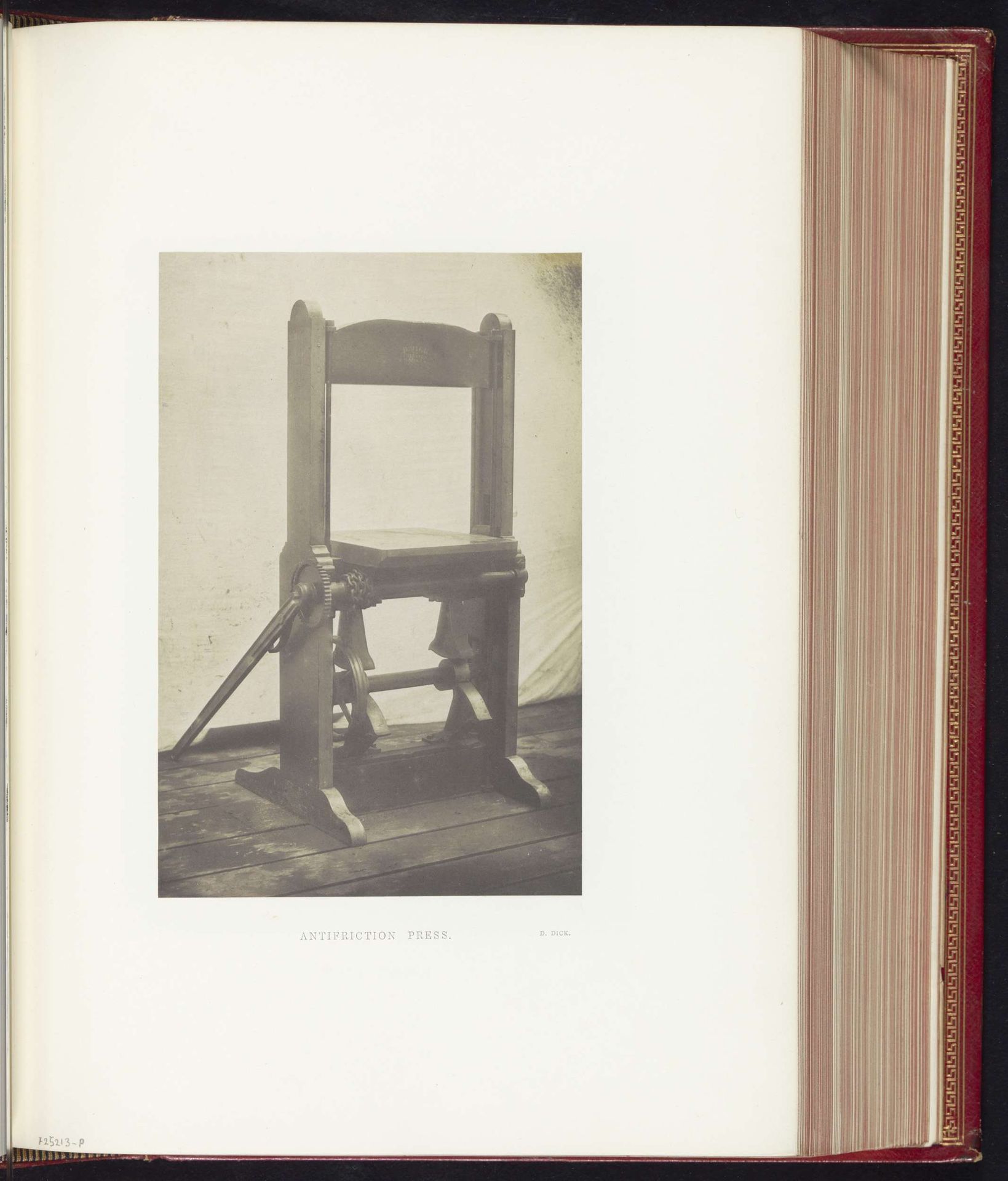
Pers van D. Dick op de Great Exhibition of the Works of Industry of All Nations van 1851 in het Crystal Palace in Londen

Listen to curator's interpretation
Curatorial notes
Curator: Ah, this photograph! It’s entitled "Pers van D. Dick op de Great Exhibition of the Works of Industry of All Nations van 1851 in het Crystal Palace in Londen", created in 1851 by C.M. Ferrier & F. von Martens. What’s your take on it? Editor: Immediately, it has such a quiet, almost austere presence. The subdued sepia tones give the impression of timelessness, even antiquity, but that sturdy mechanical object sits starkly in the frame. Almost hauntingly lonely. Curator: Indeed. The 'object' is an antifriction press. In this albumen print, its stillness and solidity take on an almost iconic quality. Do you perceive any symbolic elements, or connections to the larger exhibition? Editor: The symmetry of the object strikes me first—and yet it also feels off. As though mirroring is trying to resolve itself. The material looks aged and solid. Symbolically, I would argue it shows humankind reaching a point of using practical machines to achieve tasks, in ways which reflect a need for accuracy. I wonder if the solidity means something for how society will operate. Curator: Fascinating thought. Perhaps a kind of emblem of the Industrial Revolution's burgeoning influence. In photography’s early days, the crystal palace in London's Great Exhibition held cultural significance in shaping perceptions about labor and industry at large, in the European milieu. I wonder about the emotional charge. Do you find there is an impact beyond what one finds by the naked eye? Editor: There's an underlying sense of tension despite its static quality. I wonder what kind of dreams lay within this machine. A certain quietness permeates—like before a storm, with a sense of inevitable change looming large. The technology had a very concrete symbolism for labor back then, right? The machine has replaced work, people displaced for innovation... and here is an example of what this kind of innovation brings! Curator: Exactly. We could analyze for days all the sociocultural repercussions, but to take an ending note: how will you retain it? Editor: It makes me feel a tinge of sorrow for lost human craftsmanship and for the way machines displace so much personal input. Though progress marches on, perhaps we shouldn't wholly disregard tradition nor forsake the past? Curator: An admirable meditation, it captures how even within a single image, we witness evolving historical undercurrents and enduring visual resonance that invite reflection on progress and loss.