About this artwork
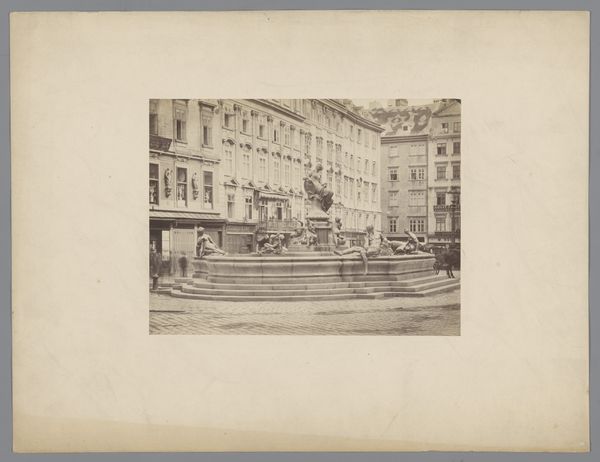
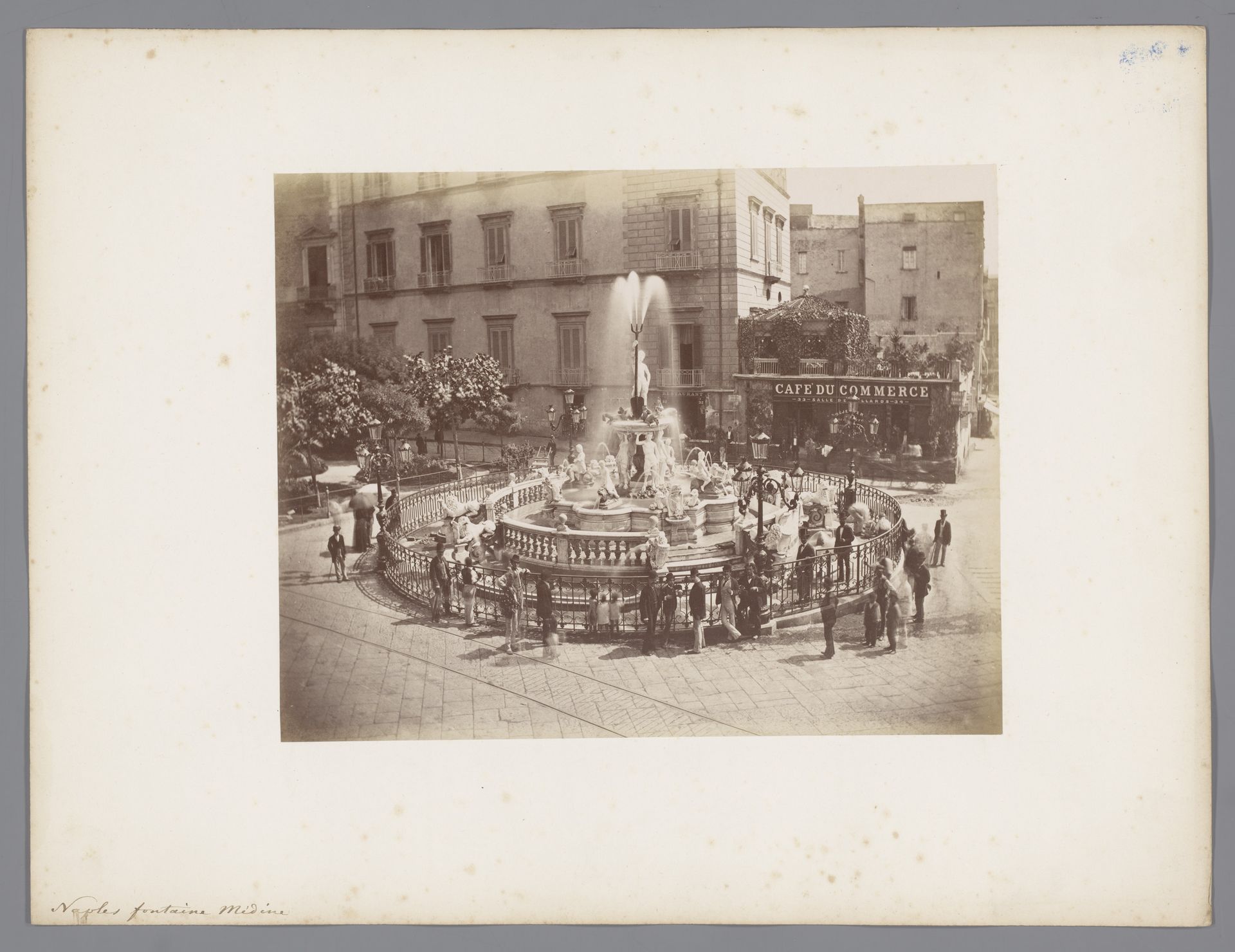
This anonymous photograph captures the Neptunusfontein in Naples, Italy, presenting a frozen moment of public life centered around the iconic fountain. At its heart stands Neptune, the Roman god of the sea, trident in hand, a symbol echoing back to ancient maritime power and control over the waters. This trident is not merely a staff, but a scepter of dominion, an emblem that reappears through centuries, from Poseidon's might in Greek pottery to modern-day heraldry. The symbolism of Neptune, commanding the seas, can be traced back to our deepest fears and respect for the ocean's power, a subconscious nod to nature's overwhelming force. The cyclical nature of symbols is evident. The image of a god associated with water and the sea is continually reborn, adapting to new cultural landscapes, yet forever tied to the primal human experience of water.

Artwork details
- Medium
- photography, gelatin-silver-print
- Dimensions
- height 307 mm, width 403 mm
- Location
- Rijksmuseum
- Copyright
- Rijks Museum: Open Domain
Tags
Comments
Share your thoughts
About this artwork
This anonymous photograph captures the Neptunusfontein in Naples, Italy, presenting a frozen moment of public life centered around the iconic fountain. At its heart stands Neptune, the Roman god of the sea, trident in hand, a symbol echoing back to ancient maritime power and control over the waters. This trident is not merely a staff, but a scepter of dominion, an emblem that reappears through centuries, from Poseidon's might in Greek pottery to modern-day heraldry. The symbolism of Neptune, commanding the seas, can be traced back to our deepest fears and respect for the ocean's power, a subconscious nod to nature's overwhelming force. The cyclical nature of symbols is evident. The image of a god associated with water and the sea is continually reborn, adapting to new cultural landscapes, yet forever tied to the primal human experience of water.
Comments
Share your thoughts