1816 - 1837
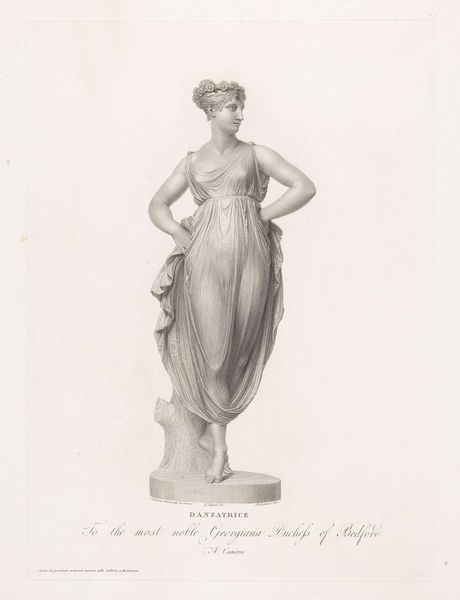
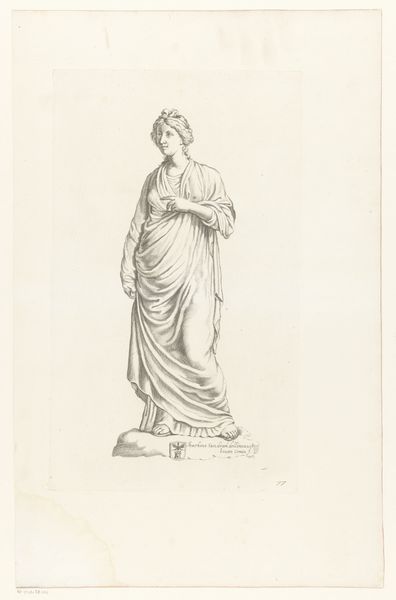
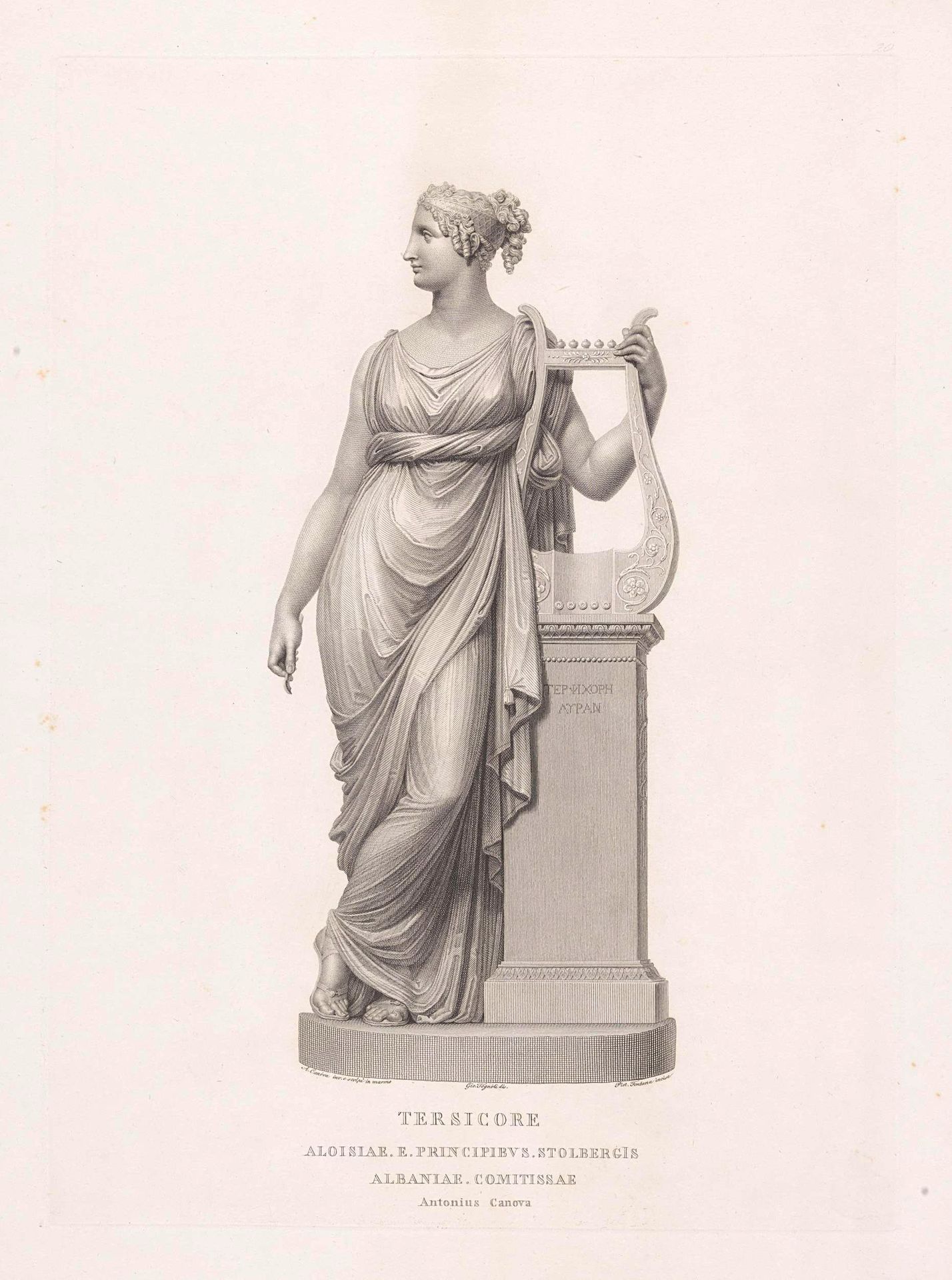
Terpsichore

Pietro Fontana
1762 - 1837Location
RijksmuseumListen to curator's interpretation
Curatorial notes
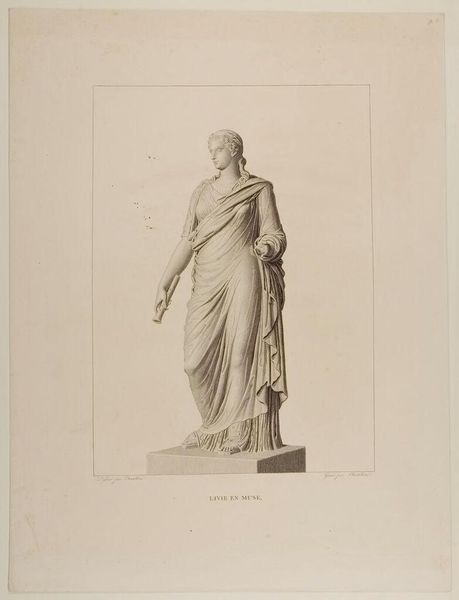
Pietro Fontana created this engraving of Terpsichore, the Greek muse of dance, during a period when Neoclassicism celebrated idealized forms and virtues. Fontana’s muse, with her serene expression and flowing garments, embodies classical beauty, yet her depiction also subtly reinforces societal norms of the time. Neoclassical art often presented women as allegorical figures, here Terpsichore is captured as an emblem of artistic inspiration, and also of beauty. Consider how the choice of Terpsichore as a subject might reflect the period's interest in the arts and the desire to connect with the perceived purity of ancient cultures. The engraving is not merely an artistic representation, but a cultural artifact that shows the values and ideals of its time.