About this artwork
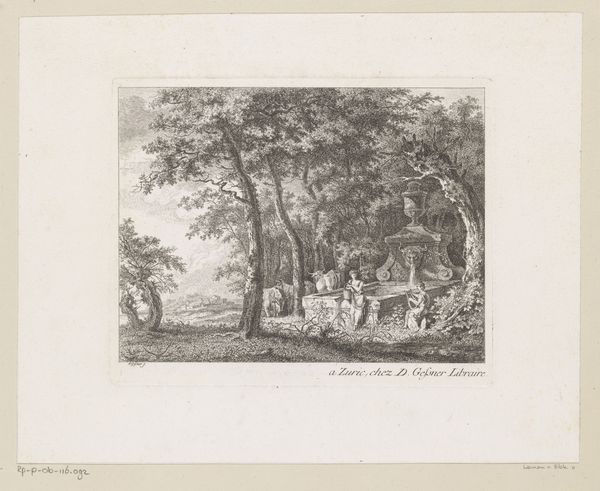
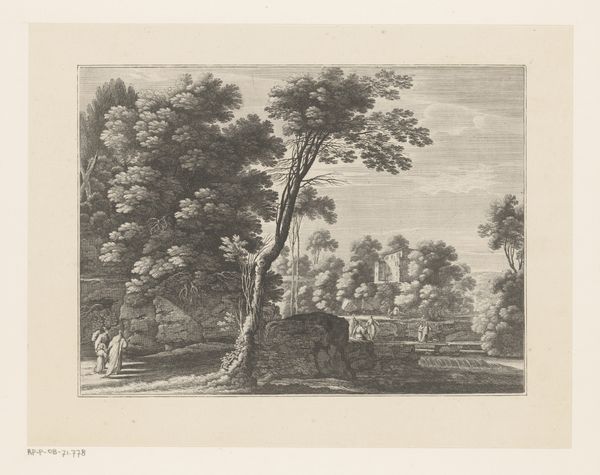
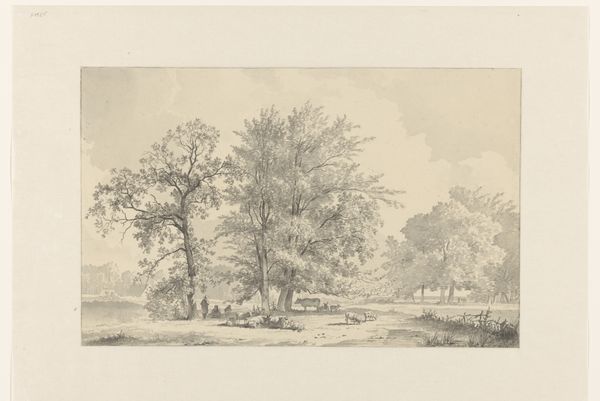
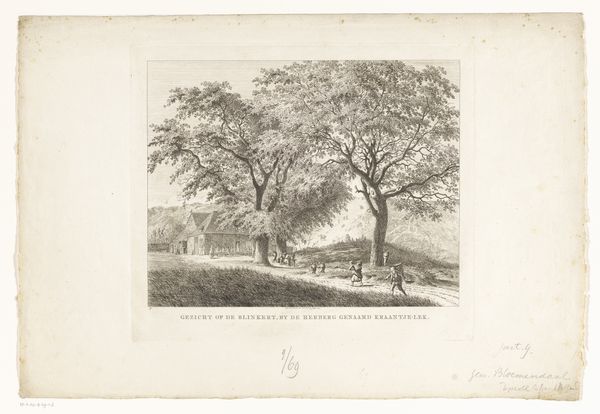
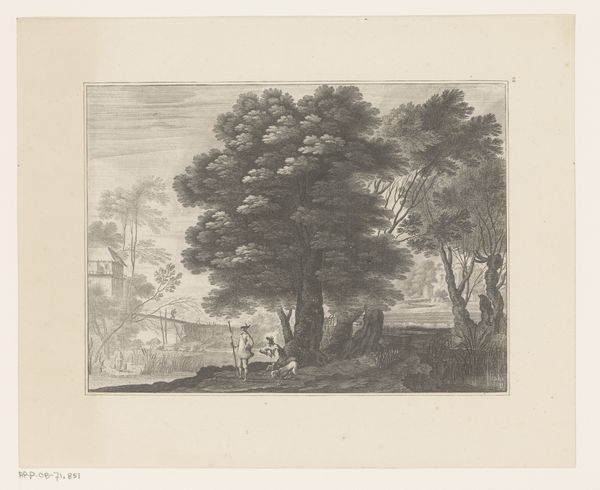
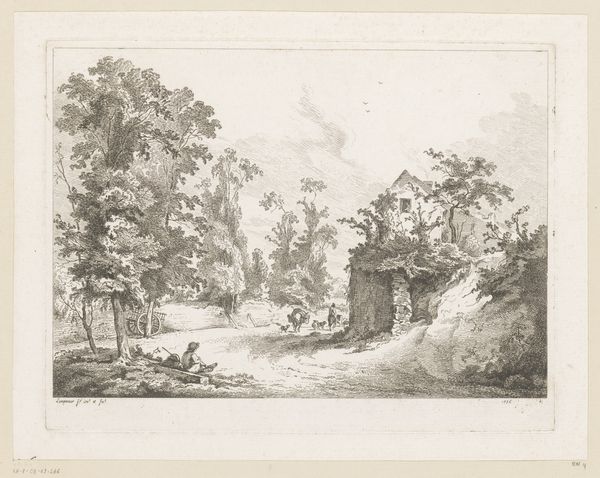
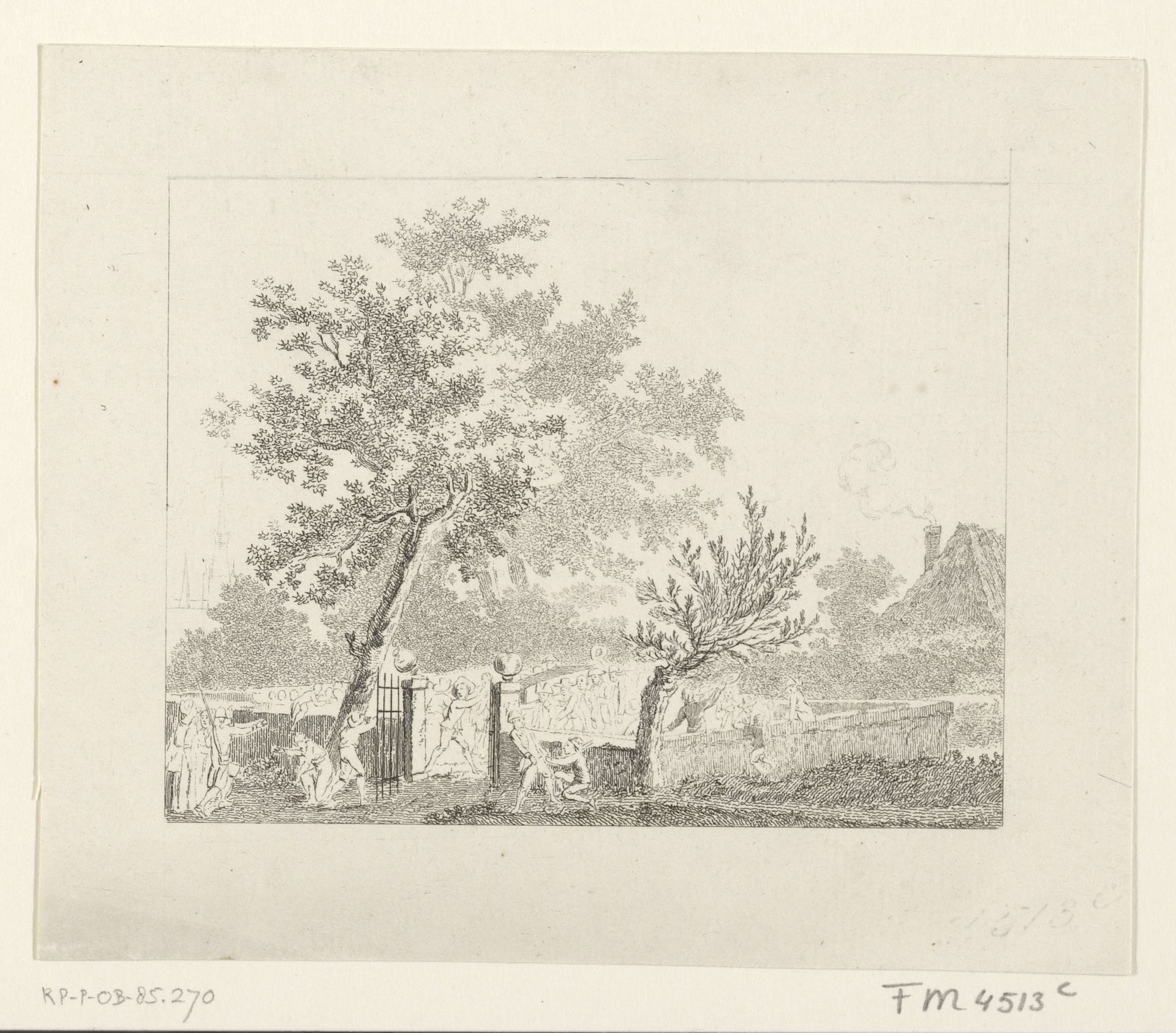
Mathias de Sallieth created this etching, Herbegrafenis van de vrouw te Arnhem, in 1783. It’s a scene rendered with a remarkable fineness of line, creating a delicate, almost ethereal atmosphere. The composition balances the dense foliage of the trees on the left with the simple structure of the building on the right, framing the central event. Sallieth's use of line is particularly striking. Notice how he employs varied densities to suggest depth and texture, from the intricate leaves of the trees to the subtle gradations of the sky. This technique draws us into the scene, inviting contemplation on the themes of mourning and memory. The stark contrast of the light etching against the white space destabilizes established meanings by using simple lines to evoke profound emotions and engage with broader philosophical concerns. Consider the balance between the natural and the architectural elements, and how the artist invites us to interpret it in our own way. The work's formal qualities underscore its function as part of a larger cultural discourse, open to ongoing interpretation and re-interpretation.
Herbegrafenis van de vrouw te Arnhem, 1783
1787

Mathias de Sallieth
1749 - 1791Location
RijksmuseumArtwork details
- Dimensions
- height 140 mm, width 167 mm
- Location
- Rijksmuseum
- Copyright
- Rijks Museum: Open Domain
Comments
Share your thoughts
About this artwork
Mathias de Sallieth created this etching, Herbegrafenis van de vrouw te Arnhem, in 1783. It’s a scene rendered with a remarkable fineness of line, creating a delicate, almost ethereal atmosphere. The composition balances the dense foliage of the trees on the left with the simple structure of the building on the right, framing the central event. Sallieth's use of line is particularly striking. Notice how he employs varied densities to suggest depth and texture, from the intricate leaves of the trees to the subtle gradations of the sky. This technique draws us into the scene, inviting contemplation on the themes of mourning and memory. The stark contrast of the light etching against the white space destabilizes established meanings by using simple lines to evoke profound emotions and engage with broader philosophical concerns. Consider the balance between the natural and the architectural elements, and how the artist invites us to interpret it in our own way. The work's formal qualities underscore its function as part of a larger cultural discourse, open to ongoing interpretation and re-interpretation.
Comments
Share your thoughts