ceramic, porcelain, sculpture
#
sculpture
#
ceramic
#
porcelain
#
figuration
#
classicism
#
sculpture
#
decorative-art
Dimensions: 11 9/16 × 6 7/8 in. (29.4 × 17.5 cm)
Copyright: Public Domain
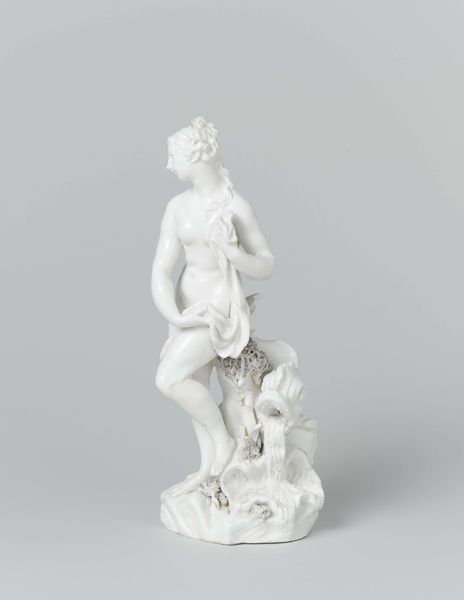
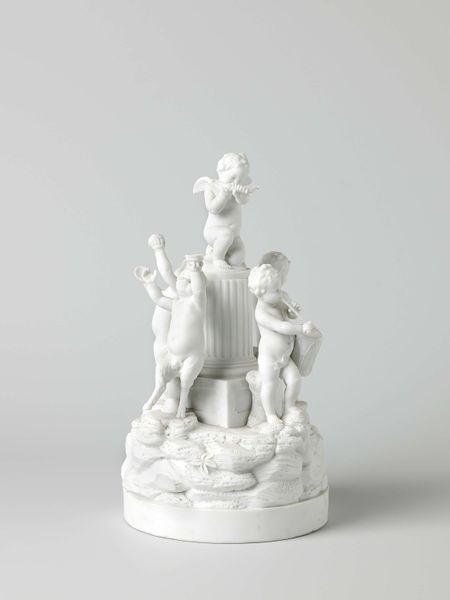
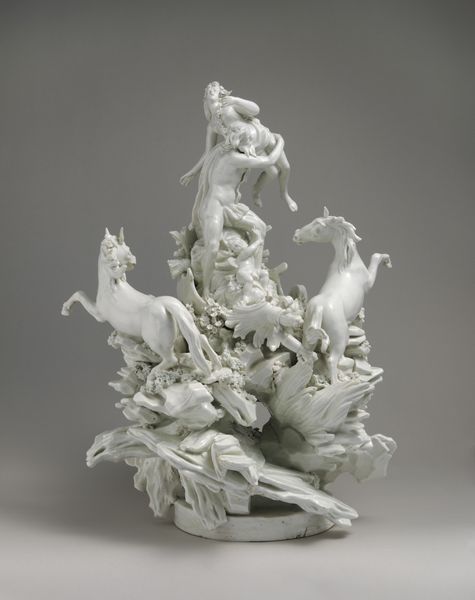
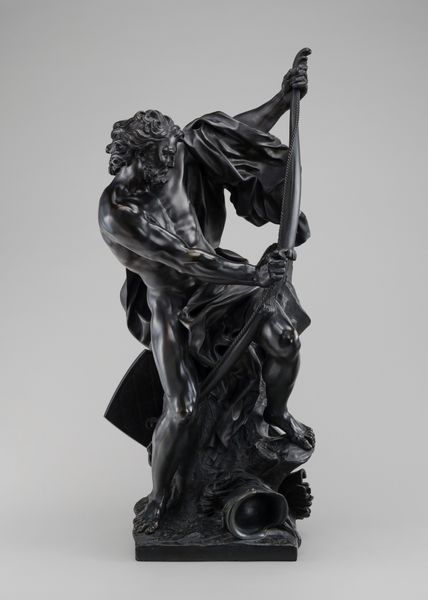
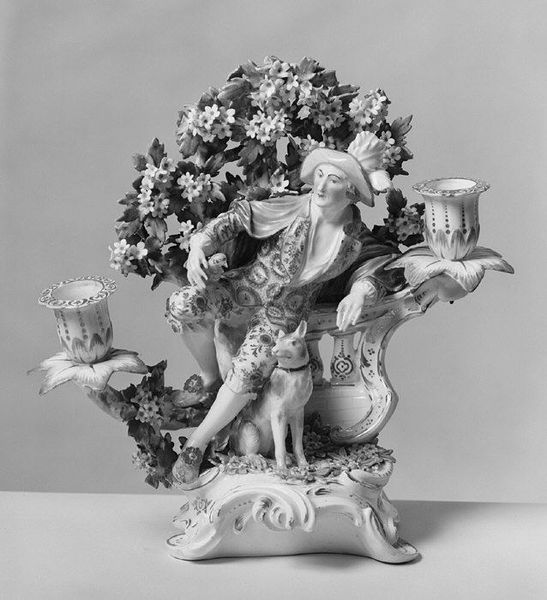
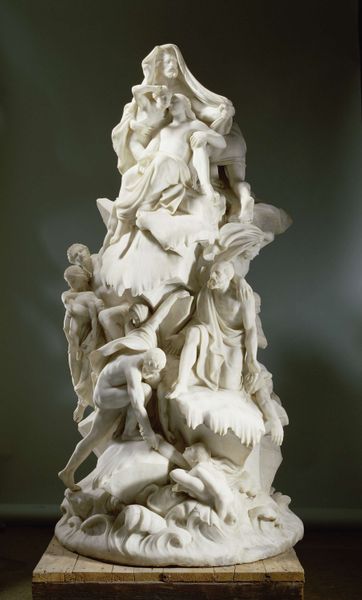
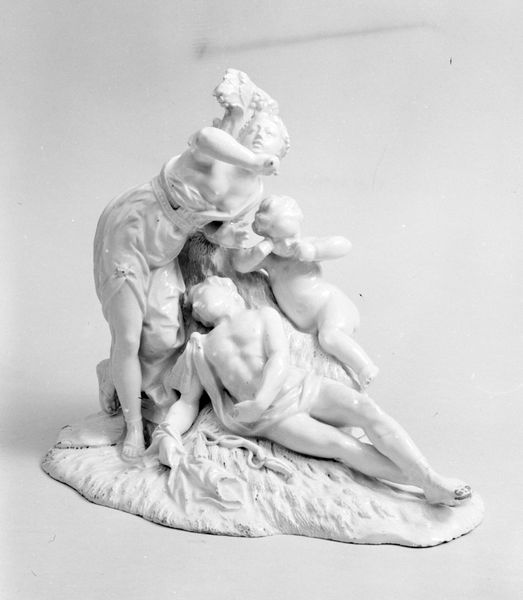
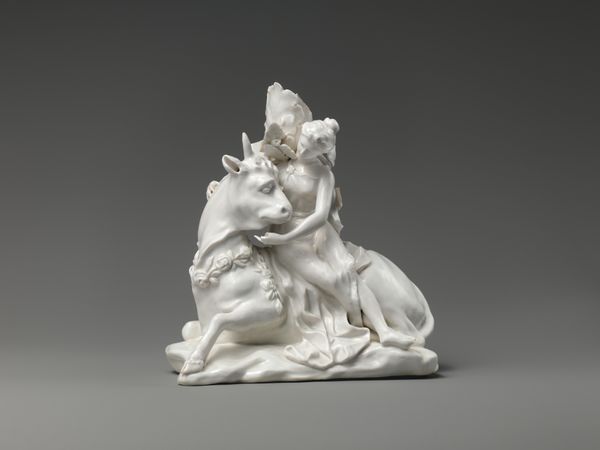
Curator: Here we have "Centerpiece," a dazzling porcelain sculpture created by the Cozzi Manufactory sometime between 1765 and 1785. You can find it on display here at the Metropolitan Museum of Art. Editor: My initial impression? The monochromatic glaze almost mutes the dramatic dynamism of the composition. All that baroque energy, rendered in such pristine, controlled porcelain, it's quite striking! Curator: Absolutely. It's a perfect example of how European decorative arts of the period were striving for refinement while navigating complex symbolic messages for an aristocratic clientele. Consider the triumphant male figure; he embodies neoclassical ideals. Editor: Yes, the upward thrust of the figure, echoed in the horses' poses, creates a powerful sense of movement. And the careful detailing in the horses' musculature and flowing manes adds a sense of realism to the fantastical scene. Semiotically, we might read the horses as representing harnessed power, maybe even Neptune himself. Curator: Indeed. The sculptural style harkens back to classical statuary, meant to evoke a sense of Roman grandeur and power—a clear nod to the artistic values circulating amongst European elite at the time. Owning something like this was undoubtedly a statement of status and sophisticated taste. Editor: The limited color palette, in this sense, could represent restraint, intellectualism. The rejection of flamboyance in favor of this cool elegance... a conscious choice, wouldn’t you agree? It guides the eye, doesn’t allow any detail to overpower the piece as a whole. Curator: I think so. And the fact that it functions as a "Centerpiece" is very telling. It becomes not only a sculpture, but a focal point of social ritual. Courtly society valued displaying such learned imagery during feasts and celebrations. Editor: Considering the placement within a dinner arrangement brings to mind ideas about display and consumption, both literal and metaphorical. Curator: Precisely. What’s particularly intriguing for me is considering the cultural moment. The tension between this idealized imagery and the impending revolutionary turmoil makes this piece even more fascinating. Editor: Yes. I see a structure created around formal choices with color, the material, and symbolic association all coalesce. It becomes this intricate visual and cultural artifact, a frozen narrative offering insights to the eighteenth century. Curator: A fitting description, and one that leaves me pondering the legacies that such works impart across eras. Editor: Agreed; sometimes the most rewarding approach involves exploring the interplay of visual impact and the cultural atmosphere, together.
Comments
No comments
Be the first to comment and join the conversation on the ultimate creative platform.
 Collect
 React
React Comment
More like this