About this artwork
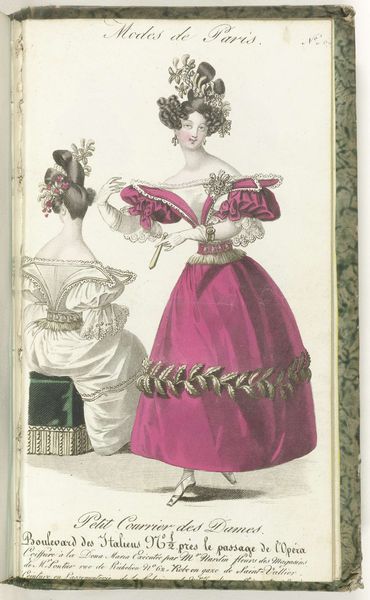
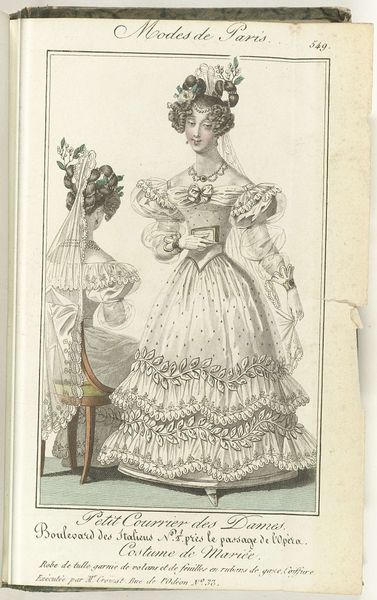
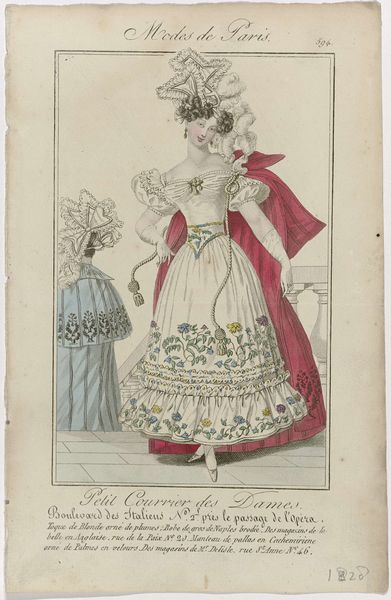
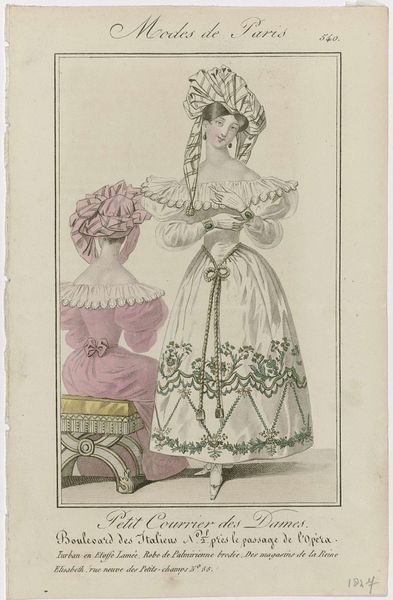
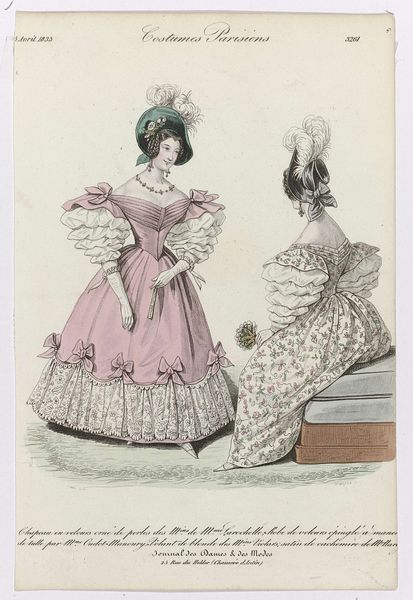
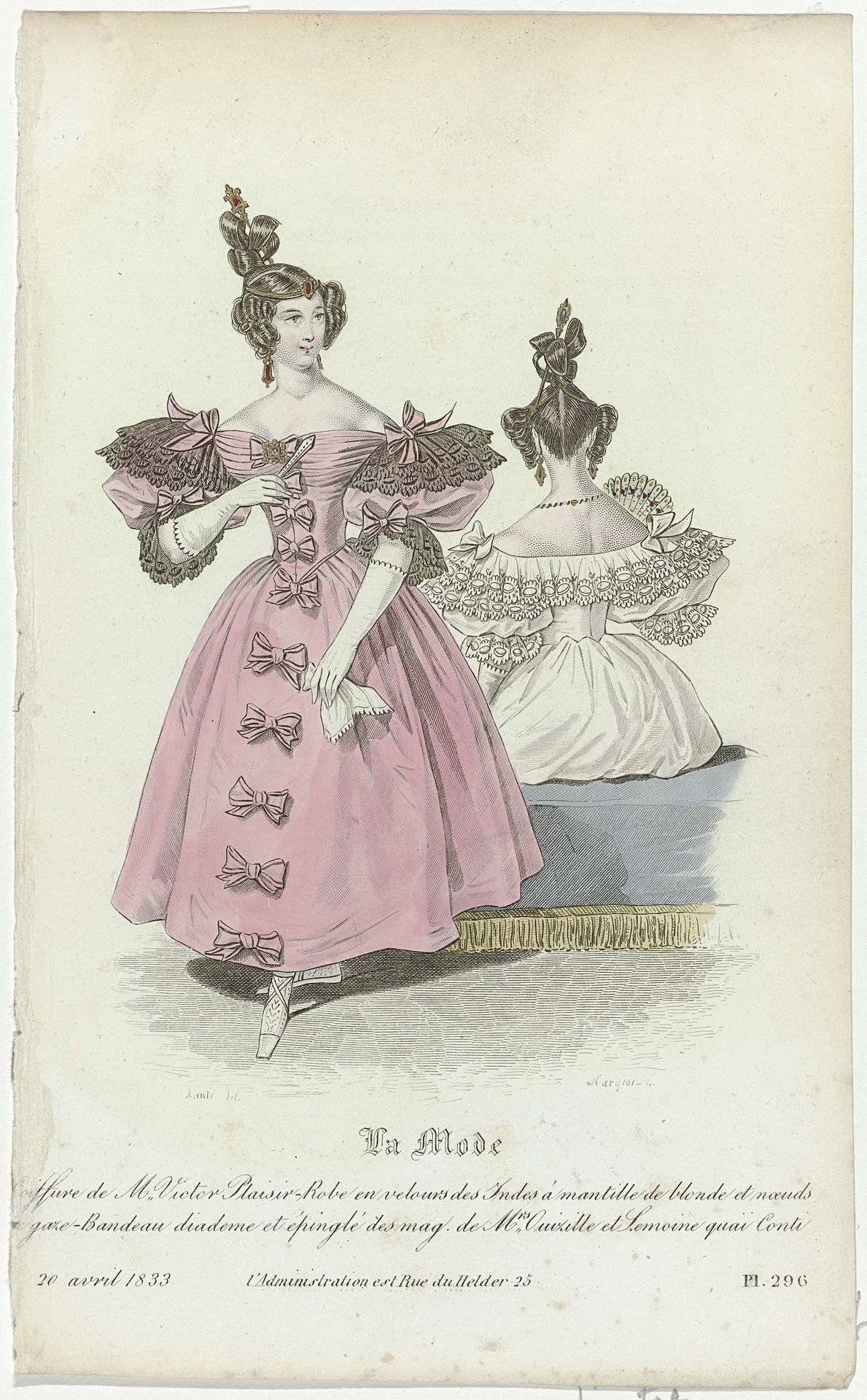
Curator: Here we have an etching from 1833, titled "La Mode, 20 avril 1833, Pl. 296: Coiffure de M. Victor Plaisir." It comes from Jean-Denis Nargeot. What catches your eye? Editor: Definitely the color, this gentle pink—it feels strangely delicate, almost like a faded dream of extravagance. It's also a little overwhelming. All those bows! Curator: The bows could signify more than mere decoration. In that era, adornments were potent signifiers of social status and even availability. The placement—descending down the dress—could subtly represent a path or journey, almost a story told through material symbols. Editor: Interesting point. I was thinking more about the process, how this etching allowed for mass dissemination of fashion trends. You see how precisely rendered the lace is; it was meant to inspire emulation and drive consumption, I suspect. What kind of labor would have gone into replicating that lace collar? Curator: Undoubtedly skilled labor, adding to the aspirational quality of the print. Notice how the figure's coiffure, specified in the title, isn't merely a hairstyle; it's an engineered aesthetic, an edifice practically. Editor: It's wild! And all that to participate in the performance of being fashionable. This image serves as a record of trends, a material document encoding social expectations, almost forcing these women into constrained molds— literal and figurative! Curator: Perhaps the bows themselves function dually, both as decorative enhancement and subtle constraints, cinching the wearer into a particular aesthetic framework... an appealing paradox. Editor: I hadn't thought of it that way. Thinking of it as 'cinching' really puts the fashion in its social and material place for me. Curator: Indeed. The print provides insight into an aesthetic, a moment, and perhaps most importantly, the enduring power of imagery to shape aspirations and social norms. Editor: Right. The work of reproducing these standards by hand, though! The human element, churning and pushing and pulling on material in the service of the decorative. Fascinating.
La Mode, 20 avril 1833, Pl. 296 : Coiffure de M. Victor Plaisir (...)
1833

Artwork details
- Medium
- drawing, print, etching
- Dimensions
- height 227 mm, width 140 mm
- Copyright
- Rijks Museum: Open Domain
Tags
Comments
Share your thoughts
About this artwork
Curator: Here we have an etching from 1833, titled "La Mode, 20 avril 1833, Pl. 296: Coiffure de M. Victor Plaisir." It comes from Jean-Denis Nargeot. What catches your eye? Editor: Definitely the color, this gentle pink—it feels strangely delicate, almost like a faded dream of extravagance. It's also a little overwhelming. All those bows! Curator: The bows could signify more than mere decoration. In that era, adornments were potent signifiers of social status and even availability. The placement—descending down the dress—could subtly represent a path or journey, almost a story told through material symbols. Editor: Interesting point. I was thinking more about the process, how this etching allowed for mass dissemination of fashion trends. You see how precisely rendered the lace is; it was meant to inspire emulation and drive consumption, I suspect. What kind of labor would have gone into replicating that lace collar? Curator: Undoubtedly skilled labor, adding to the aspirational quality of the print. Notice how the figure's coiffure, specified in the title, isn't merely a hairstyle; it's an engineered aesthetic, an edifice practically. Editor: It's wild! And all that to participate in the performance of being fashionable. This image serves as a record of trends, a material document encoding social expectations, almost forcing these women into constrained molds— literal and figurative! Curator: Perhaps the bows themselves function dually, both as decorative enhancement and subtle constraints, cinching the wearer into a particular aesthetic framework... an appealing paradox. Editor: I hadn't thought of it that way. Thinking of it as 'cinching' really puts the fashion in its social and material place for me. Curator: Indeed. The print provides insight into an aesthetic, a moment, and perhaps most importantly, the enduring power of imagery to shape aspirations and social norms. Editor: Right. The work of reproducing these standards by hand, though! The human element, churning and pushing and pulling on material in the service of the decorative. Fascinating.
Comments
Share your thoughts