About this artwork
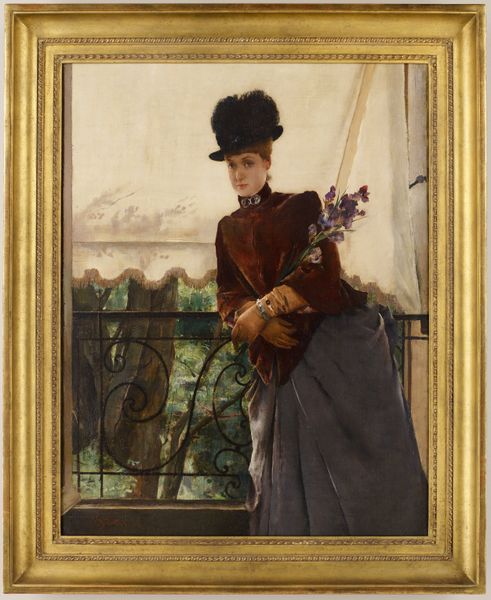
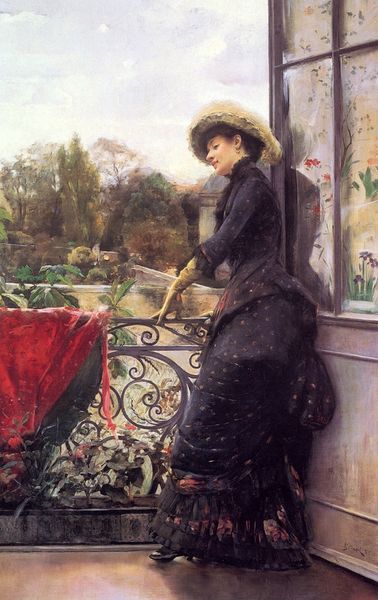
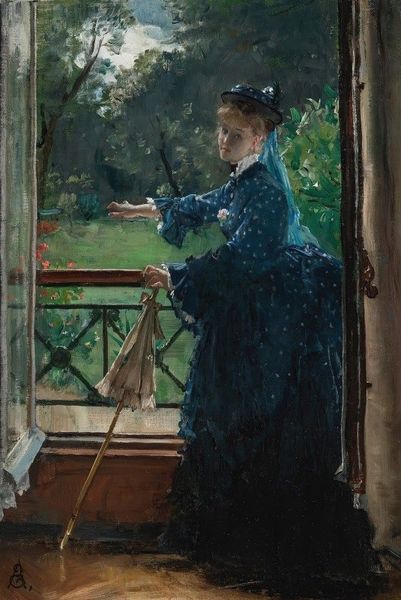
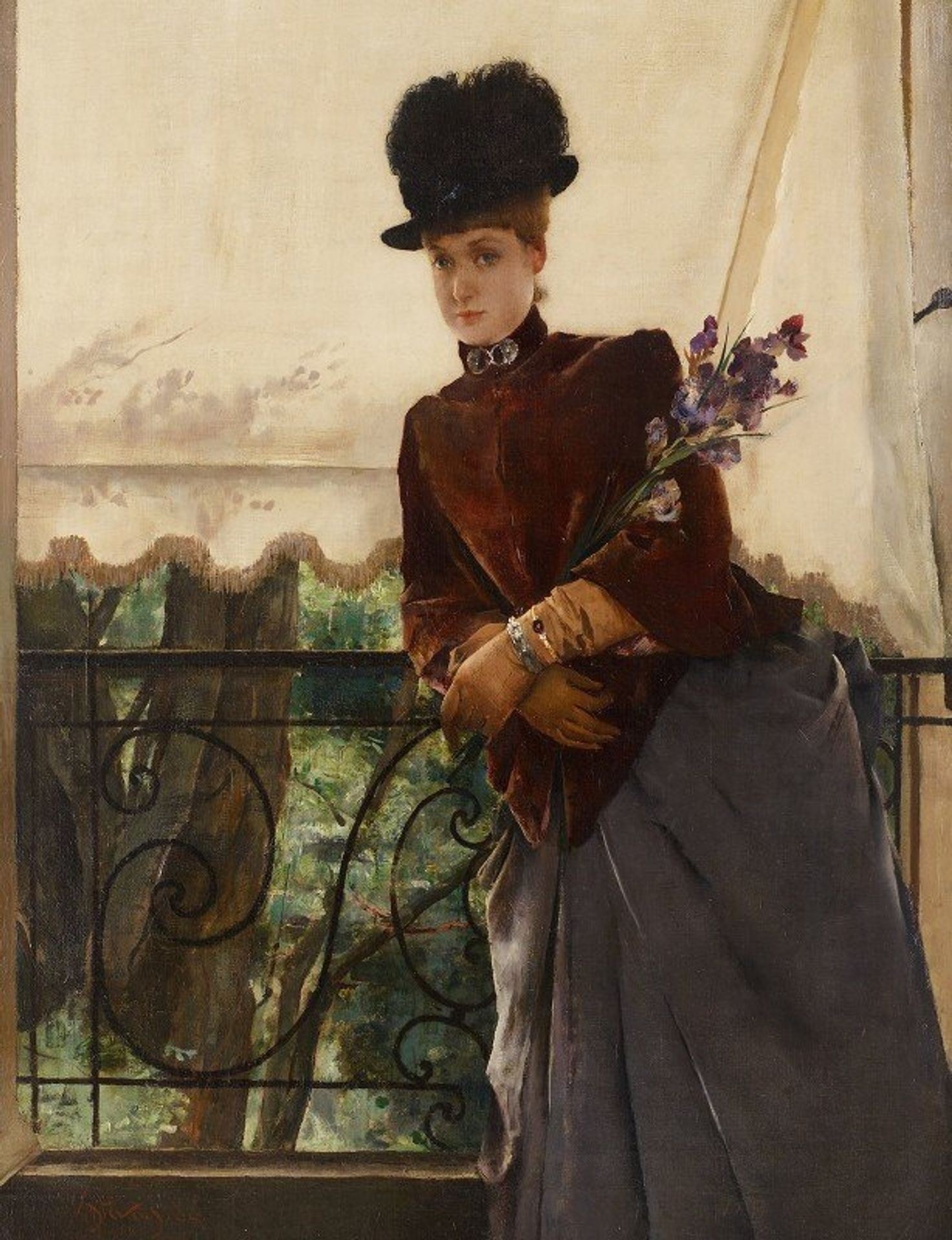
Alfred Stevens painted "Portrait of Mademoiselle Dubois" during a time of significant shifts in gender and class dynamics, especially within the rising bourgeoisie. This portrait captures a poised woman, who could be interpreted as being confined and restricted in her role, gazing beyond the balcony as if seeking more. Her elegant attire, while indicative of a certain social standing, seems to subtly highlight the performative nature of bourgeois identity. Is the artist telling us that class can also be a kind of constraint? How free is this woman? Stevens, like other artists of his time, navigates the complexities of portraying women: he both acknowledges and gently critiques the conventional representations of women in art. How does Mademoiselle Dubois stand, what does her gaze tell us about the constraints of her place in society? By subtly challenging traditional portrayals, Stevens invites us to consider the nuanced experiences of women within the societal structures of his time.

Artwork details
- Medium
- oil-paint
- Copyright
- Public Domain: Artvee
Tags
Comments
Share your thoughts
About this artwork
Alfred Stevens painted "Portrait of Mademoiselle Dubois" during a time of significant shifts in gender and class dynamics, especially within the rising bourgeoisie. This portrait captures a poised woman, who could be interpreted as being confined and restricted in her role, gazing beyond the balcony as if seeking more. Her elegant attire, while indicative of a certain social standing, seems to subtly highlight the performative nature of bourgeois identity. Is the artist telling us that class can also be a kind of constraint? How free is this woman? Stevens, like other artists of his time, navigates the complexities of portraying women: he both acknowledges and gently critiques the conventional representations of women in art. How does Mademoiselle Dubois stand, what does her gaze tell us about the constraints of her place in society? By subtly challenging traditional portrayals, Stevens invites us to consider the nuanced experiences of women within the societal structures of his time.
Comments
Share your thoughts