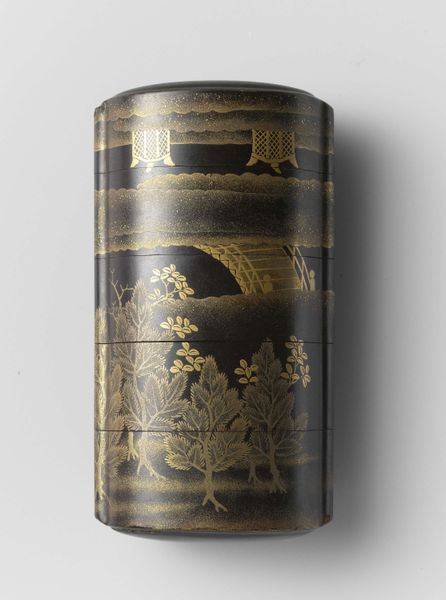
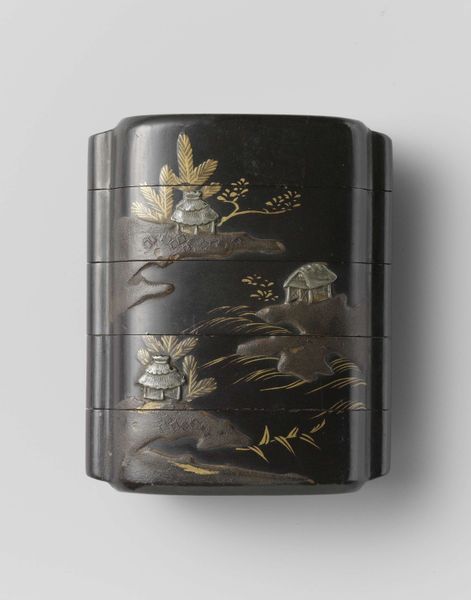
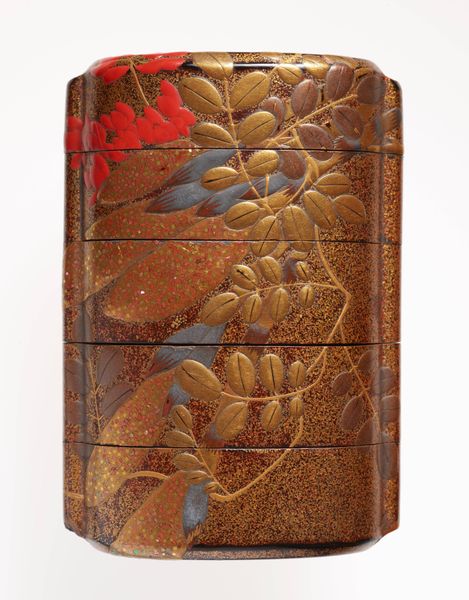
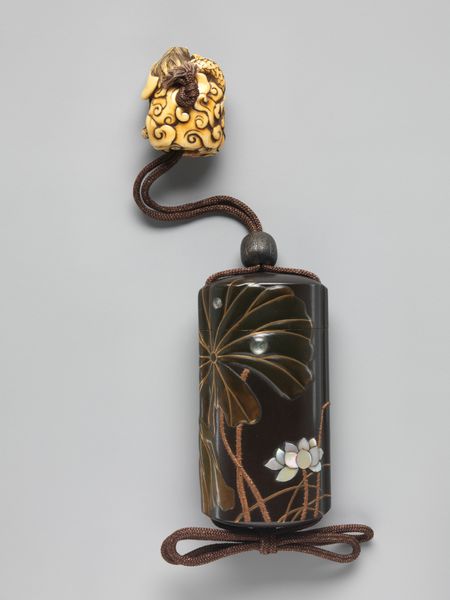
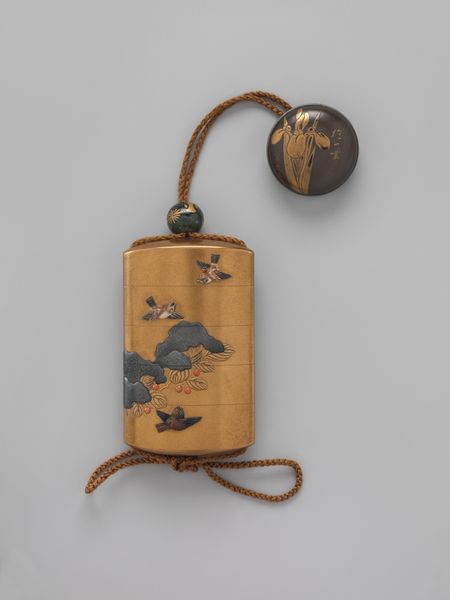
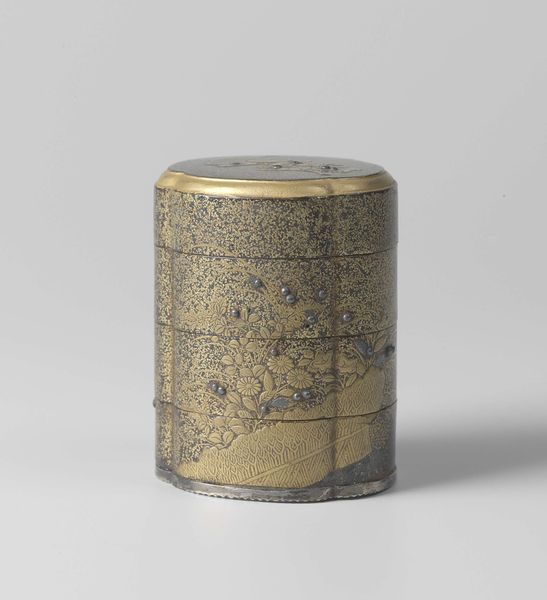
Four-case inro showing two birds seated on branch of tree c. 19th century
0:00
0:00


ceramic
#
portrait
#
byzantine-art
#
sculpture
#
asian-art
#
ceramic
#
japan
#
sculptural image
#
figuration
#
intimism
#
ceramic
#
miniature
Dimensions: 2 3/4 × 2 1/8 × 7/8 in. (6.99 × 5.4 × 2.22 cm)
Copyright: Public Domain
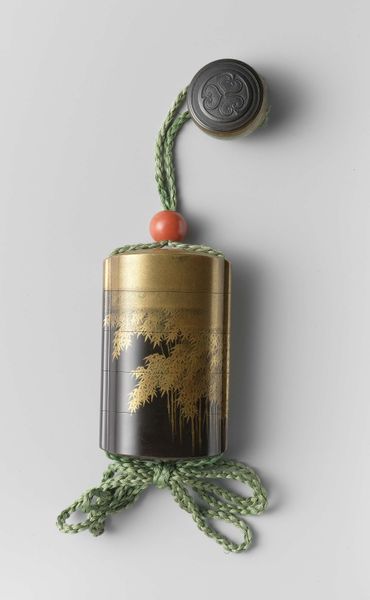
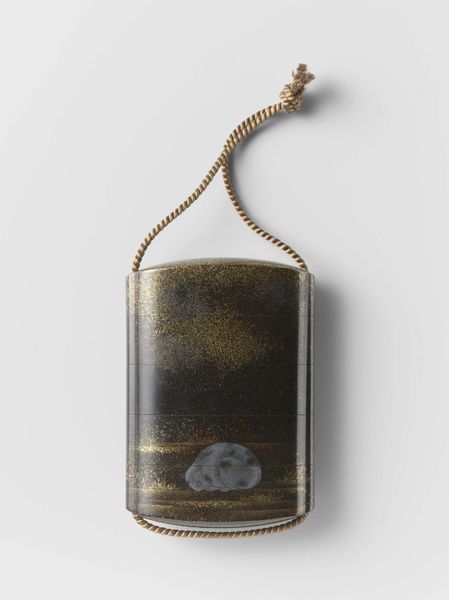
Editor: This object is a four-case inro, created around the 19th century by Jōkasai VIII. The inro is adorned with two birds perched on a tree branch. What strikes me is the almost industrial feel of the form, despite the delicate painting. What do you make of it? Curator: It’s fascinating to consider this inro through a materialist lens. Think about the labor involved in creating such a functional object. The careful selection and preparation of the lacquer, the carving and joining of the cases, and the intricate painting - all reflect specific techniques and a division of labor that existed in 19th century Japan. Editor: That's a good point, I hadn't considered that. How does the material itself influence its value, beyond its practical use? Curator: The inro's value is intrinsically linked to the materials and craftsmanship. Lacquer, especially high-quality lacquer like that used here, was a costly and highly prized material. The artistry applied elevates it further, transforming it from a mere container into a coveted object. Consider, too, the context of consumption – who would have owned and used such an item, and what does that tell us about social hierarchies? Editor: It's interesting how a utilitarian object can be elevated to art based on material and social context. What is it made of, exactly? Curator: The primary material is lacquered wood, possibly with metal detailing in the decoration. Each layer of lacquer is meticulously applied and polished. Editor: So it's not just about the image, but the entire production process, from raw materials to final polish. I'll definitely be looking at these objects differently now! Curator: Precisely. Examining the labor, the materials, and the means of production offers a valuable perspective.
Comments

minneapolisinstituteofart over 2 years ago
⋮
This medicine container (inrō) shows two sets of delicately rendered birds sitting on the branches of a blossoming cherry tree. Though the background has dulled with age, at one point the bright silver (ginji) ground would have shone vividly. This was achieved by coating a granular dusting of silver onto the wet lacquer, and once dried, grinding and shining the surface. The gold maki-e detailing in the blossoms of the cherry trees and inquisitive eyes of the birds offers a striking contrast to the dusk background.


Join the conversation
Join millions of artists and users on Artera today and experience the ultimate creative platform.
 Collect
More like this