print, photography, gelatin-silver-print
ship
landscape
photography
gelatin-silver-print
cityscape
modernism
realism
Dimensions: height 165 mm, width 225 mm, height 300 mm, width 360 mm
Copyright: Rijks Museum: Open Domain
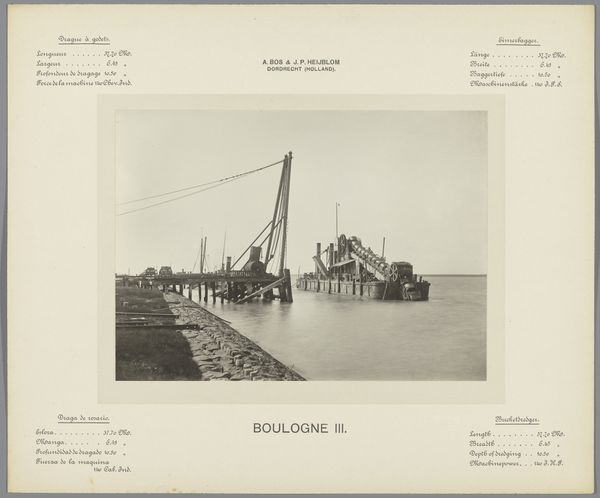
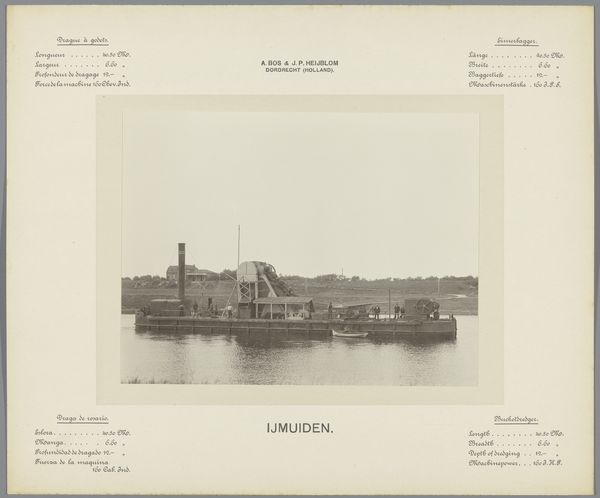
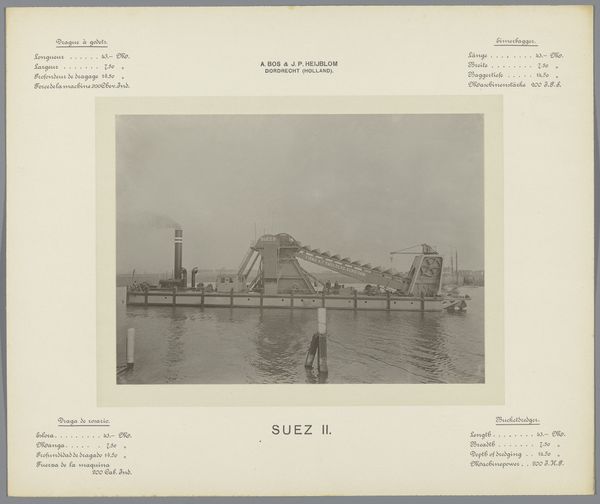
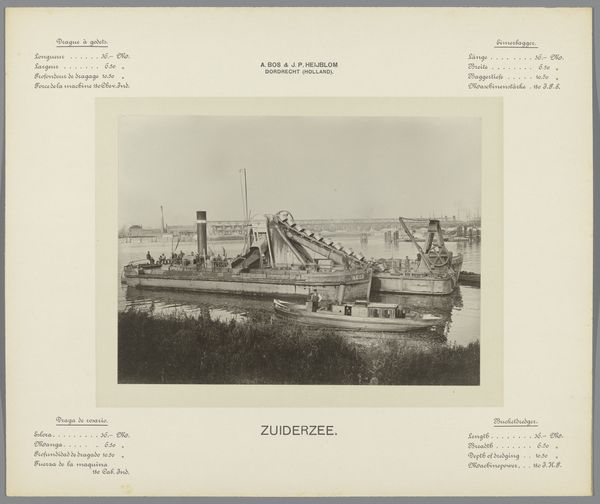
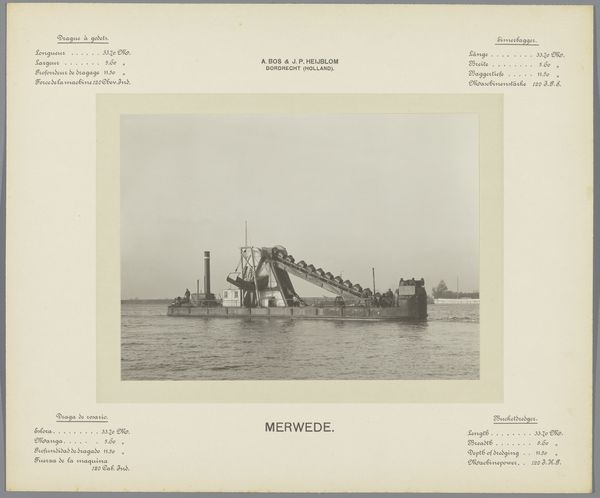
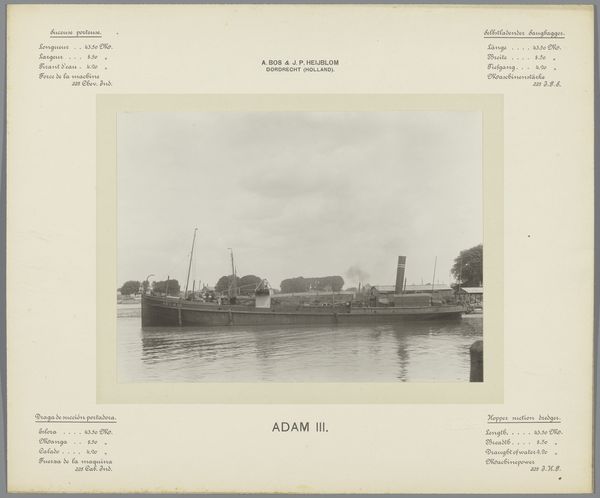
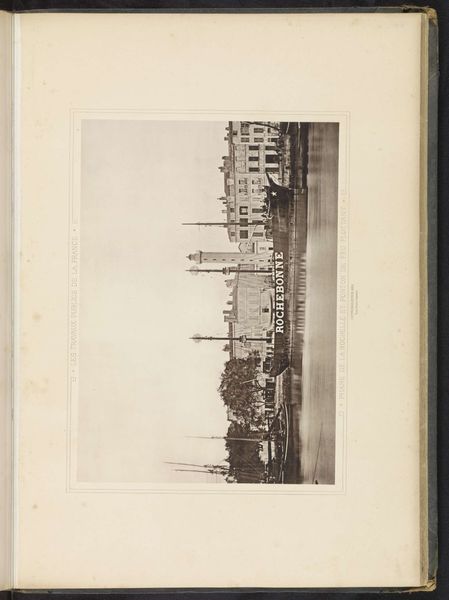
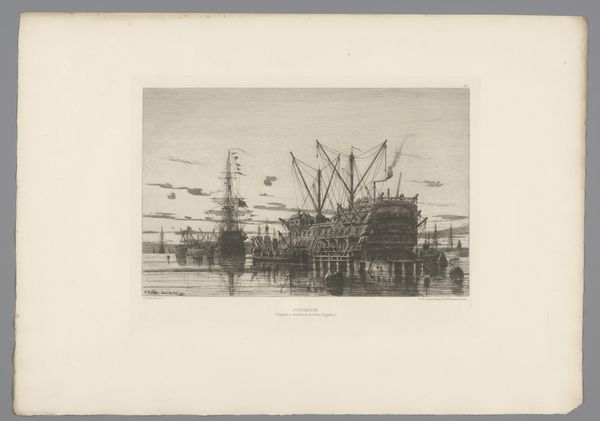
Curator: Immediately, I'm struck by its stillness. The water is like glass, reflecting the heavy machinery. There's a palpable industrial melancholy to it. Editor: That’s a sharp observation. This is a gelatin-silver print titled "America," taken sometime between 1900 and 1910, most likely by the Dutch photographer Henricus Jacobus Tollens. It depicts a dredging ship, quite likely in a harbor. What draws me in is the context. Consider this was a time when industrial prowess was seen as the key to a nation's power, maybe even destiny. Curator: Absolutely, it is more than just a depiction of machinery; it becomes a symbol. What kind of symbol exactly do you imagine? I'm wondering about the etymology, which means “to drag”. Dragging from where to where? From under, for above. This ship is literally shaping and creating landscapes for expansion and commerce. It almost reminds one of a great, hungry mechanical beast feeding off the waterways to clear its path. Editor: A "hungry mechanical beast," a superb articulation of it! The iconographic weight lies in that very tension. There is progress—or rather a kind of mythos about that idea—and the looming specter of nature, always yielding but never defeated. What strikes me is how the artist managed to humanize a very inhuman creation, in my opinion. The framing and use of light makes it a monumental portrait almost, don’t you think? Curator: I do. You can even read the photograph as propaganda on some level. The clean lines of the ship juxtaposed with the somewhat murky water hint at this sense of taming the chaos and disorder with pure industry. "America", as it is so boldly labeled. It all evokes progress, control, and a very nationalistic pride. Editor: Exactly. This image reminds us that art doesn't always reside in portraits or landscapes. It thrives even in the representation of industrial machinery and can serve as a looking glass for our cultural aspirations, ambitions, and even our anxieties, regarding progress. Curator: Precisely. Seeing the convergence of technological advancement and the very essence of nature provides invaluable glimpses into the complexities of a society's aspirations. Editor: An insight I'll surely take with me, seeing how the humblest photographs from a bygone era open expansive windows to what shapes us now.
Comments
No comments
Be the first to comment and join the conversation on the ultimate creative platform.
 React
React Comment