About this artwork
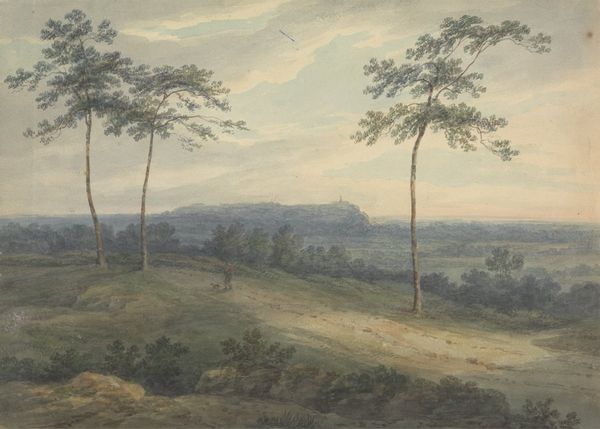
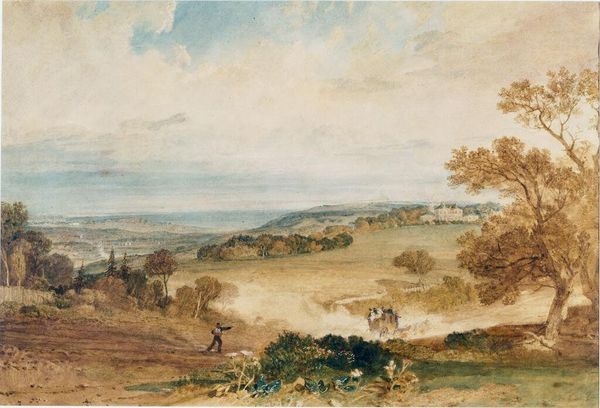
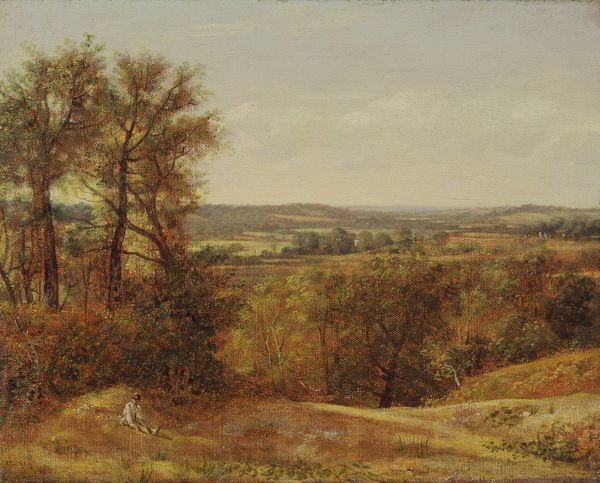
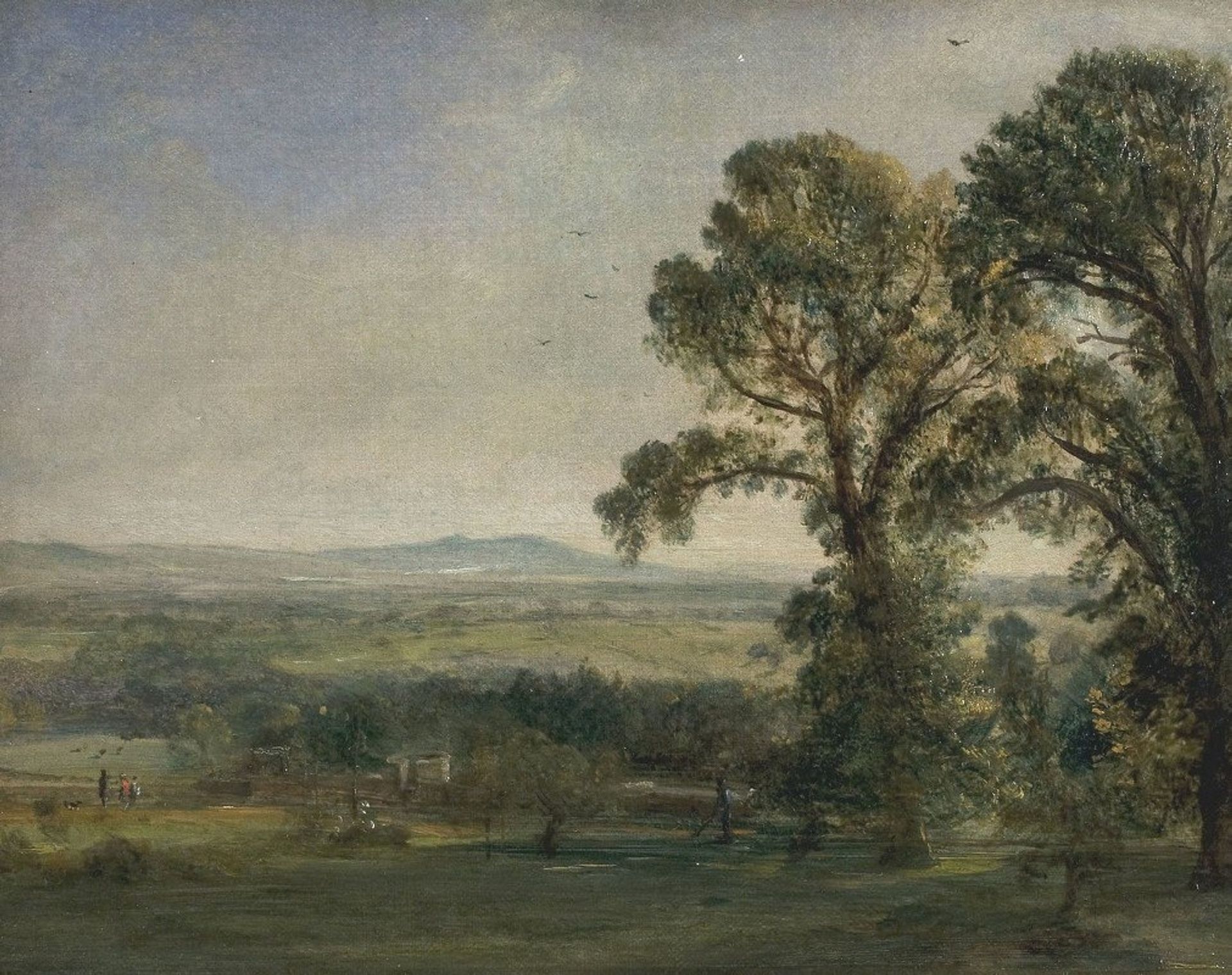
John Constable painted ‘Bardon Hill, Coleorton Hall’ during a time of immense agricultural change in England. As industrialization pushed many from rural life to urban centers, the landed gentry maintained their power through ownership of vast estates. Constable's landscapes often subtly reflect these socio-economic tensions, as the idyllic scenes mask the realities of labor and land ownership. Here, the rolling hills of Leicestershire, viewed from Coleorton Hall, evoke a sense of pastoral harmony. Yet, this harmony is framed, literally and figuratively, by the estate's boundaries. The figures in the lower left are small against the landscape and suggest a kind of class hierarchy. Constable’s choice to focus on the natural beauty, rather than the social dynamics, presents a particular narrative of English identity—one deeply rooted in the land, yet complicit in the era’s social inequalities. The emotional resonance of this painting lies in its quiet beauty, asking us to consider whose story is being told and at what cost.

Artwork details
- Medium
- painting, plein-air, watercolor
- Copyright
- Public Domain: Artvee
Tags
painting
plein-air
landscape
oil painting
watercolor
romanticism
watercolour illustration
watercolor
Comments
No comments
About this artwork
John Constable painted ‘Bardon Hill, Coleorton Hall’ during a time of immense agricultural change in England. As industrialization pushed many from rural life to urban centers, the landed gentry maintained their power through ownership of vast estates. Constable's landscapes often subtly reflect these socio-economic tensions, as the idyllic scenes mask the realities of labor and land ownership. Here, the rolling hills of Leicestershire, viewed from Coleorton Hall, evoke a sense of pastoral harmony. Yet, this harmony is framed, literally and figuratively, by the estate's boundaries. The figures in the lower left are small against the landscape and suggest a kind of class hierarchy. Constable’s choice to focus on the natural beauty, rather than the social dynamics, presents a particular narrative of English identity—one deeply rooted in the land, yet complicit in the era’s social inequalities. The emotional resonance of this painting lies in its quiet beauty, asking us to consider whose story is being told and at what cost.
Comments
No comments