About this artwork
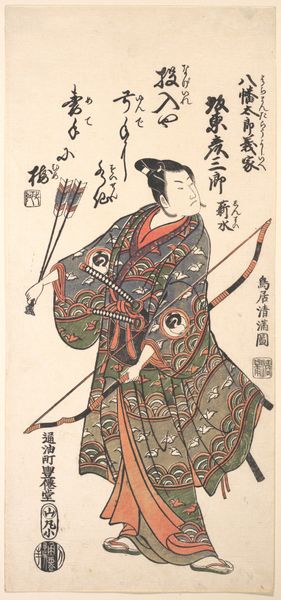
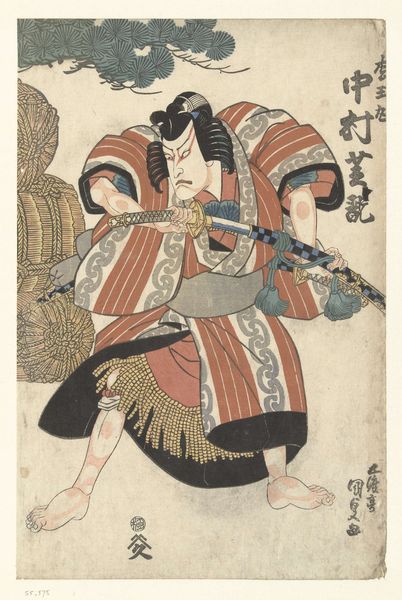
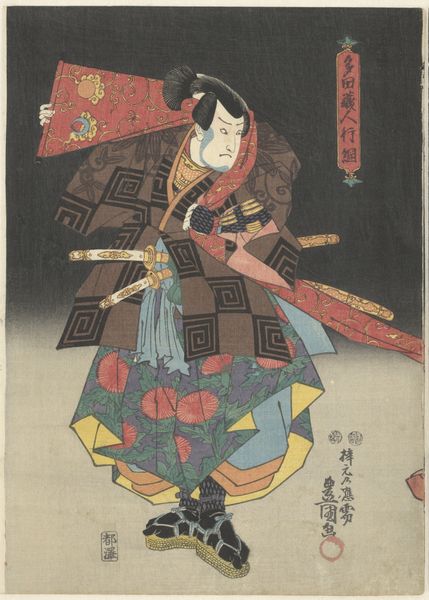
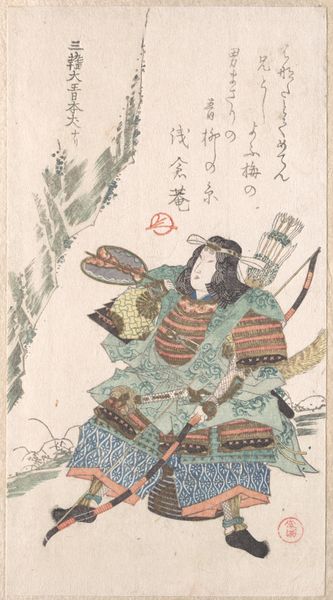
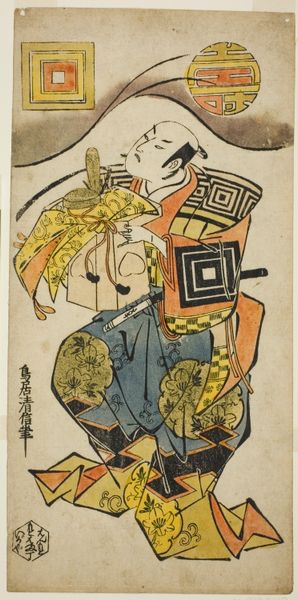
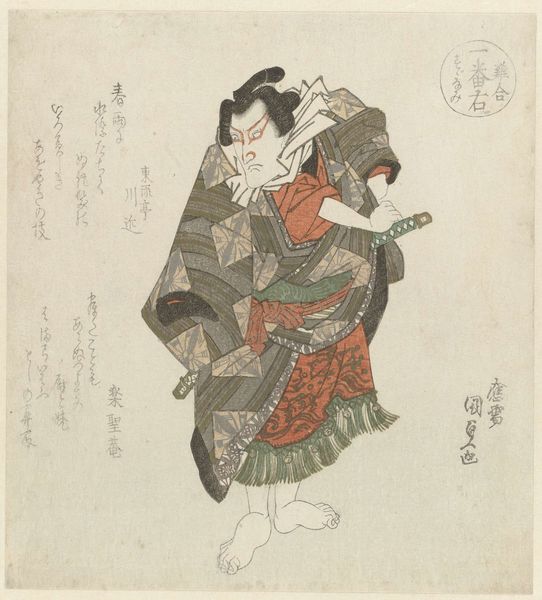
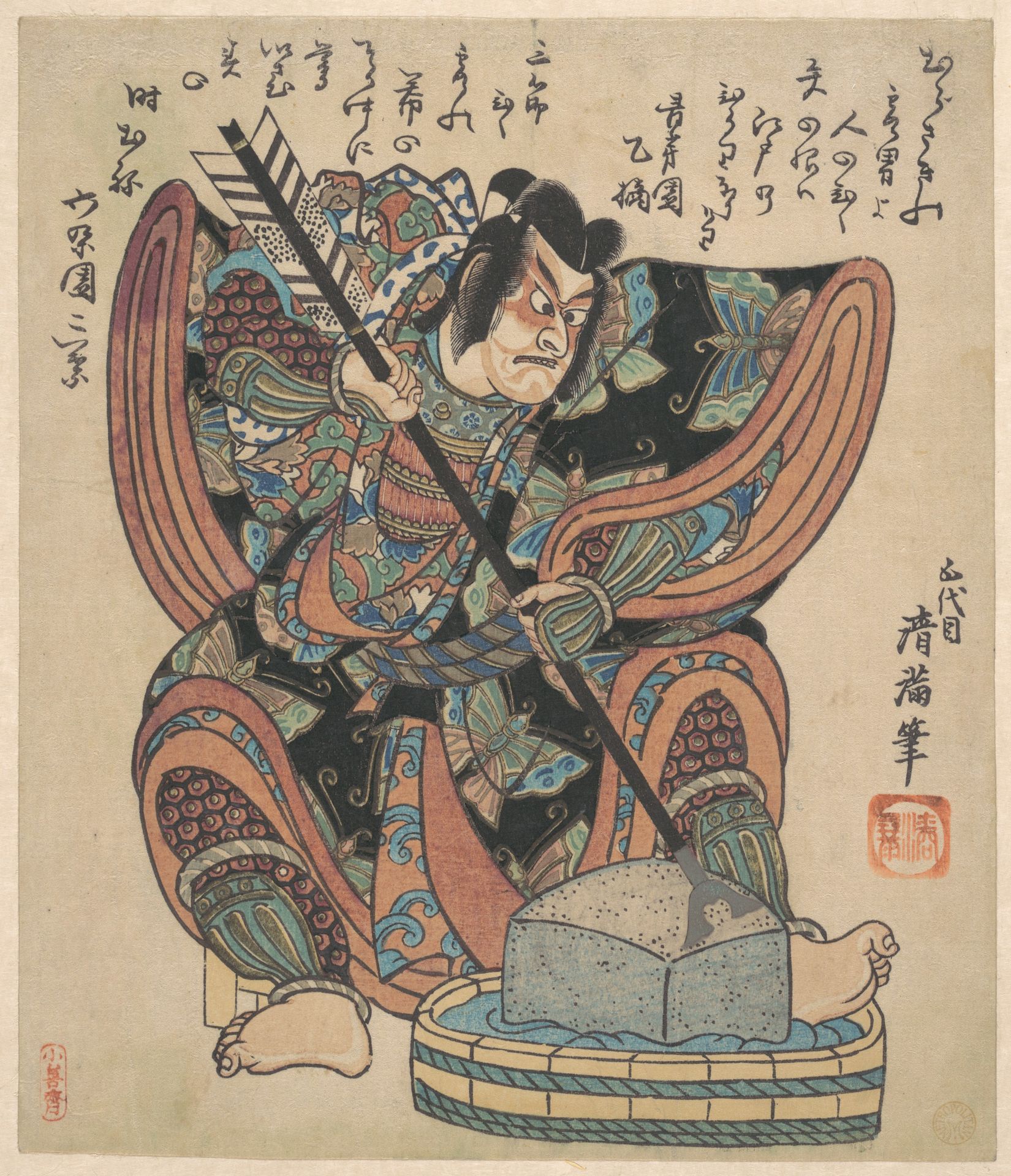
Torii Kiyomine created this woodblock print depicting Ichikawa Danjuro II in the role of Soga Goro, sometime in the late 18th or early 19th century. Kiyomine was a member of the Torii school, who almost exclusively made prints of actors. This print is not just a portrait; it captures the essence of Kabuki, a highly stylized form of Japanese theater. Kabuki was hugely popular, but it existed within a rigid social hierarchy. Certain roles, like that of the onnagata, or female impersonator, reveal how gender was performed and perceived in the Edo period. Kabuki allowed for emotional expression in a society that otherwise prized restraint. Notice the actor's intense gaze and posture. The print serves as a mirror reflecting not just an image, but also the complex interplay of identity, performance, and societal expectations.
Ichikawa Danjuro II in the Role of Soga Goro from the Play "Yanone"
1810 - 1830


Artwork details
- Medium
- Dimensions
- 8 7/16 x 7 3/16 in. (21.4 x 18.3 cm)
- Location
- Metropolitan Museum of Art, New York, NY
- Copyright
- Public Domain
Tags
Comments
Share your thoughts
About this artwork
Torii Kiyomine created this woodblock print depicting Ichikawa Danjuro II in the role of Soga Goro, sometime in the late 18th or early 19th century. Kiyomine was a member of the Torii school, who almost exclusively made prints of actors. This print is not just a portrait; it captures the essence of Kabuki, a highly stylized form of Japanese theater. Kabuki was hugely popular, but it existed within a rigid social hierarchy. Certain roles, like that of the onnagata, or female impersonator, reveal how gender was performed and perceived in the Edo period. Kabuki allowed for emotional expression in a society that otherwise prized restraint. Notice the actor's intense gaze and posture. The print serves as a mirror reflecting not just an image, but also the complex interplay of identity, performance, and societal expectations.
Comments
Share your thoughts