drawing, print, watercolor
#
drawing
# print
#
11_renaissance
#
watercolor
#
watercolour illustration
Dimensions: sheet: 4 11/16 x 6 3/16 in. (11.9 x 15.7 cm)
Copyright: Public Domain
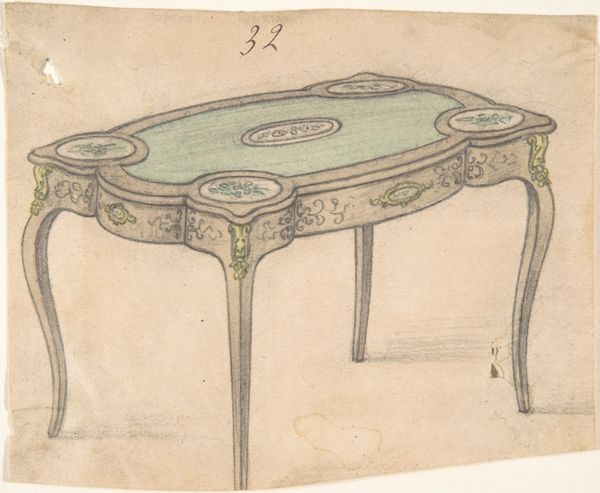
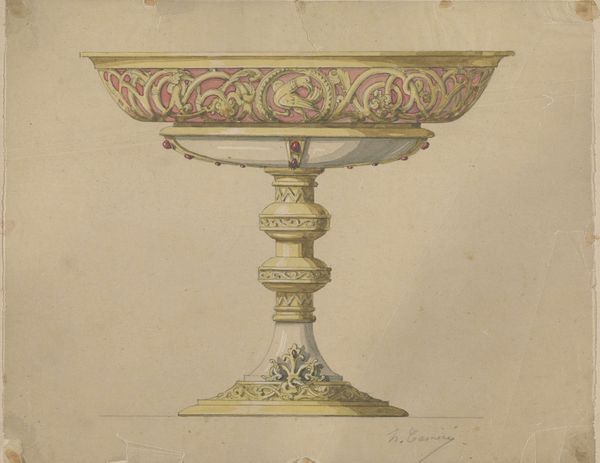
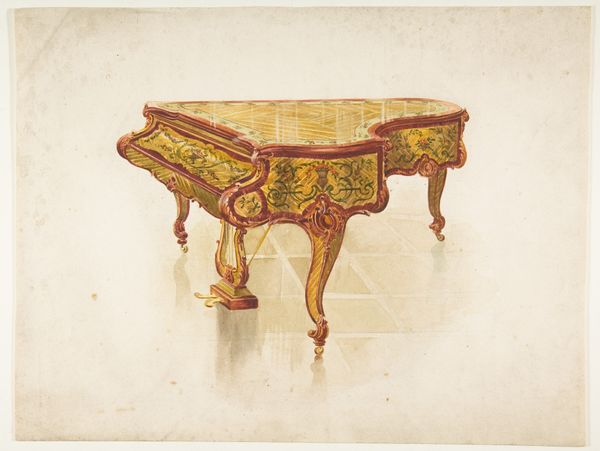
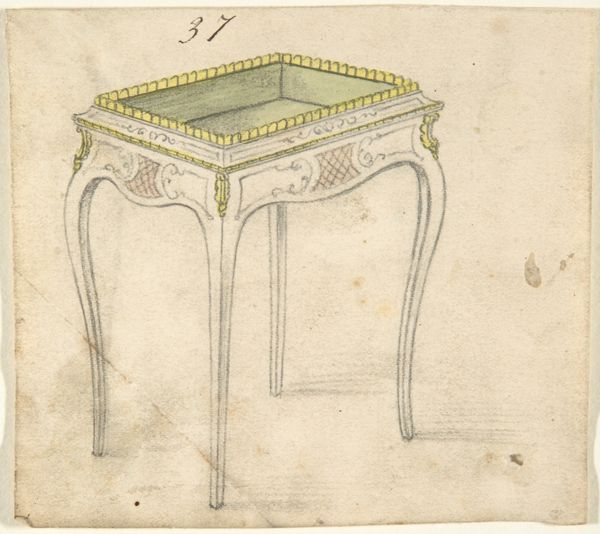
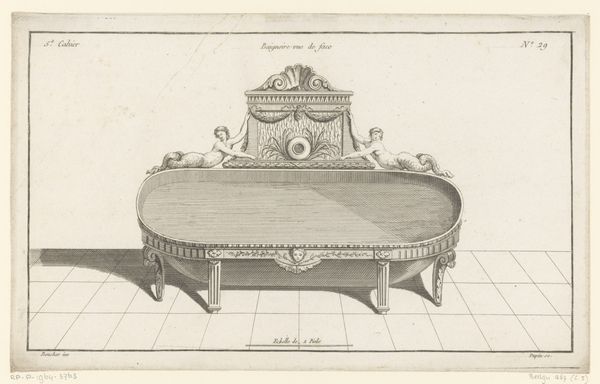
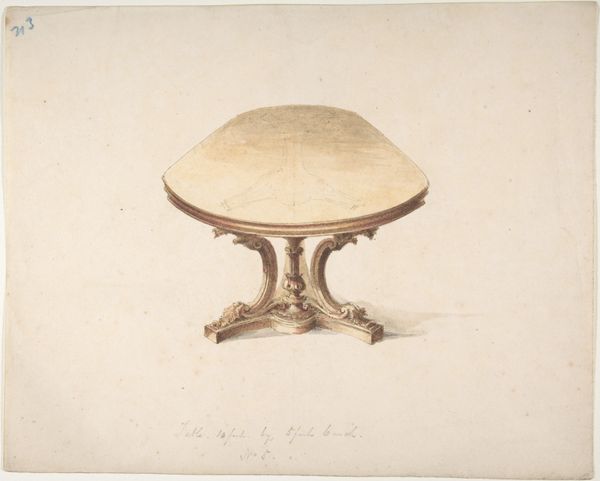
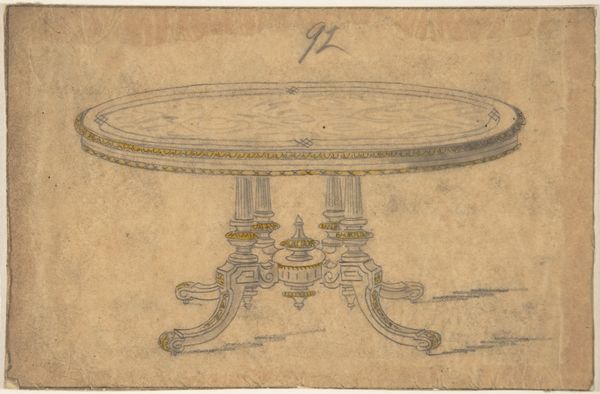
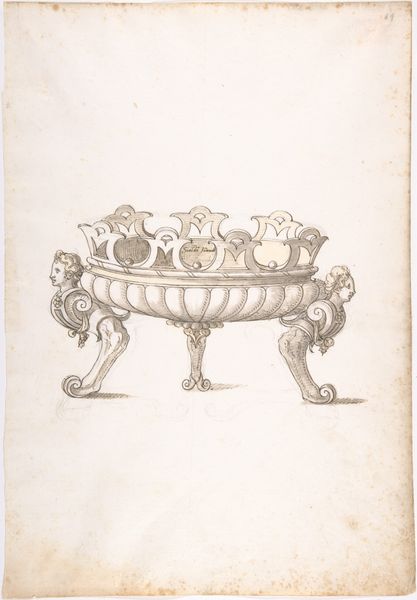
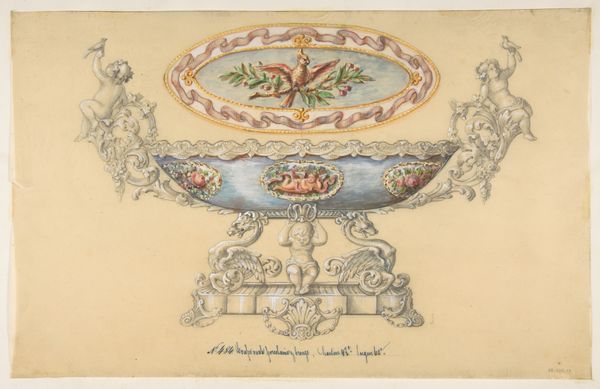
Editor: Here we have an anonymous watercolor and print, “Design for a Round Renaissance Style Table,” created sometime between 1800 and 1900. It's surprisingly ornate. All the curves and embellishments give it a real sense of, well, aristocratic excess. What’s your take on it? Curator: It’s easy to dismiss this as *just* a design for furniture, but that misses the broader cultural implications. Consider the fascination with the Renaissance during the 19th century. It was seen as a period of rebirth, a supposed escape from the constraints of the medieval period. Editor: I see your point. Almost a deliberate reaching back to an imagined golden age. Curator: Exactly. And who gets to participate in that "rebirth"? Who has the leisure, the resources, to commission such a table? Designs like this weren't just about aesthetics; they were statements of power and privilege. The level of detail and presumed craftsmanship speaks volumes about social stratification and artistic labor. The very act of creating such a decorative piece emphasizes how aesthetics are inextricably tied to class. Editor: That’s a really compelling perspective. I was so focused on the beauty of it, I didn't initially consider its connection to those in power. Curator: Ask yourself: whose history gets represented in art? The design harkens back to a period viewed, selectively, as a high point in civilization, usually told from a distinctly European, patriarchal point of view. Who were the people that didn't get to sit at this imagined table? Editor: So, it's more than just a table. It’s a symbol of exclusion, an embodiment of unequal power dynamics through art and design. Thanks, that's a new way to look at things. Curator: Absolutely. And by questioning these visual representations, we open doors to understanding the hidden narratives embedded within art history.
Comments
No comments
Be the first to comment and join the conversation on the ultimate creative platform.
 Collect
 React
React Comment
More like this