About this artwork
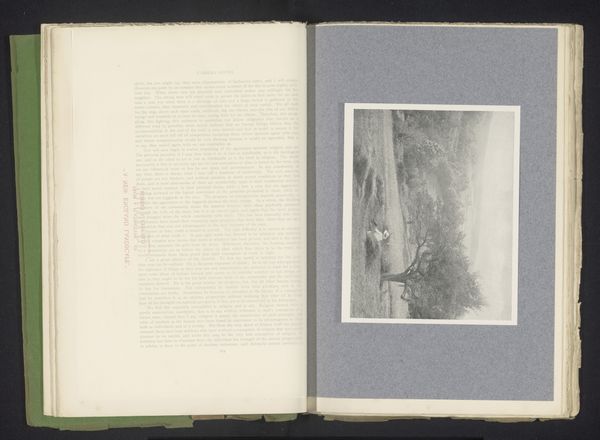
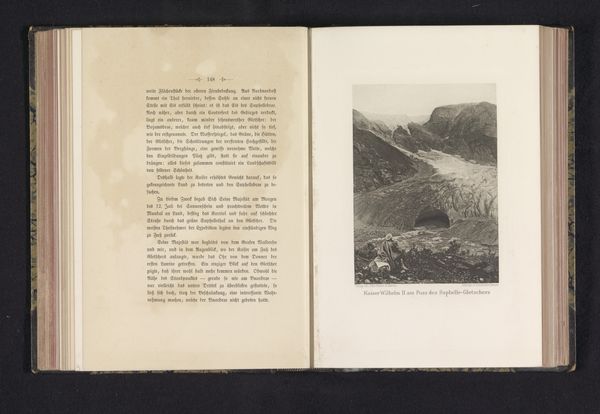
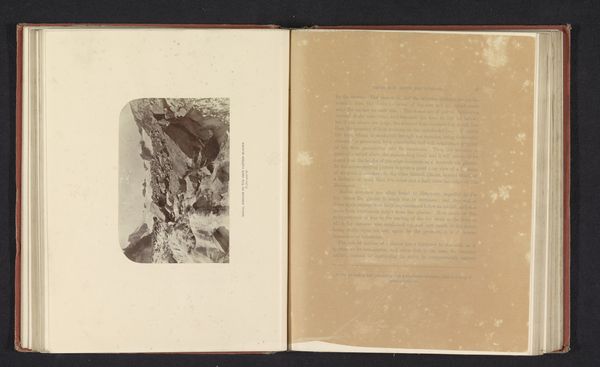
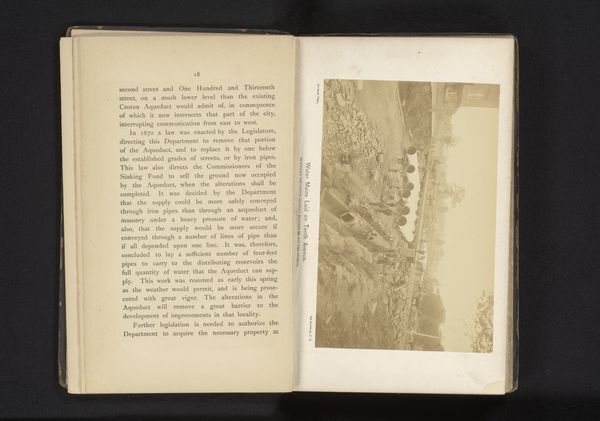
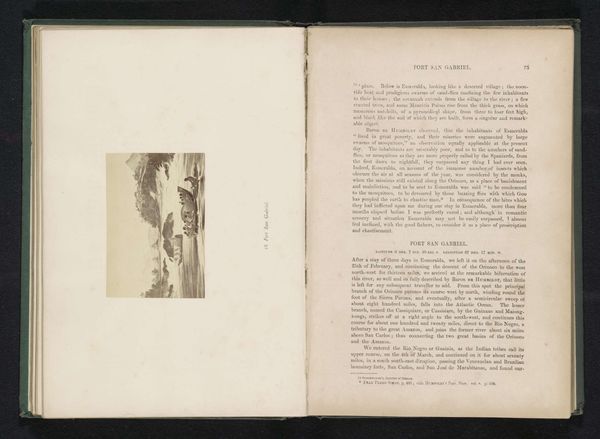
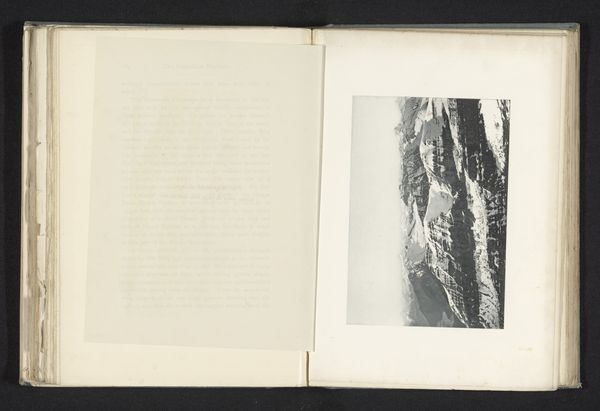
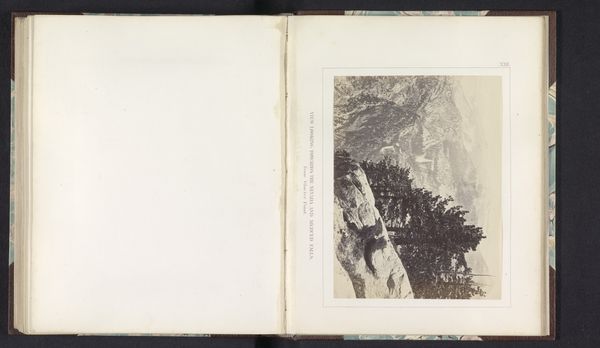
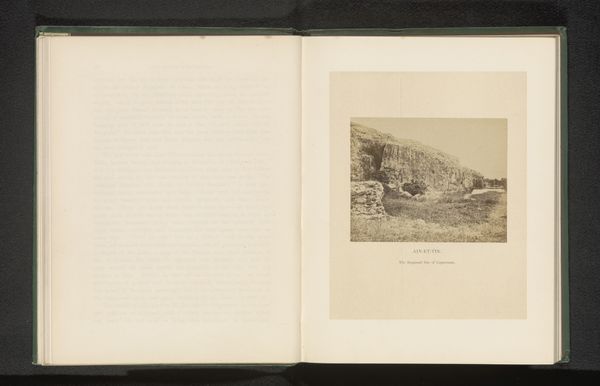
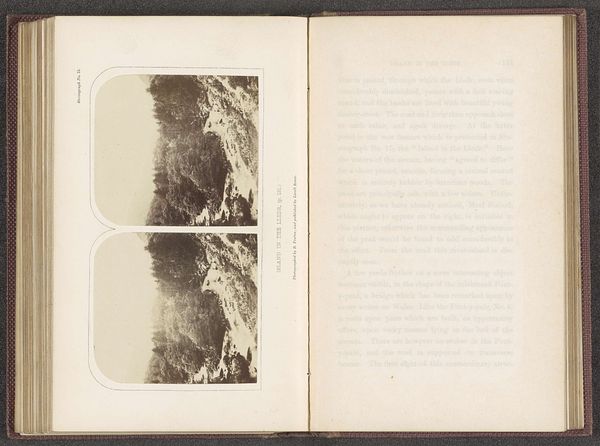
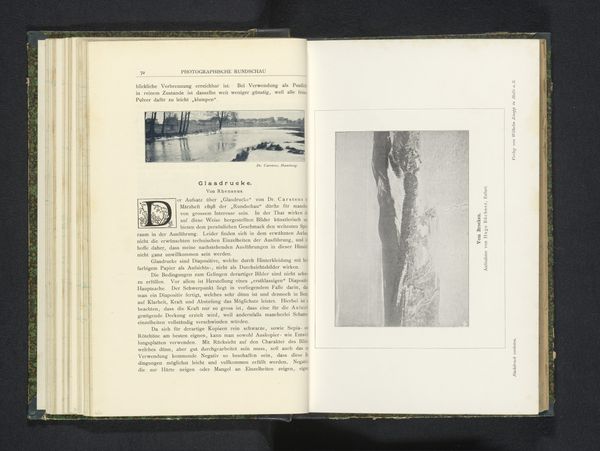
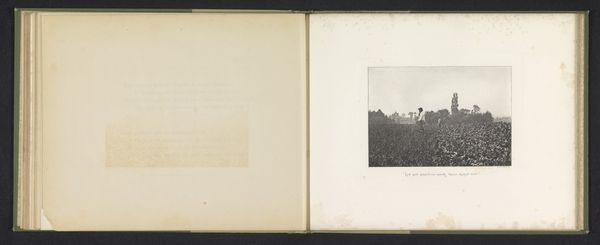
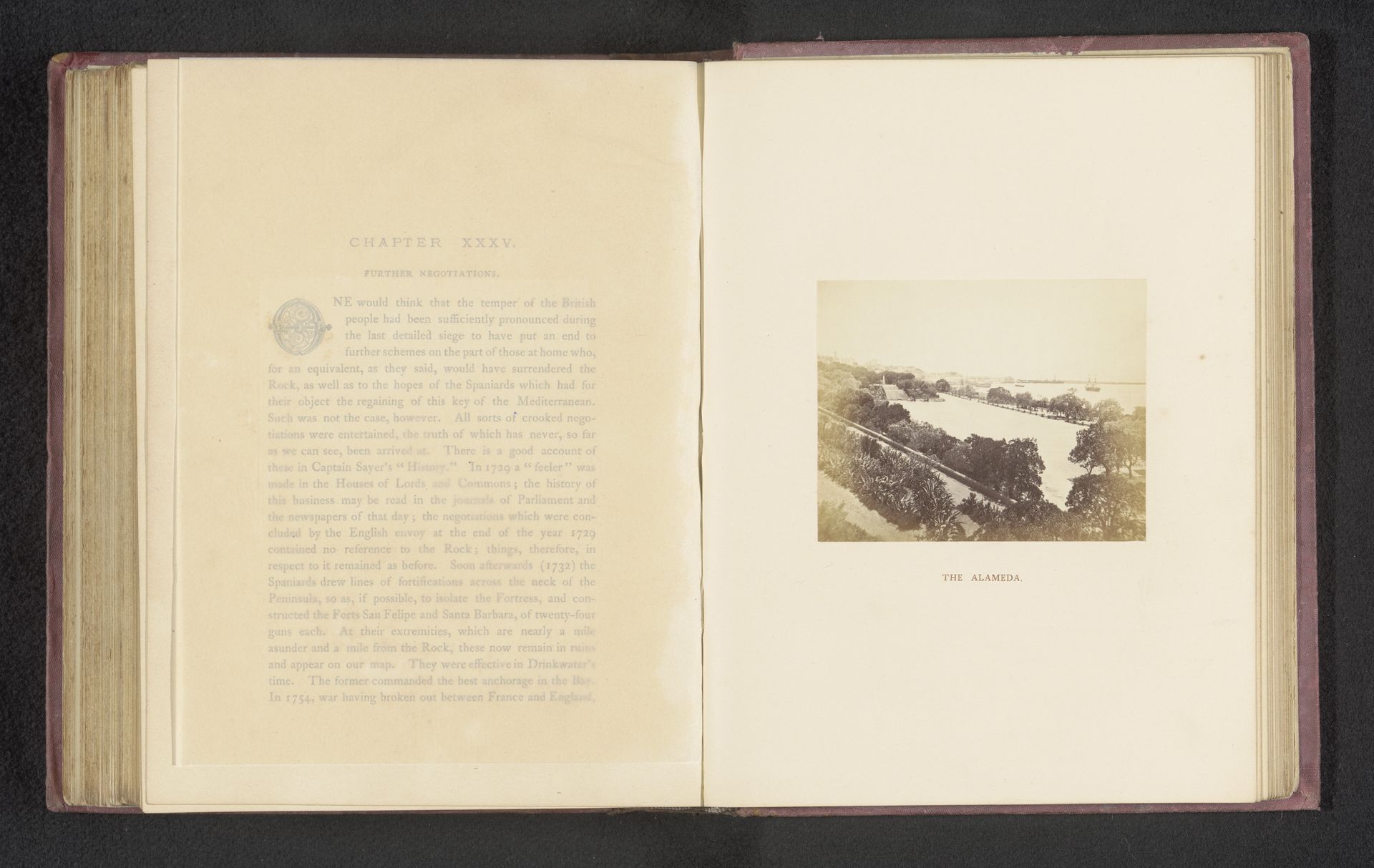
Editor: Here we have J.H. Mann’s “The neutral ground, from the Rock,” a landscape captured before 1870 in an albumen print. It’s striking how this photograph is presented within what seems to be an opened book. What do you see in this piece, Professor? Curator: The presentation is critical. By situating the photograph within the book, Mann isn't just presenting a landscape; he's inviting a reading of it. Think about the “neutral ground” itself—a politically charged space, a buffer zone. How does the act of photographing and documenting it contribute to a particular colonial narrative, fixing it in a specific historical understanding? Editor: So you're saying the photograph isn’t neutral even though it's named neutral ground. Curator: Precisely. The photograph freezes a specific, constructed perspective. Who had access to photography at this time? Who was *allowed* to document these landscapes and how did those choices reinforce power structures? Also consider what's *not* shown—what voices and perspectives are absent? Editor: That makes me think about whose stories get told and whose are left out. What the text mentions on the other side seems equally important. It suggests whose perspective we’re adopting. Curator: Exactly. And the materiality of the albumen print itself contributes. The sepia tones lend a sense of nostalgia and historical distance. This seemingly objective documentation is loaded with subjective choices, embedding the landscape within a specific colonial gaze. What new ideas have you formed by our brief exchange? Editor: It definitely makes you realize the picture is more of an interpretation and the book format makes it a powerful statement. It is not simply recording space.

Artwork details
- Medium
- print, textile, photography, albumen-print
- Dimensions
- height 99 mm, width 143 mm
- Copyright
- Rijks Museum: Open Domain
Tags
Comments
Share your thoughts
About this artwork
Editor: Here we have J.H. Mann’s “The neutral ground, from the Rock,” a landscape captured before 1870 in an albumen print. It’s striking how this photograph is presented within what seems to be an opened book. What do you see in this piece, Professor? Curator: The presentation is critical. By situating the photograph within the book, Mann isn't just presenting a landscape; he's inviting a reading of it. Think about the “neutral ground” itself—a politically charged space, a buffer zone. How does the act of photographing and documenting it contribute to a particular colonial narrative, fixing it in a specific historical understanding? Editor: So you're saying the photograph isn’t neutral even though it's named neutral ground. Curator: Precisely. The photograph freezes a specific, constructed perspective. Who had access to photography at this time? Who was *allowed* to document these landscapes and how did those choices reinforce power structures? Also consider what's *not* shown—what voices and perspectives are absent? Editor: That makes me think about whose stories get told and whose are left out. What the text mentions on the other side seems equally important. It suggests whose perspective we’re adopting. Curator: Exactly. And the materiality of the albumen print itself contributes. The sepia tones lend a sense of nostalgia and historical distance. This seemingly objective documentation is loaded with subjective choices, embedding the landscape within a specific colonial gaze. What new ideas have you formed by our brief exchange? Editor: It definitely makes you realize the picture is more of an interpretation and the book format makes it a powerful statement. It is not simply recording space.
Comments
Share your thoughts