drawing, lithograph, print, pen
portrait
drawing
comic strip sketch
quirky illustration
narrative-art
lithograph
pen illustration
caricature
old engraving style
cartoon sketch
personal sketchbook
sketchwork
comic
sketchbook drawing
pen
storyboard and sketchbook work
academic-art
sketchbook art
Dimensions: height 275 mm, width 215 mm
Copyright: Rijks Museum: Open Domain
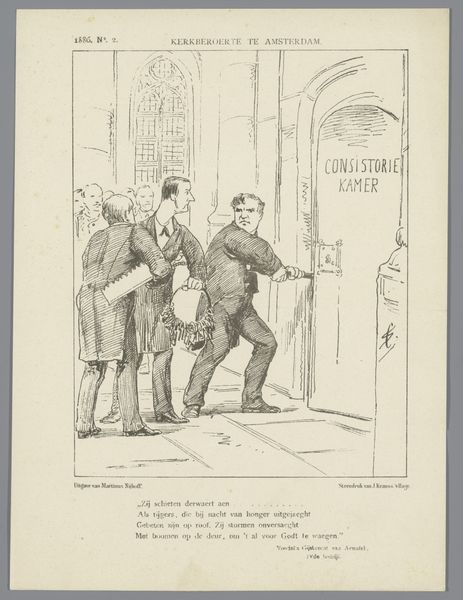
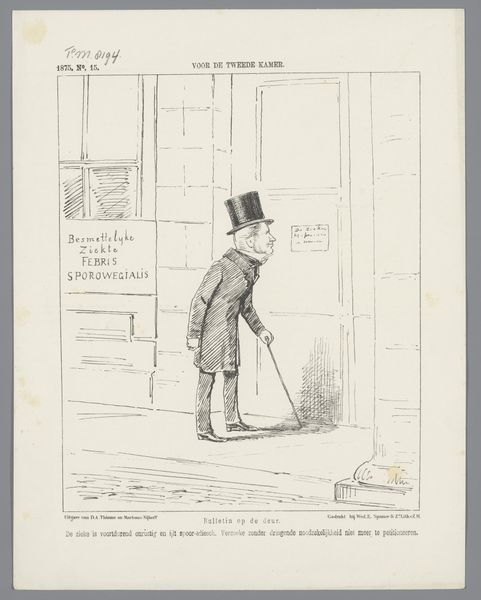
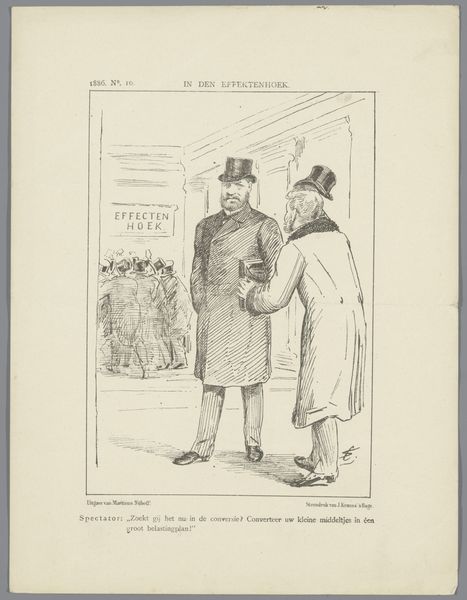
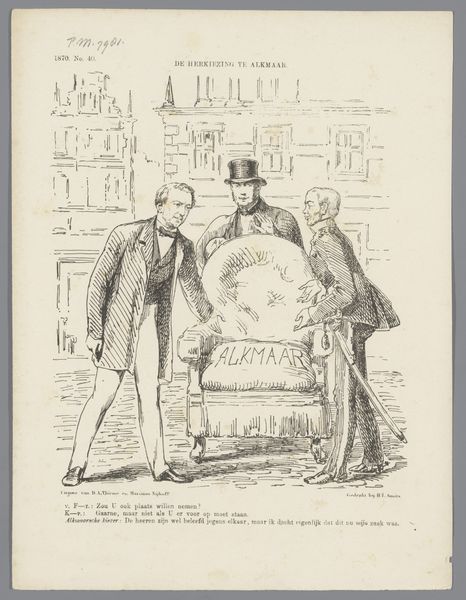
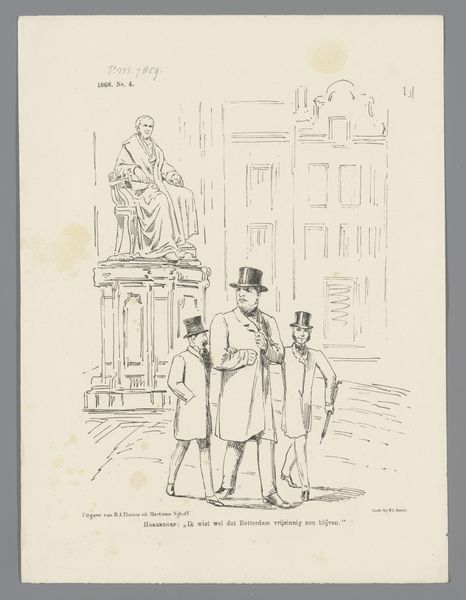
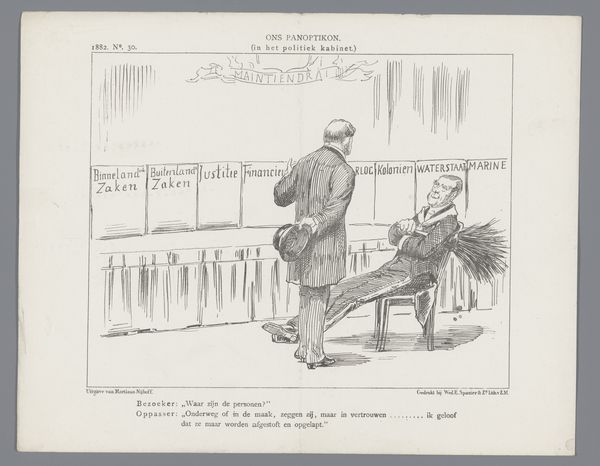
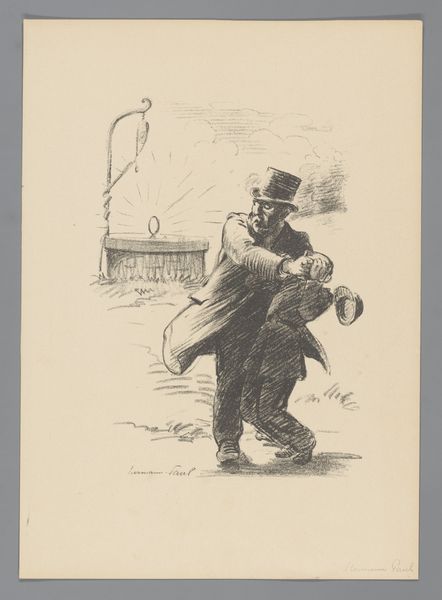
Editor: So, this is "Spotprent over Schaepman op de Voedingstentoonstelling" from 1887, a lithograph print by Johan Michaël Schmidt Crans. It seems like a political cartoon, drawn in a pretty detailed, almost academic style. It feels a bit satirical, but I'm not entirely sure what's being satirized. What do you see happening here, especially given the title referencing a "food exhibition?" Curator: It’s intriguing, isn't it? Looking at it historically, we can interpret it as a commentary on the intersection of politics and social issues – in this case, food policy. The food exhibition was likely a stage for political maneuvering. Notice how Schaepman is depicted looking intently at the clock showing "194;" The phrase at the bottom reinforces that it has something to do with "politics and food." Who do you think the other figure standing to the right of Schaepman represents and what political dynamic might be in play here? Editor: Well, the other man seems to be watching Scheapman intensely but at a distance. Perhaps a rival or political opponent? Given it's a caricature, is the clock representing something specific related to policy deadlines or voting counts perhaps? Curator: Precisely. The artist uses the exhibition and its context to criticize the perceived relationship between politicians, policies, and public need. This caricature shows that such relationships, when viewed through the lens of art, have complex societal implications. And remember, the print itself is circulating publicly, furthering that socio-political dialogue. Editor: That’s fascinating. So, it's not just about the event itself but also how it was perceived and used within political discourse. Curator: Exactly! And the choice of lithography—a readily reproducible medium—underscores its intent to reach a wide audience, shaping public opinion and engaging in political commentary. Editor: I hadn't thought about it that way, it definitely shows me how deeply embedded art can be in contemporary socio-political conversations. Thanks for your perspective. Curator: Indeed, considering its cultural context and method of dissemination offers crucial insight into this seemingly simple cartoon.
Comments
No comments
Be the first to comment and join the conversation on the ultimate creative platform.
 React
React Comment