About this artwork
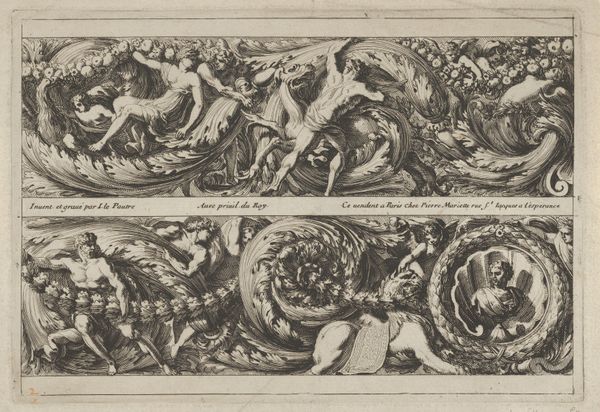
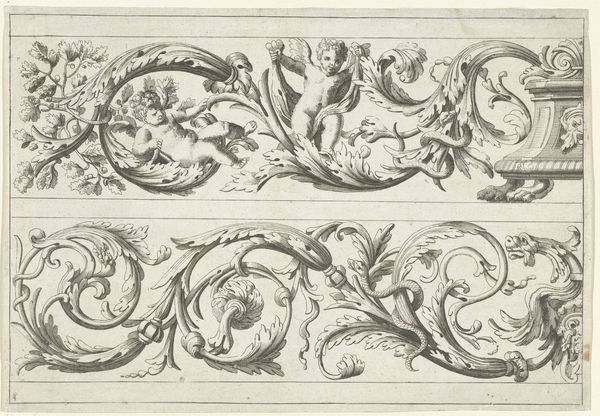
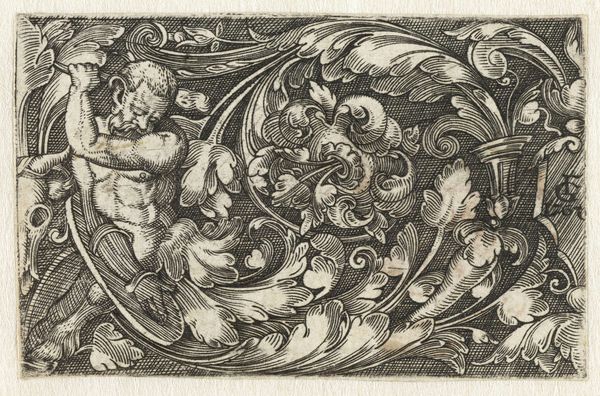
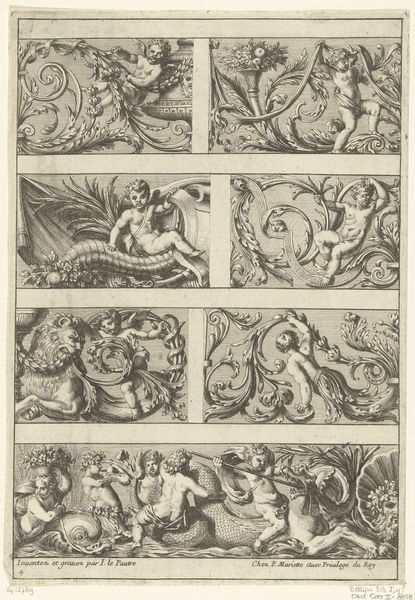
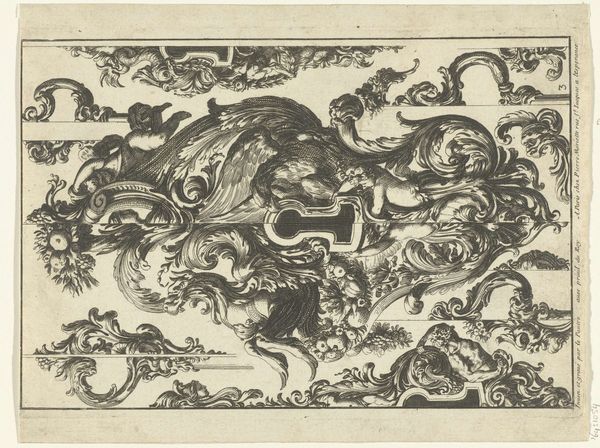
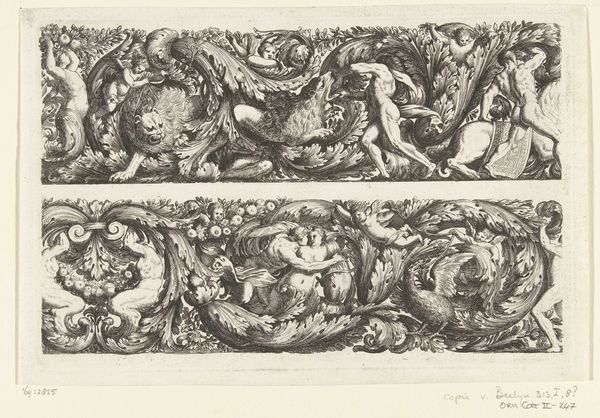
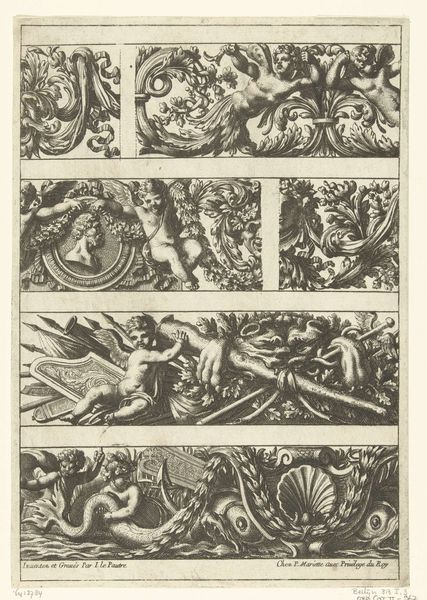
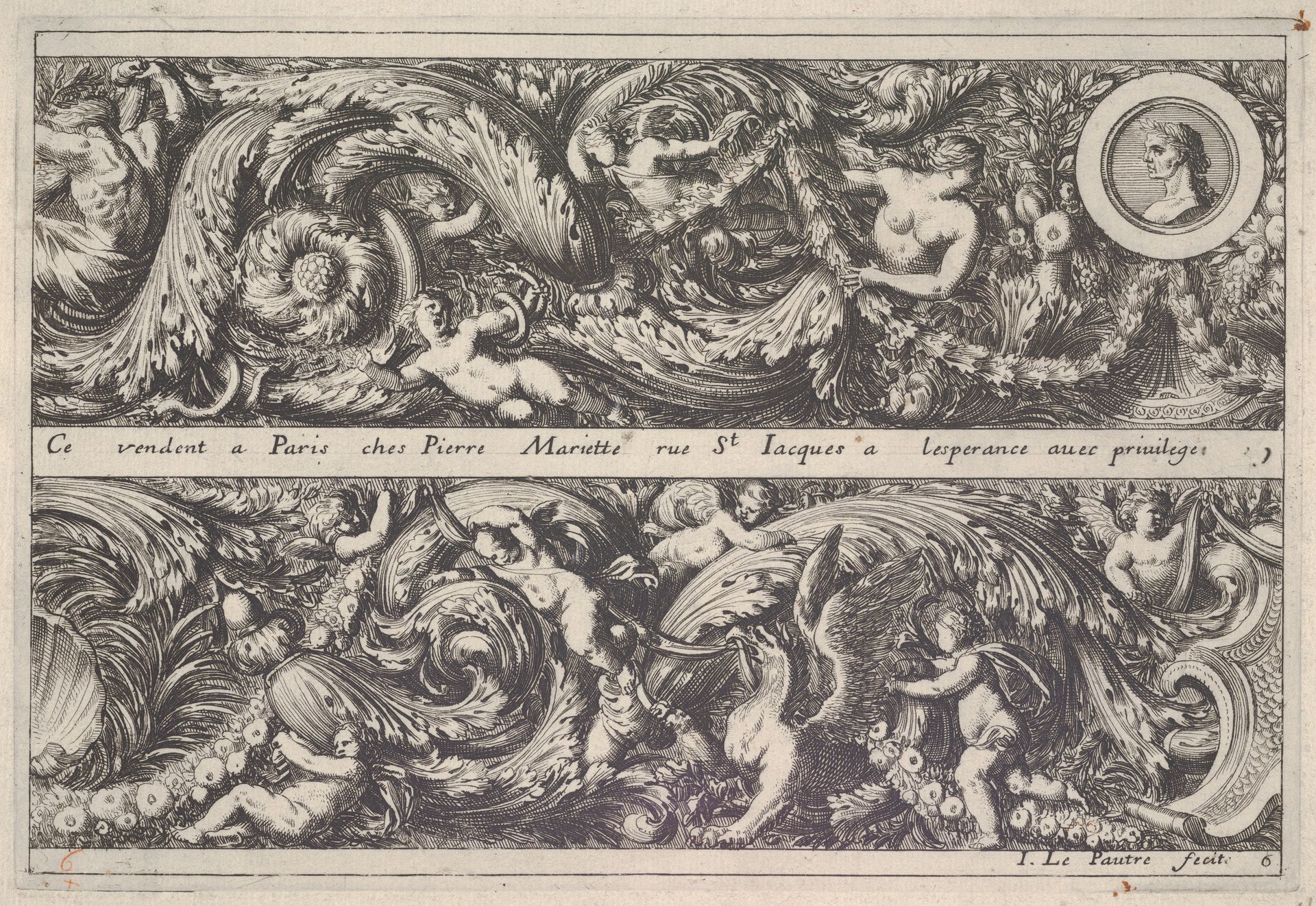
Jean Le Pautre created this print, “Two Designs for Friezes,” in France sometime in the 17th century. The image presents two elaborate frieze designs teeming with foliage, mythical figures, and, in one design, a portrait medallion. These friezes reflect the Baroque style popular during the reign of Louis XIV. Characterized by grandeur and ornamentation, this aesthetic was closely tied to the French monarchy and nobility. Le Pautre's designs would have appealed to those seeking to emulate the lavishness and power associated with the court. The inclusion of classical motifs, like tritons and portrait medallions, speaks to the period's interest in antiquity and its use in legitimizing contemporary power structures. The text on the print indicates it was sold in Paris by Pierre Mariette, suggesting a market for such designs among the city's affluent residents. To fully appreciate this print, historians consult period pattern books, architectural treatises, and social histories to understand the culture of consumption and display in 17th-century France.
Two Designs for Friezes, of which one with a Round Portrait Medaillon, from: Frises, feuillages ou tritons marins antiques et modernes
1635 - 1645


Artwork details
- Medium
- drawing, print, intaglio, engraving
- Dimensions
- sheet: 6 7/16 x 9 1/4 in. (16.3 x 23.5 cm) plate: 5 13/16 x 8 11/16 in. (14.8 x 22 cm)
- Location
- Metropolitan Museum of Art, New York, NY
- Copyright
- Public Domain
Tags
Comments
Share your thoughts
About this artwork
Jean Le Pautre created this print, “Two Designs for Friezes,” in France sometime in the 17th century. The image presents two elaborate frieze designs teeming with foliage, mythical figures, and, in one design, a portrait medallion. These friezes reflect the Baroque style popular during the reign of Louis XIV. Characterized by grandeur and ornamentation, this aesthetic was closely tied to the French monarchy and nobility. Le Pautre's designs would have appealed to those seeking to emulate the lavishness and power associated with the court. The inclusion of classical motifs, like tritons and portrait medallions, speaks to the period's interest in antiquity and its use in legitimizing contemporary power structures. The text on the print indicates it was sold in Paris by Pierre Mariette, suggesting a market for such designs among the city's affluent residents. To fully appreciate this print, historians consult period pattern books, architectural treatises, and social histories to understand the culture of consumption and display in 17th-century France.
Comments
Share your thoughts