print, engraving
portrait
landscape
figuration
northern-renaissance
engraving
Copyright: National Gallery of Art: CC0 1.0
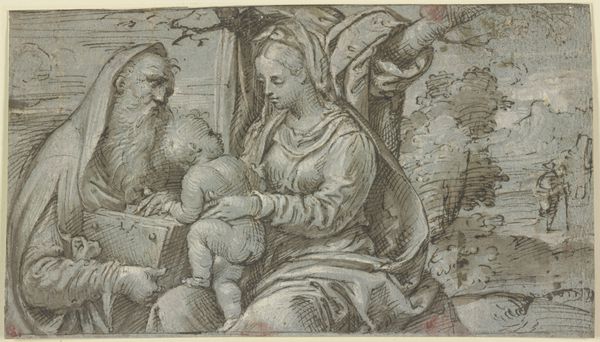
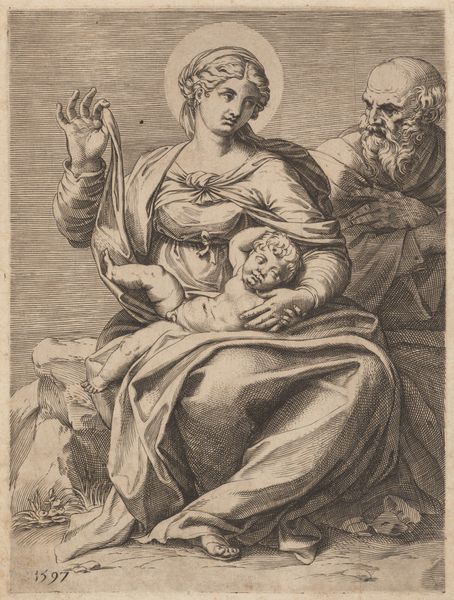
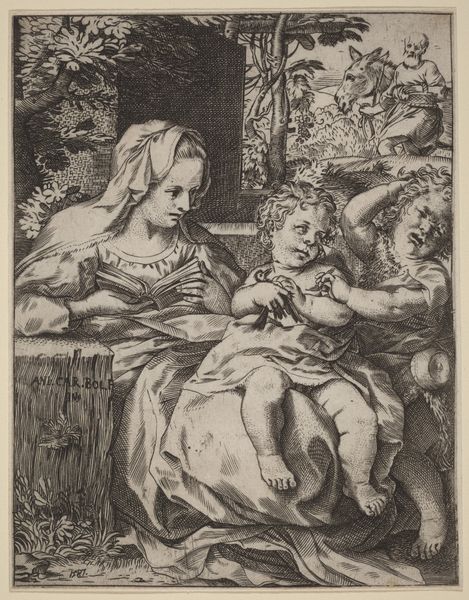
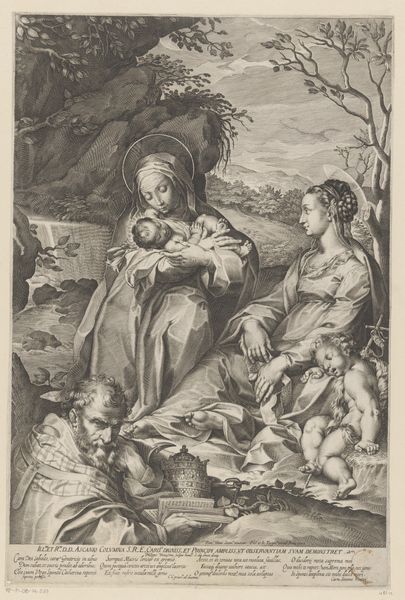
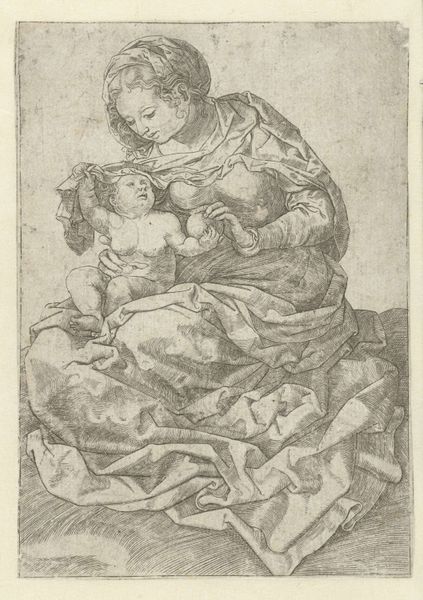
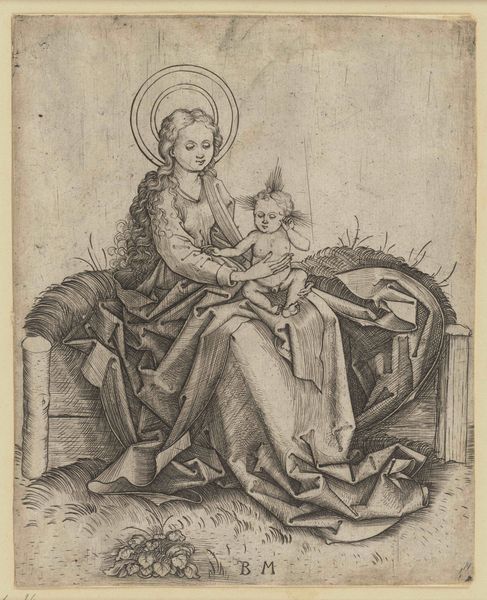
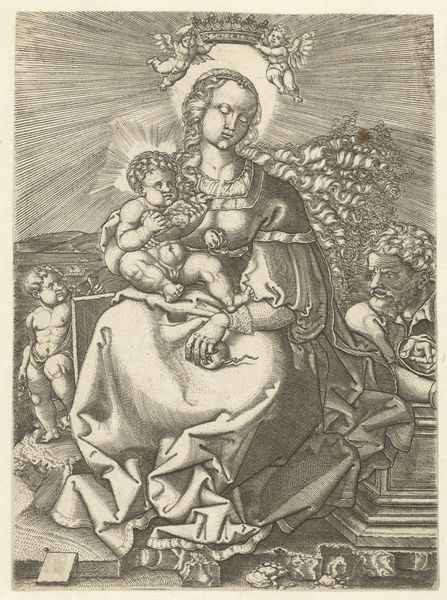
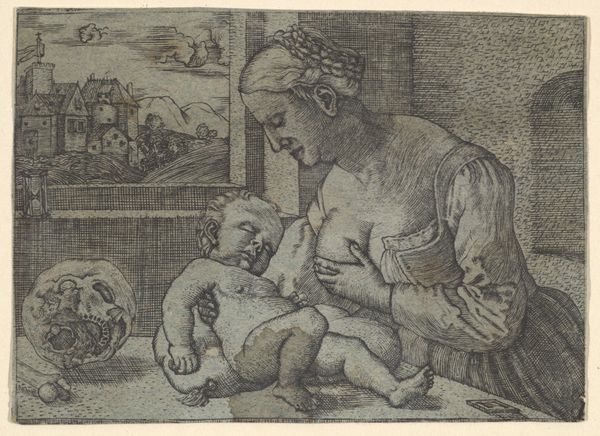
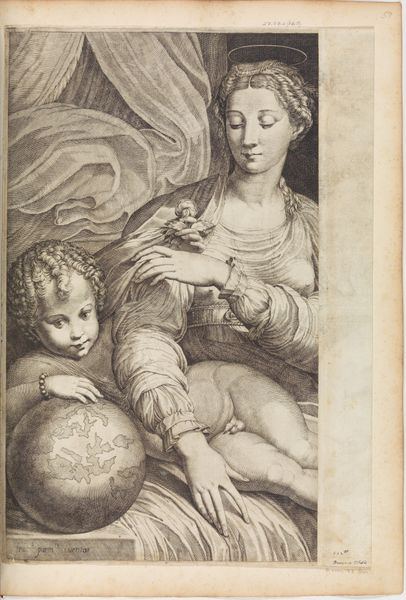
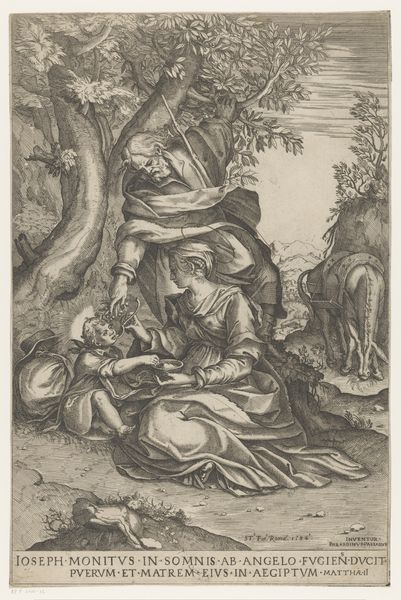
Lucas van Leyden created this engraving of ‘The Virgin Seated under a Tree’ in 1518, using a technique of carving into a metal plate to hold ink. This wasn’t exactly an everyday process, but it wasn’t high art either. Look closely at the image and you'll see how the engraving gives the artwork its appearance. The texture of the tree bark, the weight of the Virgin’s robe, and the delicate shading of their skin, all achieved through precise lines. The process involved skilled traditions, connecting it to goldsmithing and armor decoration, as well as the fine arts. Engraving allowed for the mass production of images, tying it to emerging capitalism. Prints like this were relatively affordable, and could be widely disseminated. But the amount of work involved in their production shouldn't be overlooked. Considering the materials, making, and context is essential to fully understand the meaning and significance of this artwork, which challenges the conventional distinctions between fine art and craft.
Comments
No comments
Be the first to comment and join the conversation on the ultimate creative platform.
 React
React Comment