1840 - 1880
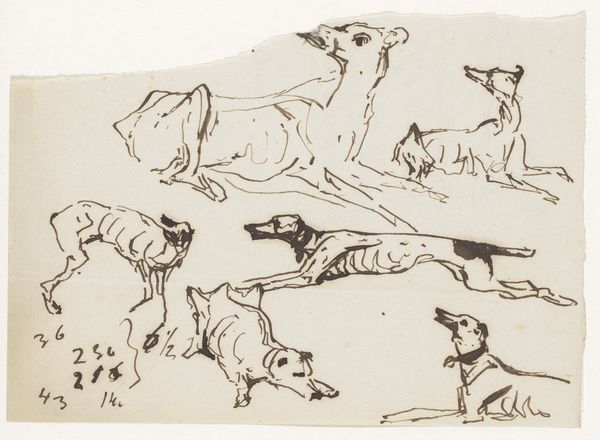
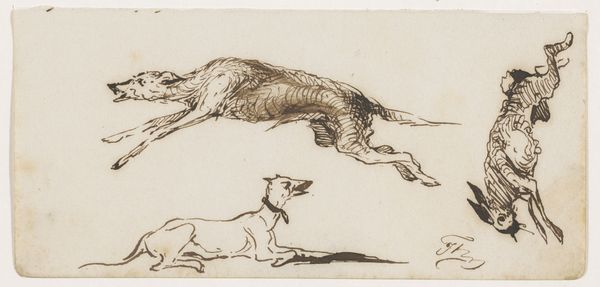
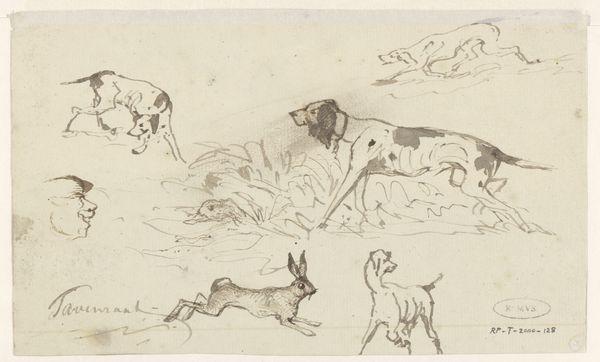
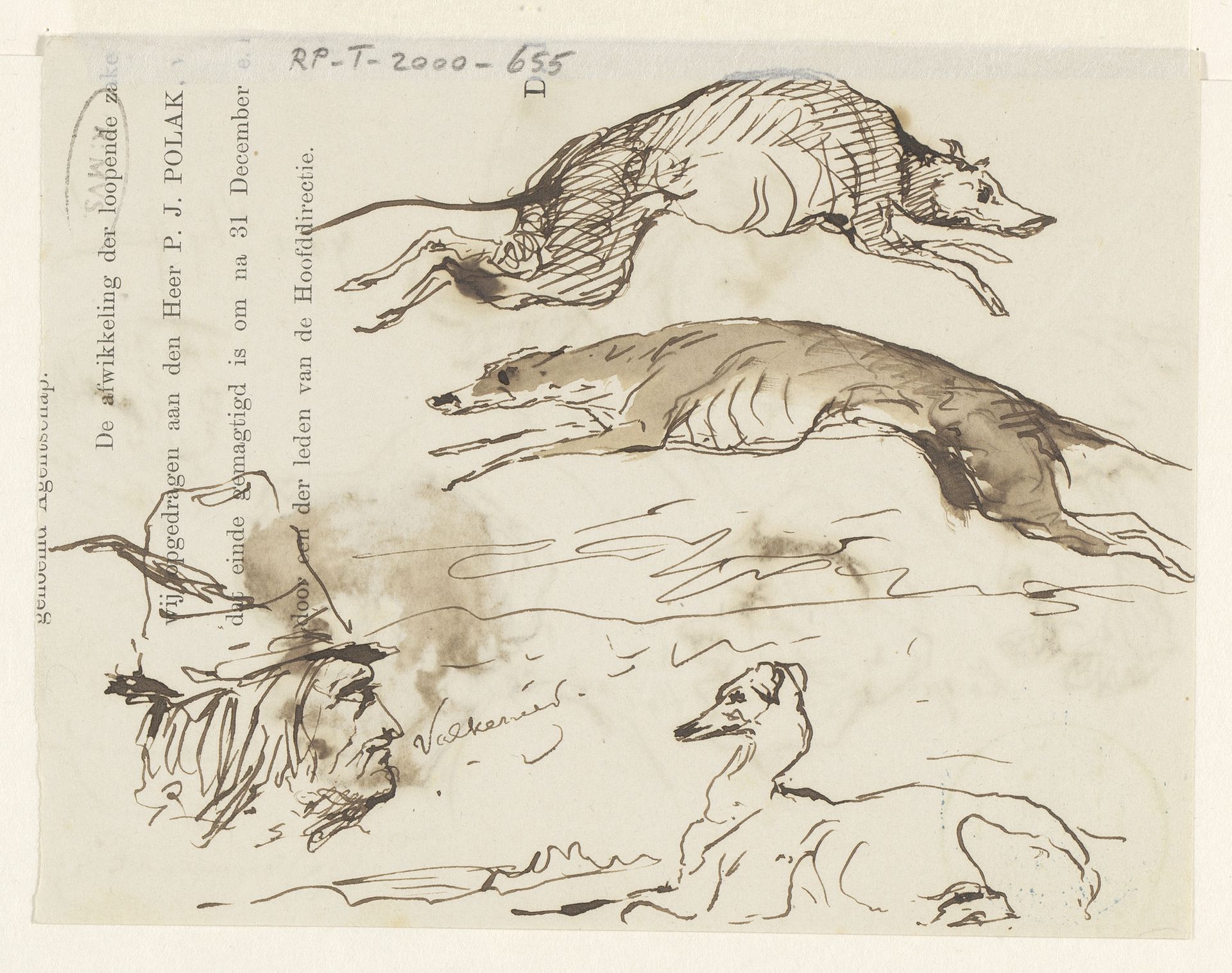
Valkenier en windhonden

Johannes Tavenraat
1809 - 1881Location
RijksmuseumListen to curator's interpretation
Curatorial notes
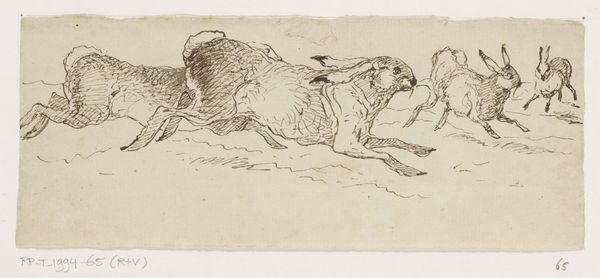
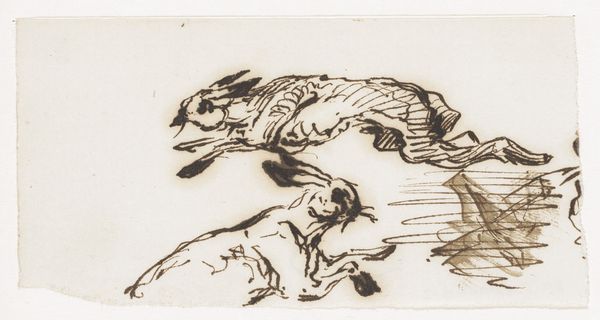
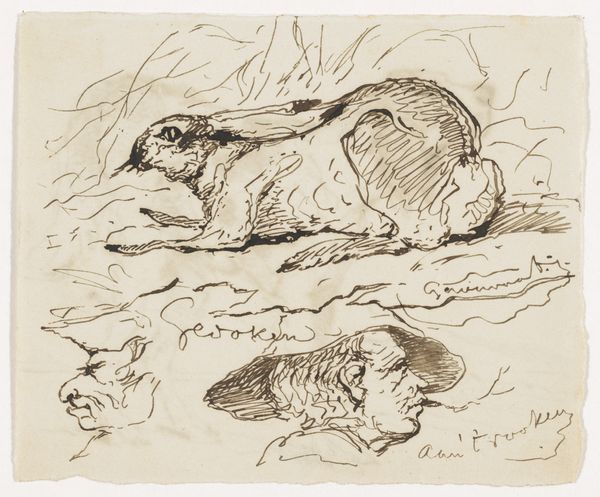
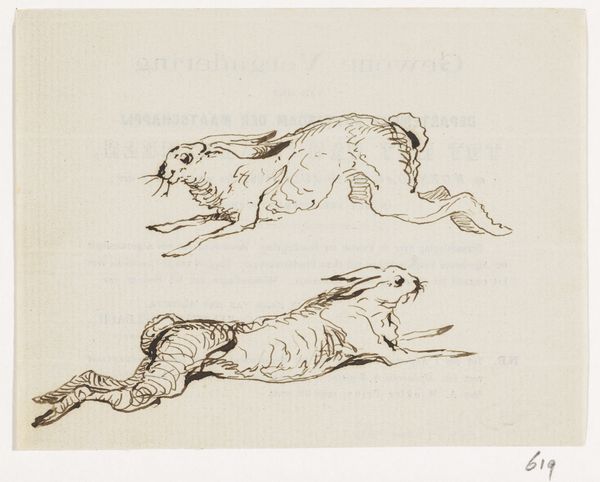
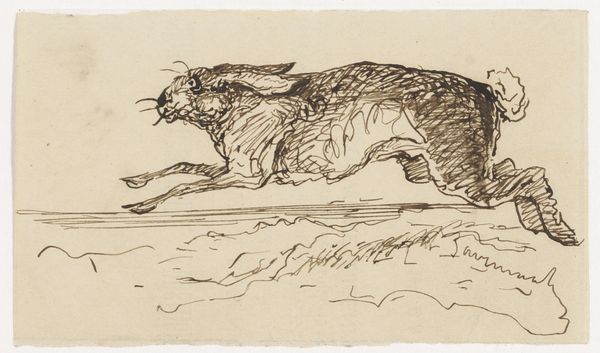
Curator: Today, we are looking at “Valkenier en windhonden” or "Falconer and Greyhounds," a pen and ink drawing on paper by Johannes Tavenraat. The piece resides in the Rijksmuseum and dates roughly between 1840 and 1880. What are your initial thoughts? Editor: Energetic! You immediately get the sense of speed and movement in this quirky little sketch. The dogs are captured mid-stride, all lean muscle, with this really lovely loose application of ink and pen to show their forms. Curator: Indeed. It looks as if Tavenraat caught a momentary scene in his sketchbook. The focus seems less about idealized form, more about observing real animals and the social practice of falconry in a particular context. Note how the falconer is depicted merely as a quick study. Editor: I agree. You can see the economical use of the artist's materials; every line does a job. There's no excess, no fancy flourish, just a recording of activity and shape using the barest of means. And this choice, by the artist to draw and define this way, feels so immediate, so tied to process. Curator: Considering Tavenraat's work overall, this sketch gives us a view into 19th-century leisure and the societal importance placed on activities like falconry and the selective breeding of animals. The relationship between man, nature, and status is definitely there. Editor: Precisely! It makes me think of the availability of drawing supplies, the accessibility of artistic training, and how all this intersects with class. Falconry was, for centuries, a preserve of the aristocracy. Curator: Well, studying this piece definitely shows us how a simple sketch can tell us so much about art as both a reflection and a product of its time. Editor: I am now really curious how accessible these papers and sketching materials were and what processes an artist had to do just to have these tools available to create works like these!