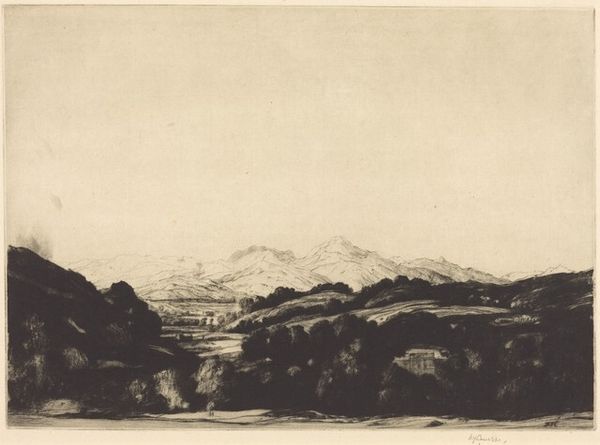
1947
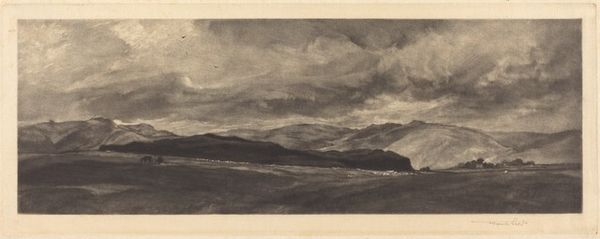
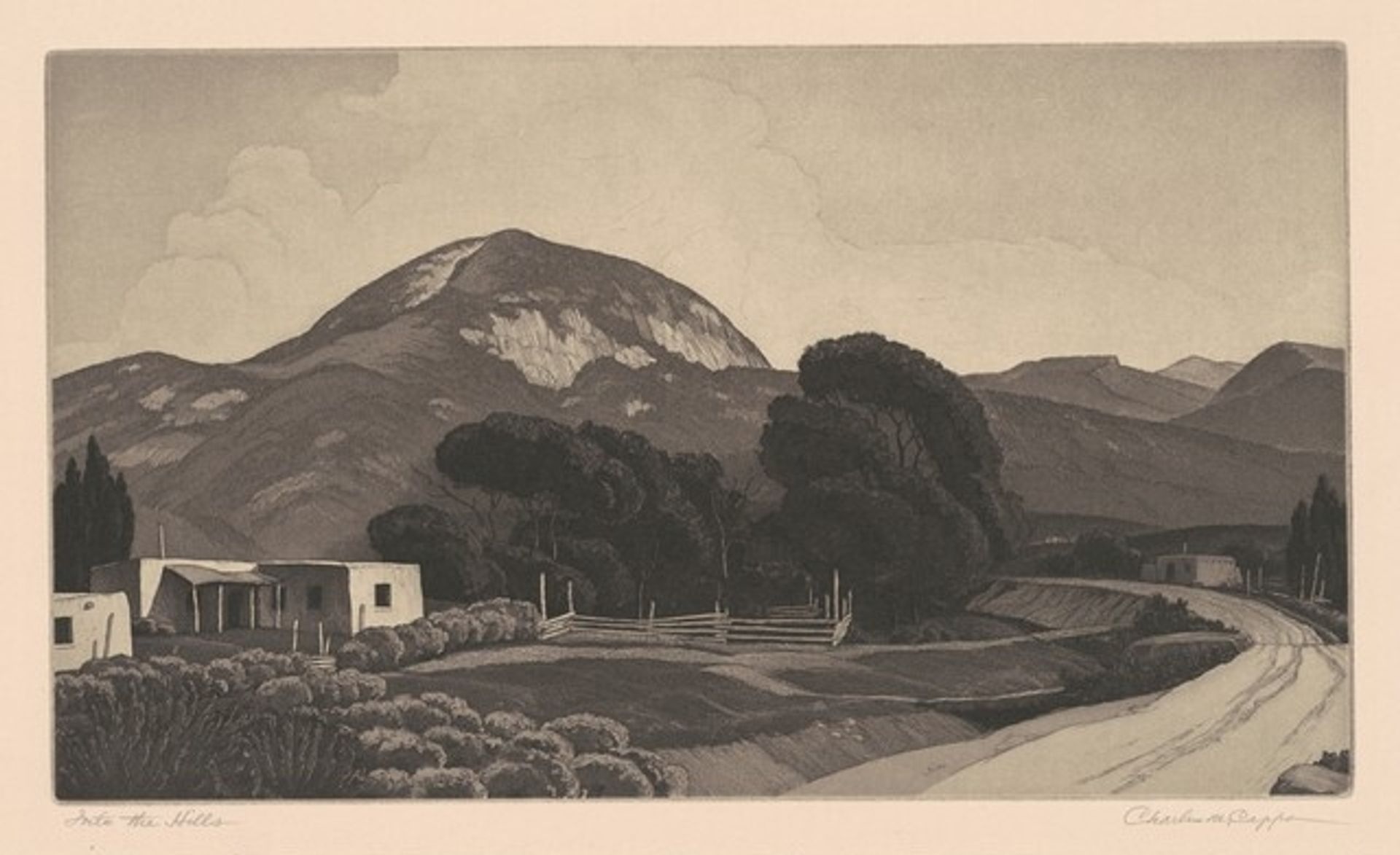
Into the Hills


Listen to curator's interpretation
Curatorial notes
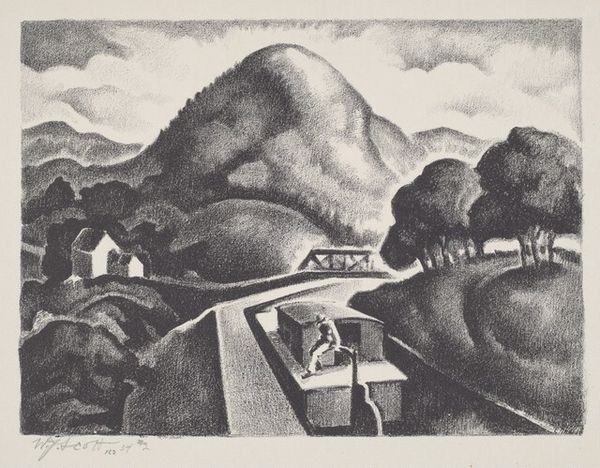
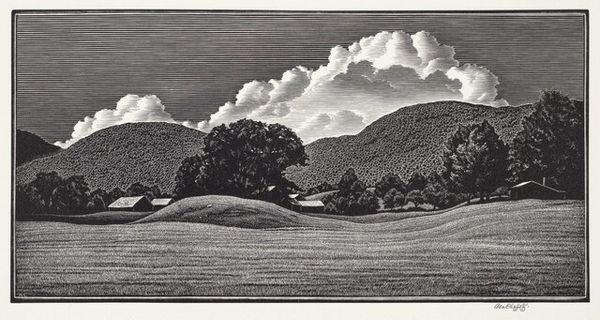
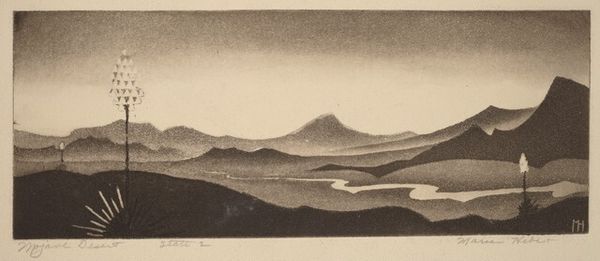
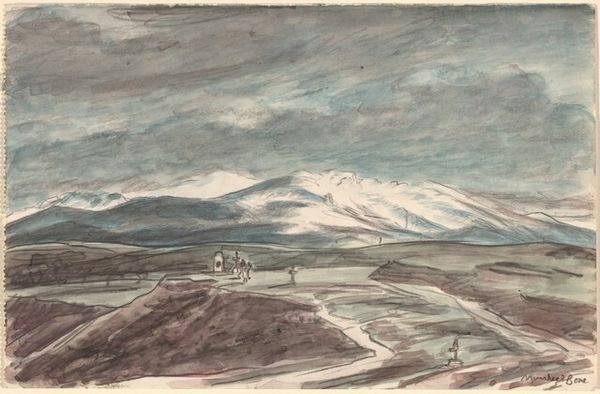
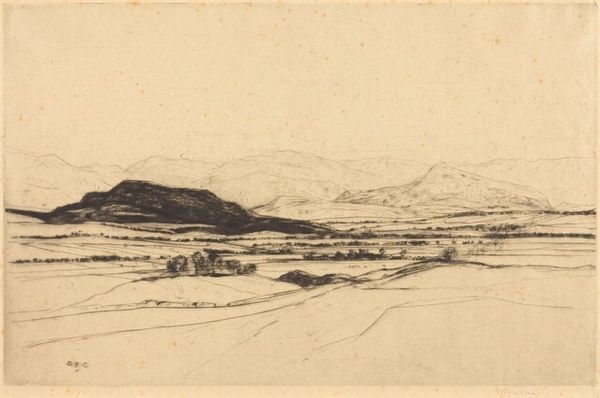
Curator: Editor: So, this is "Into the Hills" by Charles Capps, made in 1947. It’s a print, and it gives me a feeling of solitude, a quiet moment in nature. What do you see in this piece, beyond the obvious landscape elements? Curator: It's interesting you pick up on the solitude. To me, this image speaks to a much larger history, specifically, how the landscape has been both a site of exploitation and romanticization, especially concerning Indigenous displacement. Do you notice how the structures, perhaps meant to signify human presence, almost seem dwarfed, swallowed by the scale of the hills? Editor: I do see what you mean. They look so small compared to the mountains. Almost insignificant, really. Curator: Precisely. This image was made in 1947; right after the Second World War. I’d want to know how the American myth of the “frontier” and manifest destiny may have shaped its creation and reception. Are we looking at a benign landscape or is this image complicit in obscuring a violent history? Editor: I hadn’t considered that at all. I was just thinking about how pretty the mountains are. But you're right, we should also consider the social and political implications. So, you are saying that viewing artwork such as this piece requires contextual knowledge and understanding? Curator: Absolutely! Engaging with the cultural context enriches the artistic experience. It encourages you to not only admire beauty but also interrogate the conditions under which it was produced and perceived. Who benefits from such representation of landscape? Editor: This makes me see landscape art in a new light. It’s more complex than I thought! Curator: That's the power of engaging with art critically, to push beyond the surface and uncover the deeper narratives embedded within.