1733
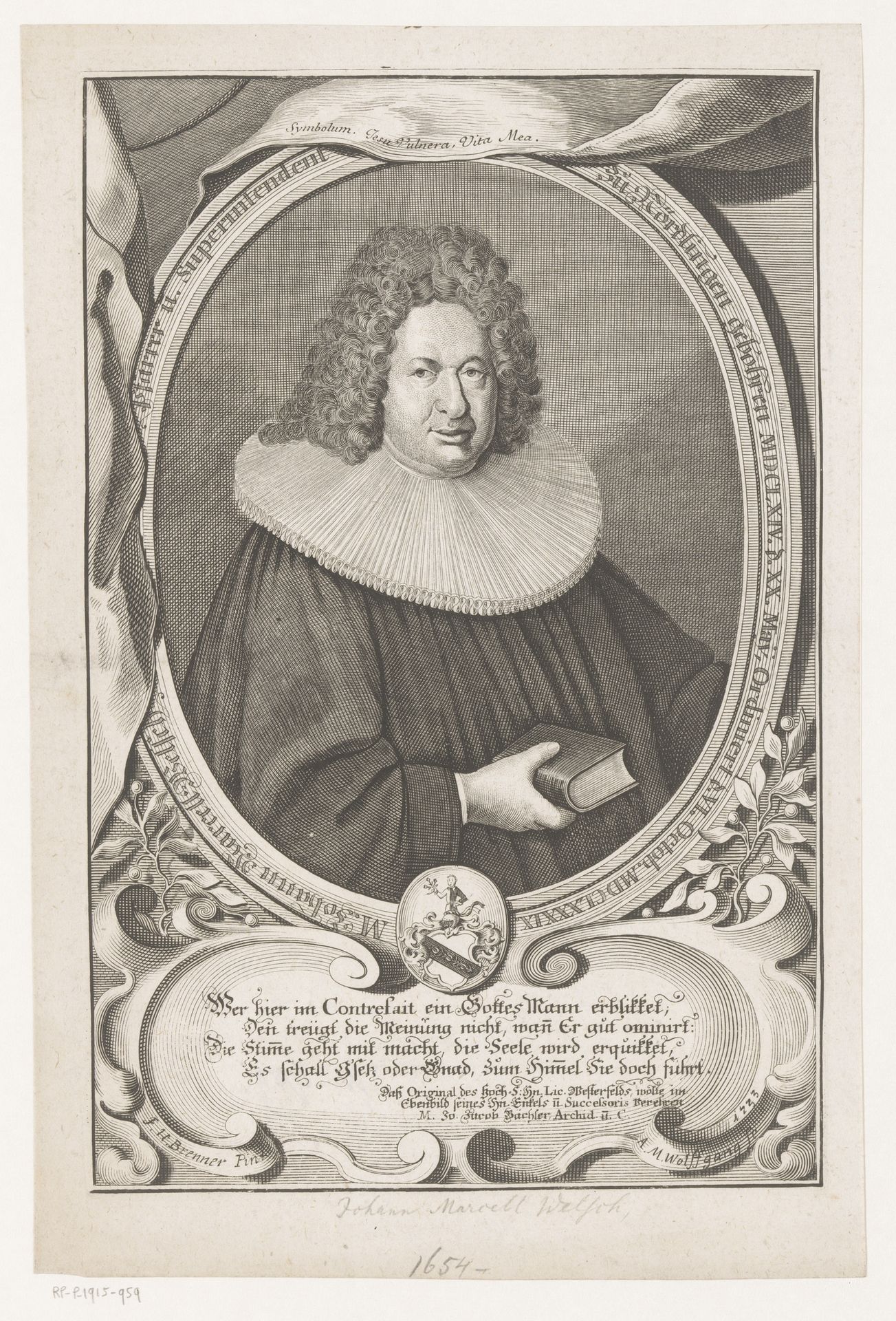
Portret van Johann Marcell Welsch

Listen to curator's interpretation
Curatorial notes
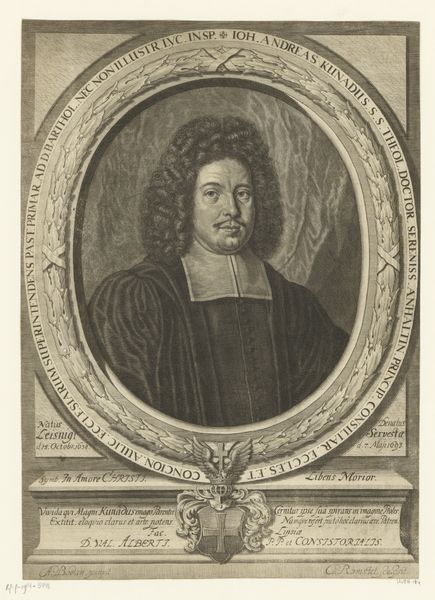
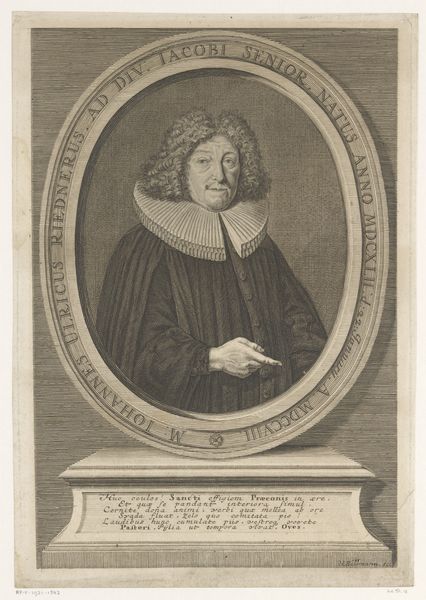
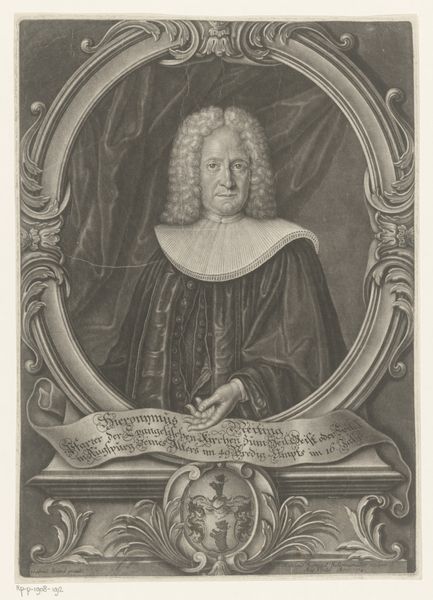
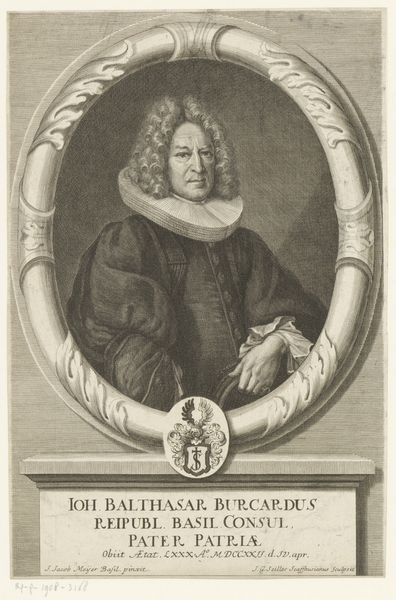
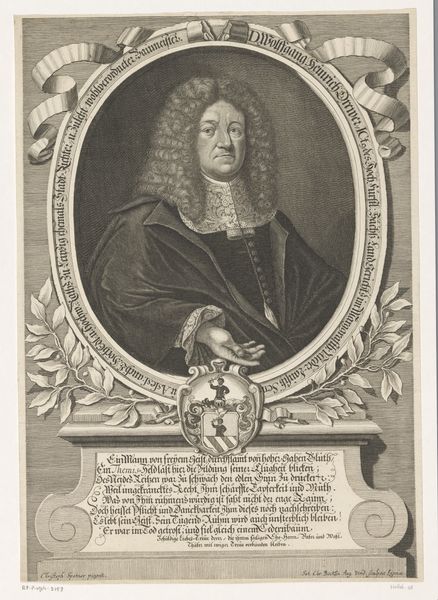
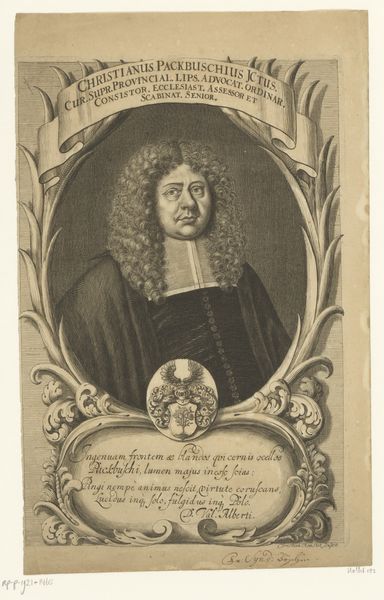
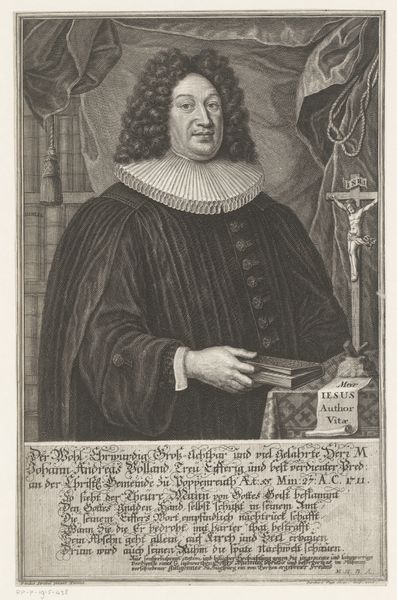
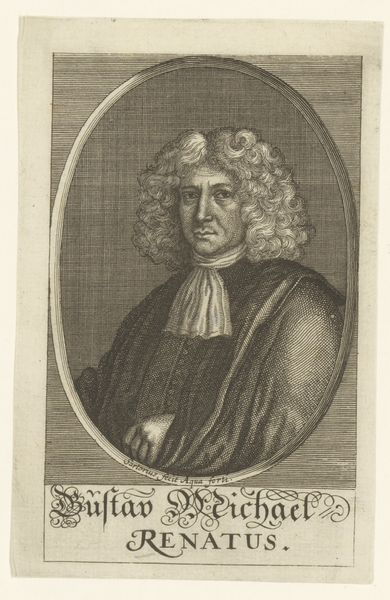
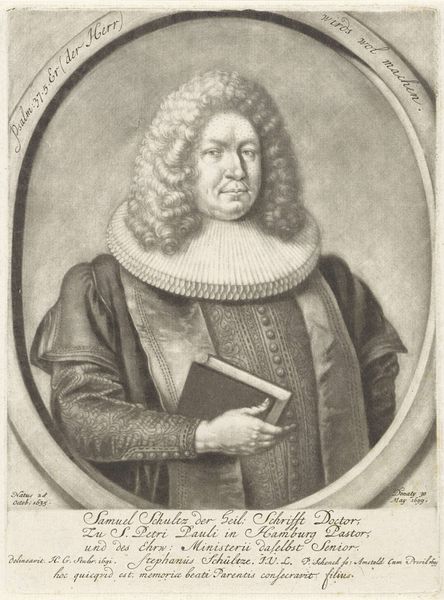
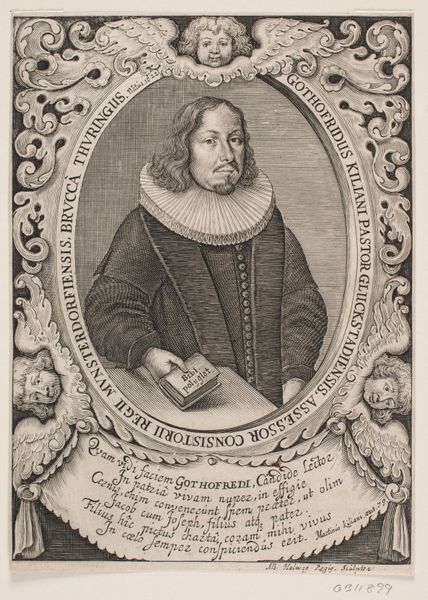
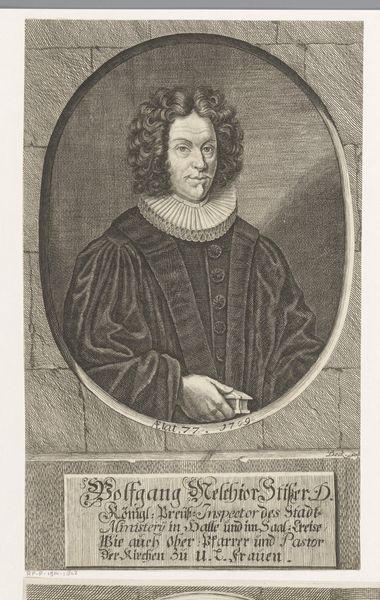
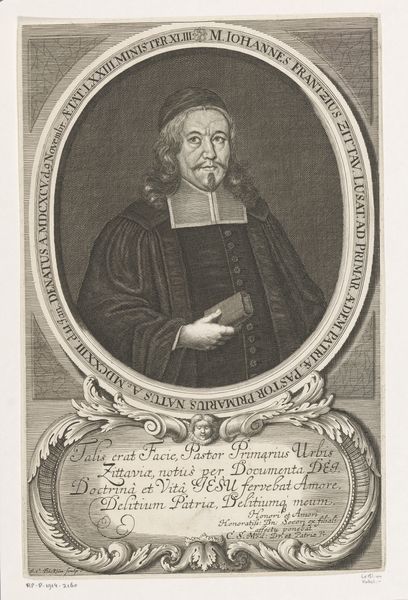
Andreas Matthäus Wolfgang created this print of Johann Marcell Welsch sometime around 1700 in Germany. The portrait presents Welsch, a superintendent, encircled by ornate text and symbols of his status. Such images were important tools in the social and political landscape of the time. They served to publicly affirm and disseminate the sitter's authority within their community. The meticulous detail and formal presentation signal the sitter's importance, but also subtly reinforce the existing social hierarchy. These portraits were often commissioned not just for personal commemoration, but also for institutional display, thereby embedding the subject within a network of power and influence. To fully appreciate this portrait, we need to delve into the visual language of the period, researching the significance of symbols, clothing, and the conventions of portraiture itself. By doing so, we can better understand how art like this played a crucial role in shaping social perceptions and reinforcing institutional power structures.