c. 1900
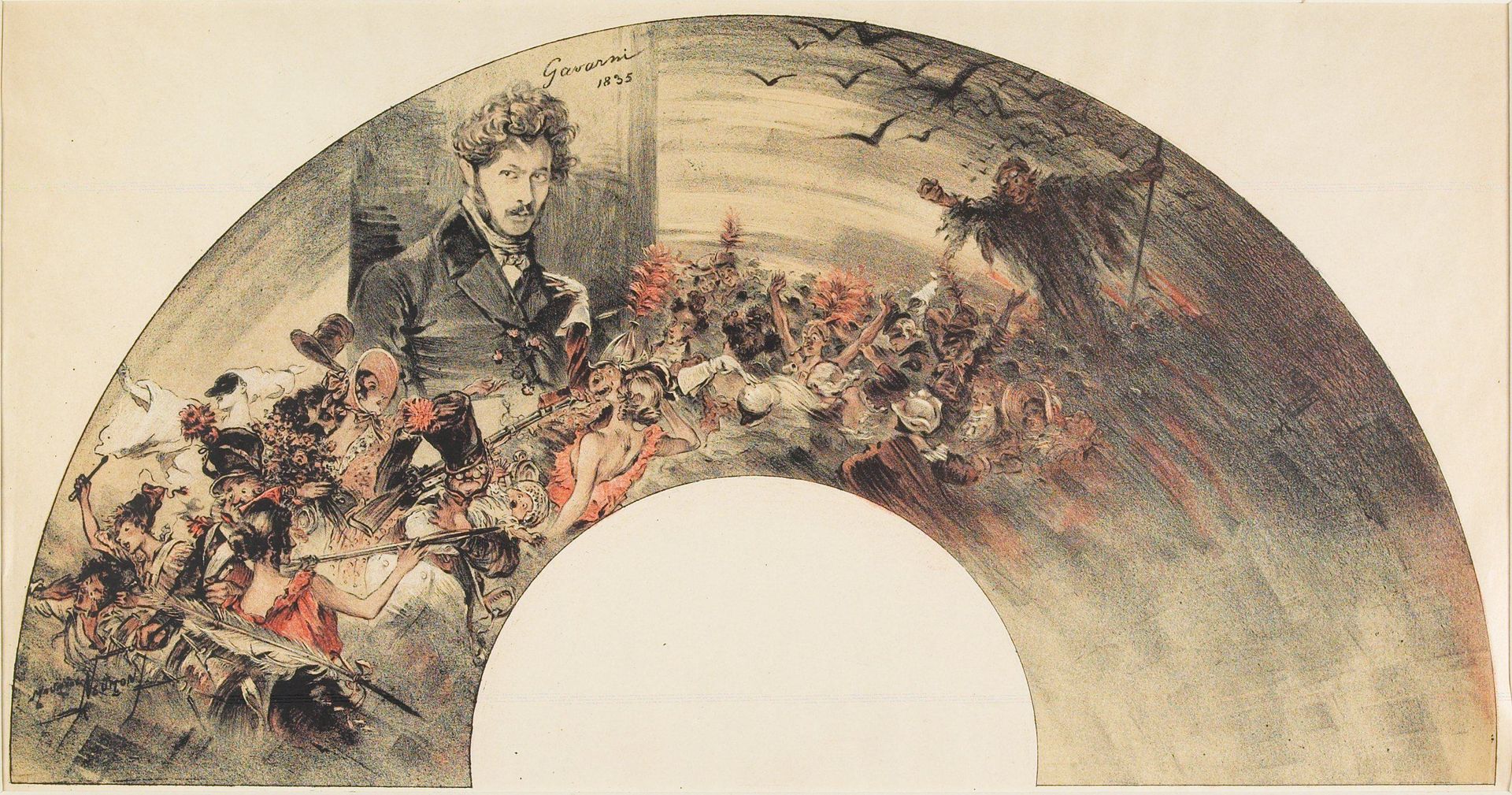
Portrait de Gavarni et allégorie de ses personnages


Listen to curator's interpretation
Curatorial notes
Editor: This is Maurice Neumont's "Portrait de Gavarni et allégorie de ses personnages," from around 1900. It’s a color lithograph with ink, pen, and watercolor—quite the mix! There's a portrait, sure, but then this whole fantastical scene unfolds around it, full of strange figures. What strikes me most is this swirling chaos and the implied stories of all these people depicted. What do you see in this piece? Curator: This piece cries out for a look at the sociopolitical context of caricature. Gavarni, the central figure, was a master of social satire in his time. Neumont positions him amidst a world of his own creation – a critical reflection on the mores of the Second Empire. Look closely – what stories do you think Neumont is trying to tell with these caricatures? Editor: Well, some seem like dancers or performers, maybe poking fun at entertainment or societal figures? And there's a sense of…decay, almost, on the right, a cloaked figure overseeing the chaos, adding a darker tone. Curator: Exactly. That decaying aspect touches on themes of societal decline. Gavarni and other artists like him used caricature to critique power, exposing the hypocrisy and excesses of the elite. How might an image like this have functioned as a form of resistance during its time? Editor: I guess it allowed people to see the ridiculousness of the powerful. Maybe to question authority in a way that was both humorous and pointed. It's like visual activism. Curator: Precisely. Neumont echoes this activism. Think of how the format – designed like a handheld fan – puts Gavarni’s commentary literally into the hands of the people. These images, seemingly frivolous, fostered a critical lens for the viewer. It's a really thought-provoking piece when considered through that historical lens. Editor: That's such a good point, I hadn't considered the subversiveness inherent in the object itself, beyond just the image. Thanks, that adds a whole new dimension.