About this artwork
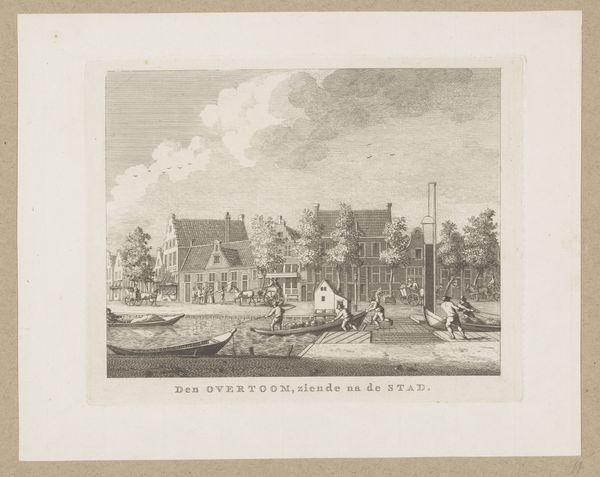
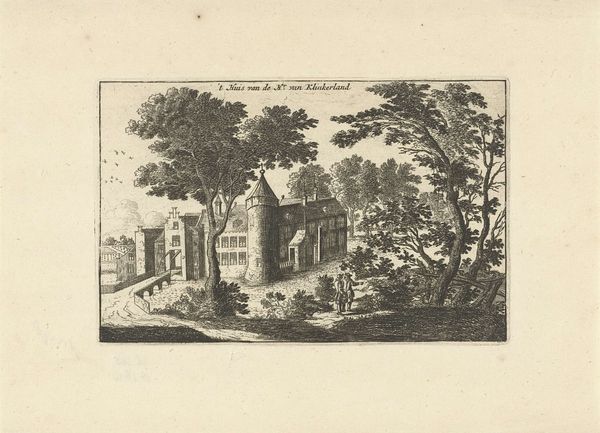
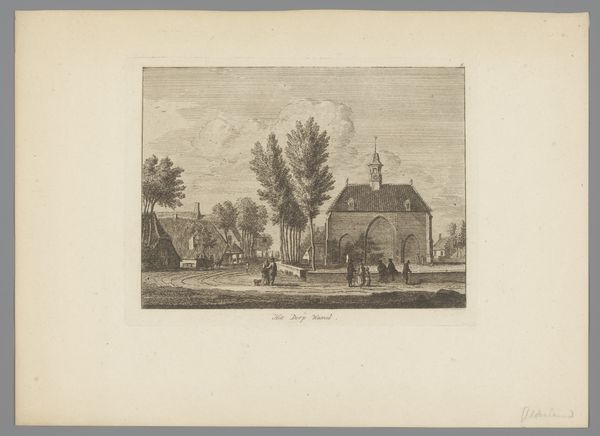
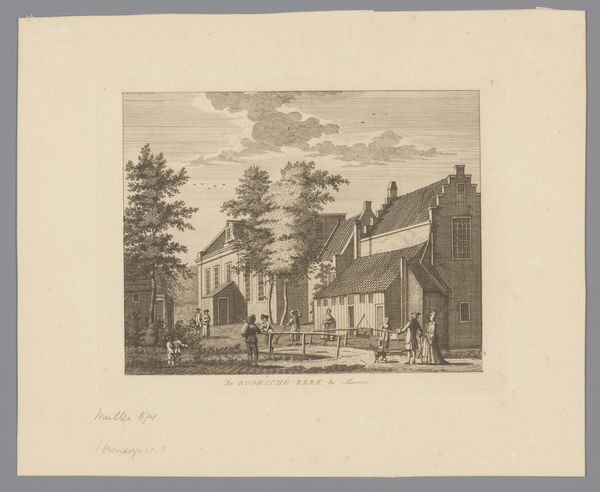
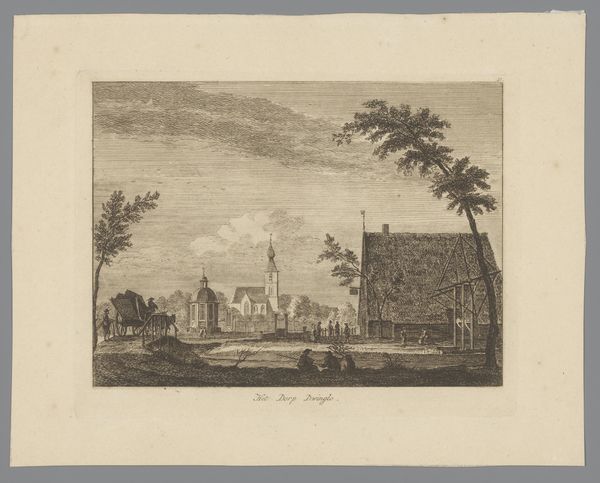
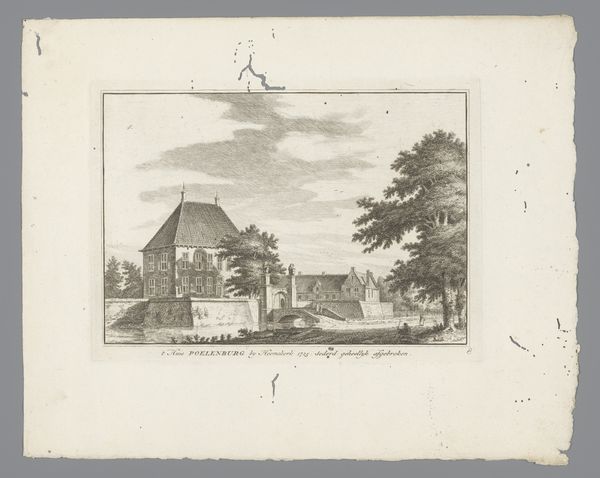
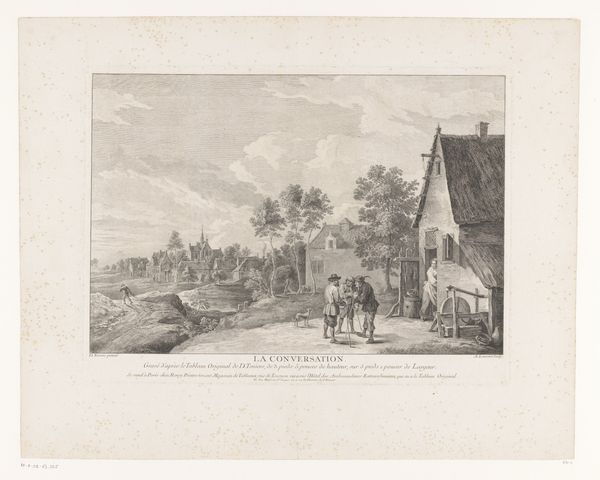
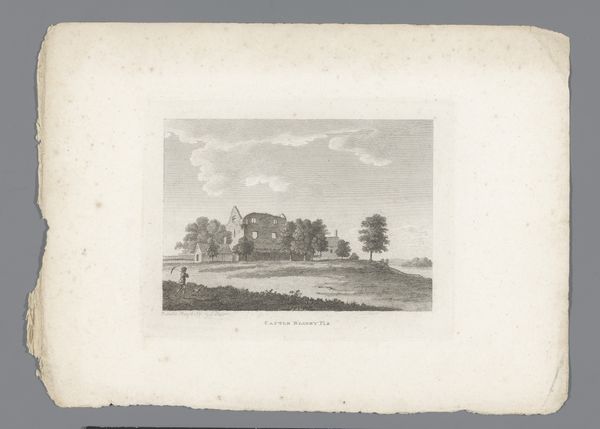
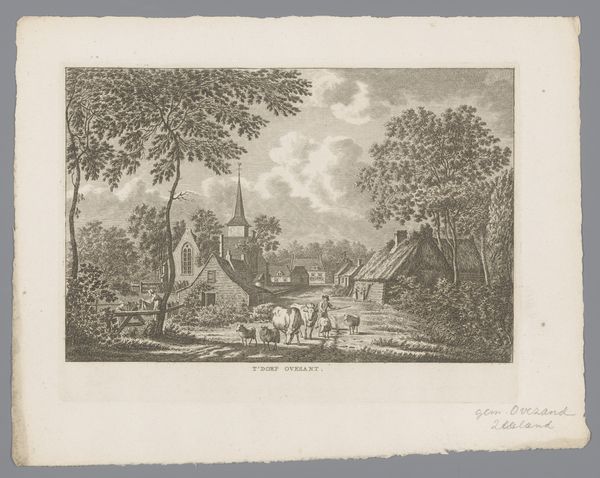
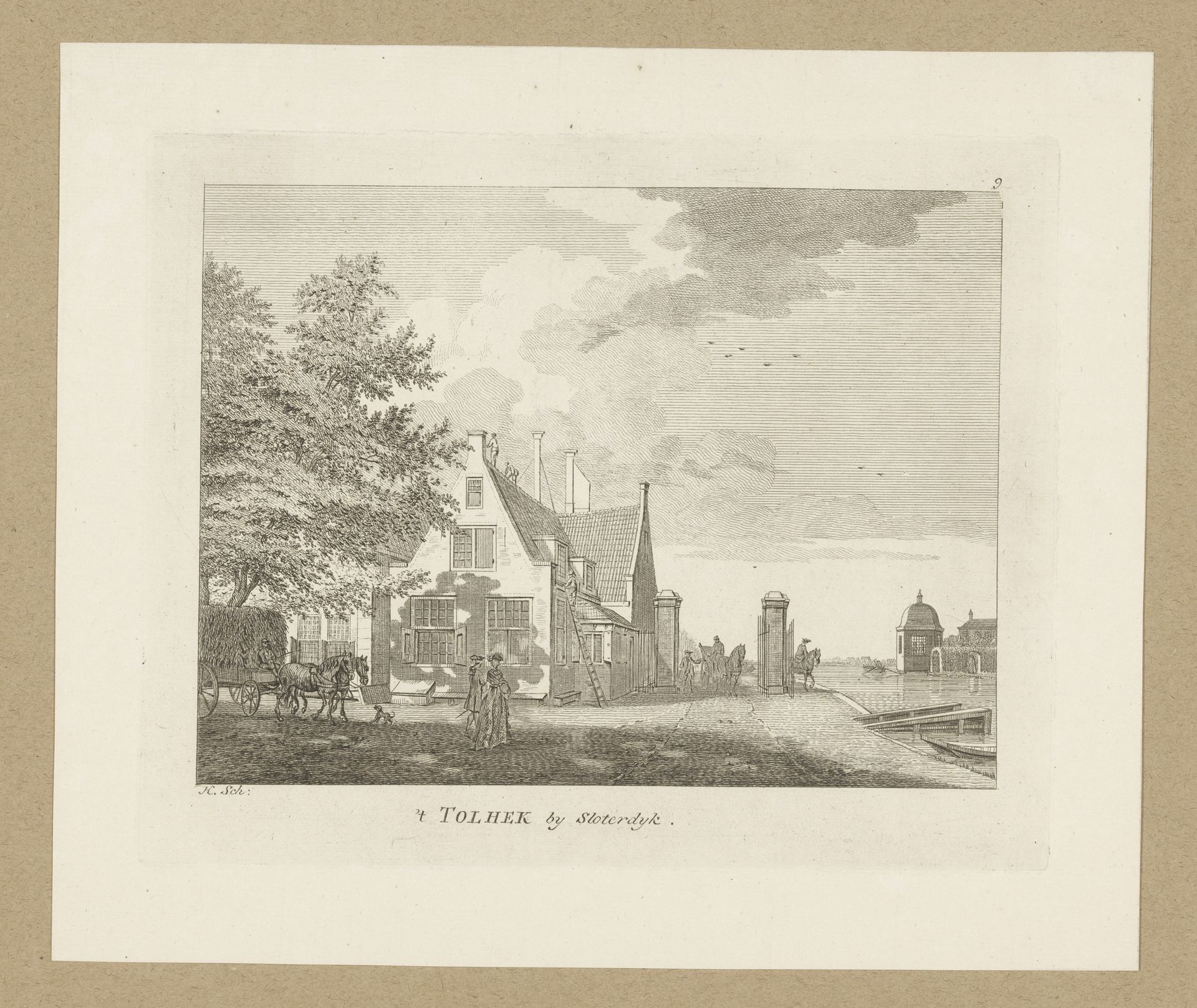
This is Hermanus Petrus Schouten's "View of the Tollgate at Sloterdijk," an etching now held at the Rijksmuseum. The composition is structured around a stark contrast between the solid, geometric forms of the buildings and the organic, flowing lines of the trees and clouds. Schouten masterfully employs line and texture to create depth and atmosphere. The foreground is meticulously detailed, drawing us into the scene, while the background fades into a hazy distance, marked by subtle gradations of tone. This interplay between precision and ambiguity invites contemplation on the nature of representation itself. Consider the cultural context; the tollgate itself is a signifier of commerce and control, a point of intersection between the natural landscape and human intervention. The artist's formal choices are not merely aesthetic, but deeply intertwined with the socio-political landscape of his time. Through its complex interplay of form and content, this etching destabilizes fixed meanings and engages with the viewer in an ongoing dialogue.
Gezicht op het Tolhek bij Sloterdijk c. 1795

Hermanus Petrus Schouten
1747 - 1822Location
RijksmuseumArtwork details
- Medium
- drawing, print
- Dimensions
- height 161 mm, width 202 mm
- Location
- Rijksmuseum
- Copyright
- Rijks Museum: Open Domain
Tags
drawing
neoclacissism
landscape
cityscape
genre-painting
Comments
No comments
About this artwork
This is Hermanus Petrus Schouten's "View of the Tollgate at Sloterdijk," an etching now held at the Rijksmuseum. The composition is structured around a stark contrast between the solid, geometric forms of the buildings and the organic, flowing lines of the trees and clouds. Schouten masterfully employs line and texture to create depth and atmosphere. The foreground is meticulously detailed, drawing us into the scene, while the background fades into a hazy distance, marked by subtle gradations of tone. This interplay between precision and ambiguity invites contemplation on the nature of representation itself. Consider the cultural context; the tollgate itself is a signifier of commerce and control, a point of intersection between the natural landscape and human intervention. The artist's formal choices are not merely aesthetic, but deeply intertwined with the socio-political landscape of his time. Through its complex interplay of form and content, this etching destabilizes fixed meanings and engages with the viewer in an ongoing dialogue.
Comments
No comments