

1839
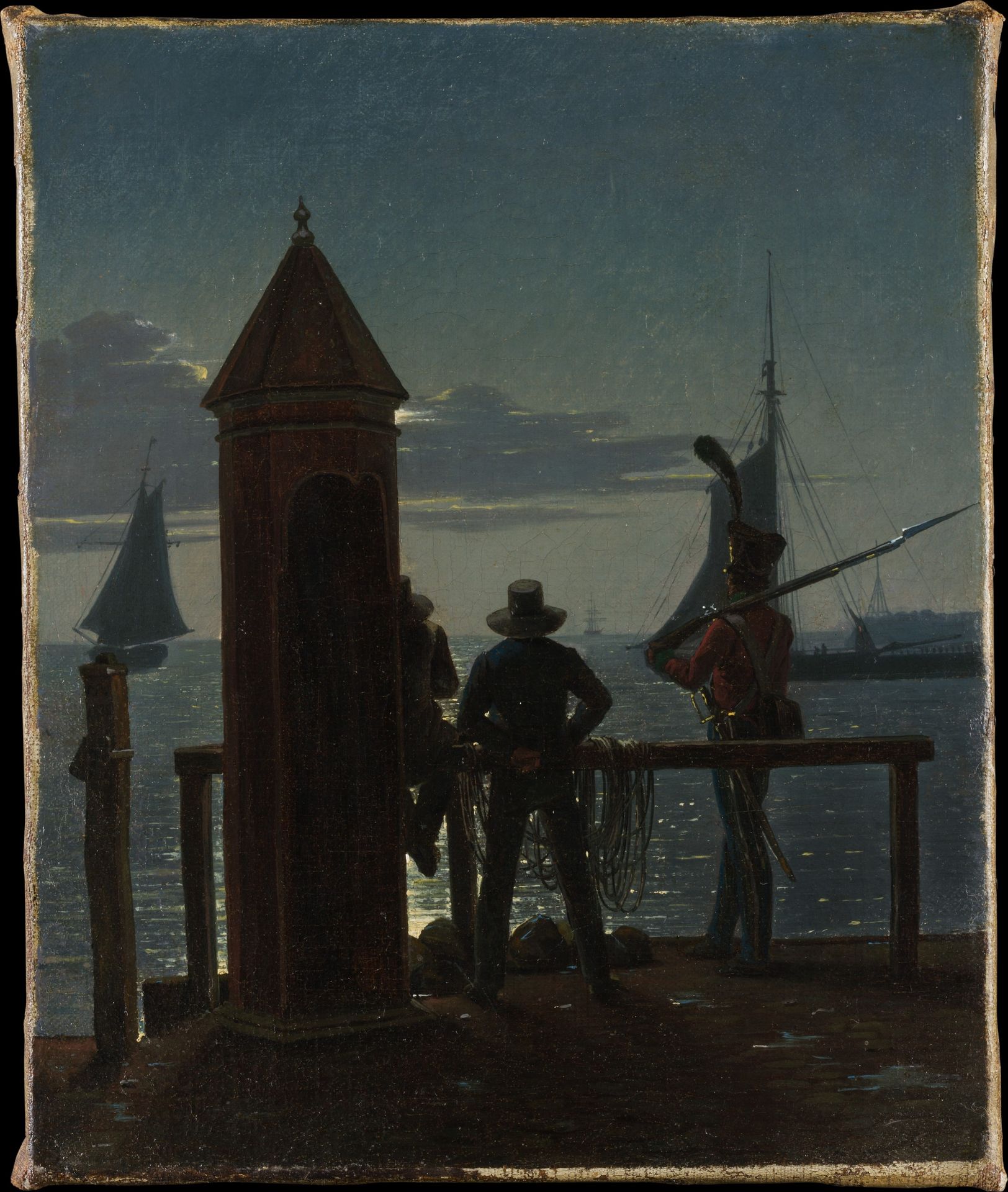
View from the Citadel Ramparts in Copenhagen by Moonlight

Listen to curator's interpretation
Curatorial notes
Editor: This is "View from the Citadel Ramparts in Copenhagen by Moonlight," painted by Martinus Rørbye in 1839. It’s an oil painting, and the moonlight really sets a calm but somewhat melancholic mood for me. What stands out to you? Curator: It's interesting how Rørbye uses Romanticism, not just to depict a picturesque scene, but to also subtly explore the social dynamics within a city under watch. This piece presents Copenhagen, yes, bathed in a beautiful moonlight, but it is also reminding us of state power. Notice the placement of the soldier; his presence highlights themes of civic duty and the ever-present role of the military in maintaining order. Do you think the artist intended for us to consider the nuances of security versus freedom here? Editor: That's a really insightful point. I hadn’t considered it in terms of state power, but seeing the soldier now definitely shifts my perspective. Is it about order or something else, maybe control, that Rørbye is interested in exploring? Curator: Perhaps it's both. The historical context is key. Denmark, in 1839, was navigating its identity after significant political upheaval in Europe. Rørbye might be inviting the viewer to contemplate Copenhagen’s own role, its perceived security, and the societal costs involved. Does seeing the piece this way alter your perception of that initial calmness you described? Editor: It definitely does. There's a tension there now, a sort of unease beneath the beauty. It makes you wonder what stories are not being told about life within those ramparts. I see it so differently now! Curator: Precisely. The politics of imagery are fascinating, especially when an artwork invites layered readings beyond its immediate aesthetic appeal. Editor: It’s amazing how history and social context can completely transform our understanding of a painting. I never would have thought about this piece in this light. Curator: And that's why context is critical for us in understanding art's dialogue with society and culture.