About this artwork
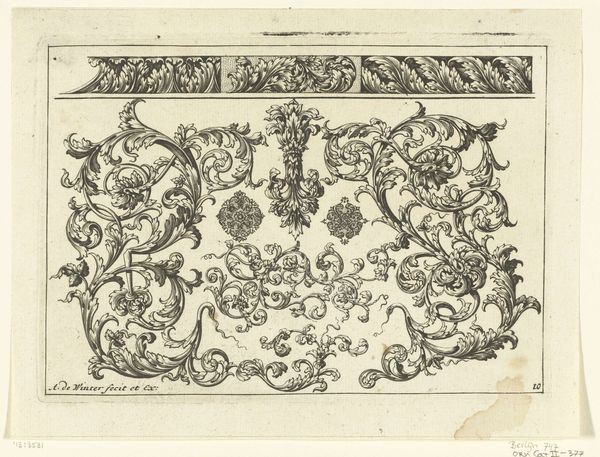
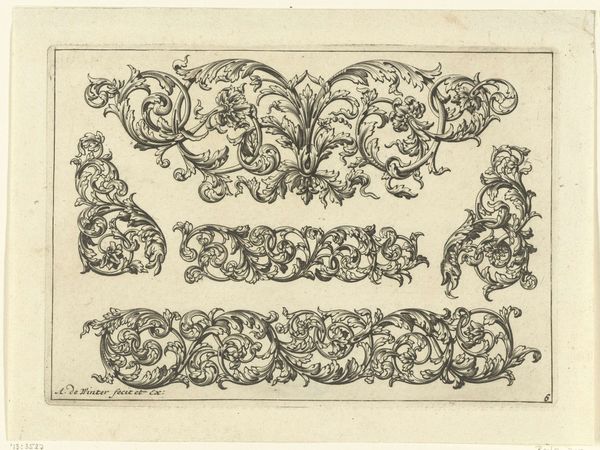
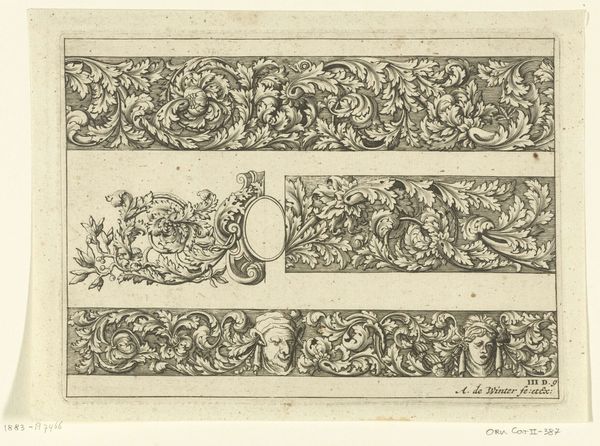
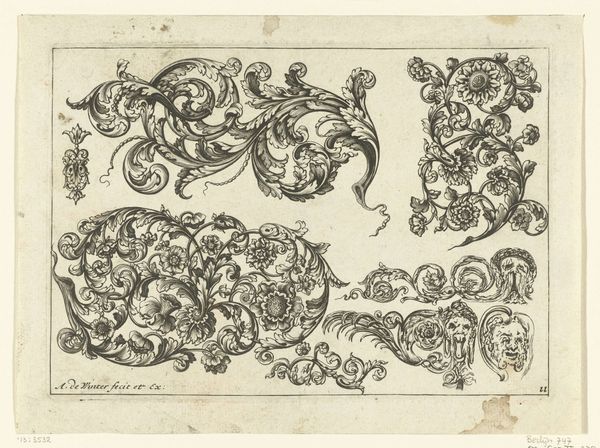
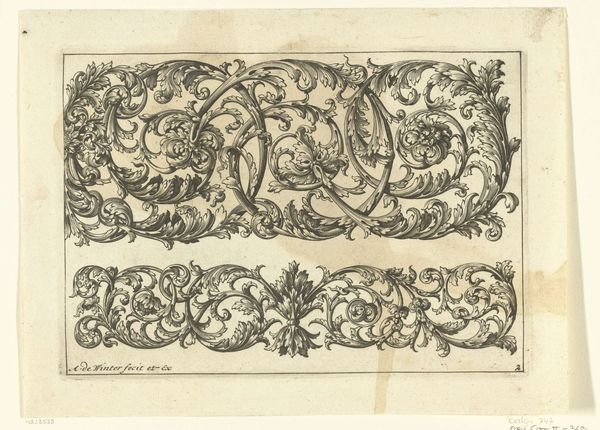
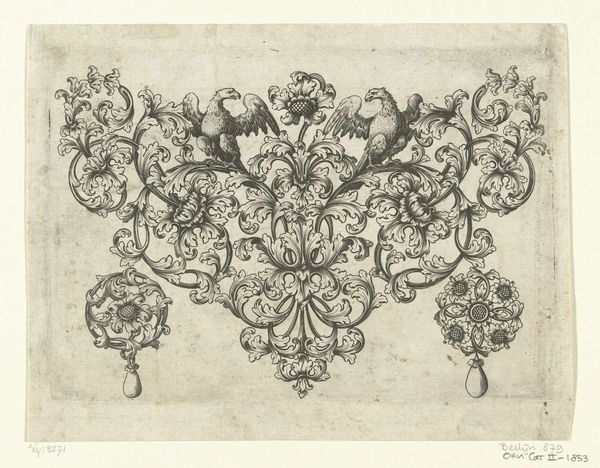
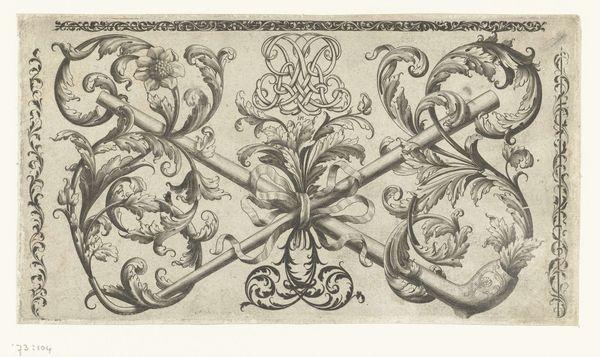
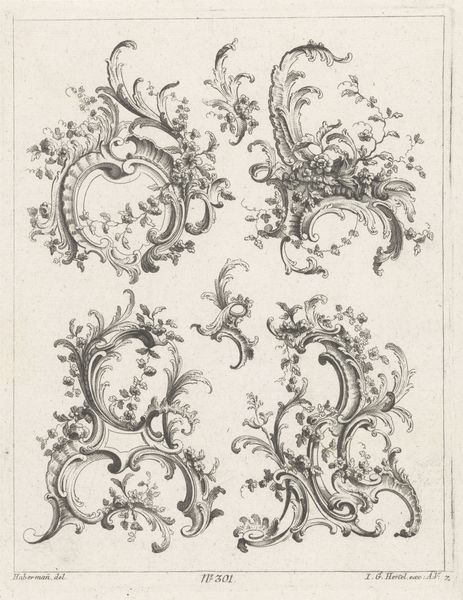
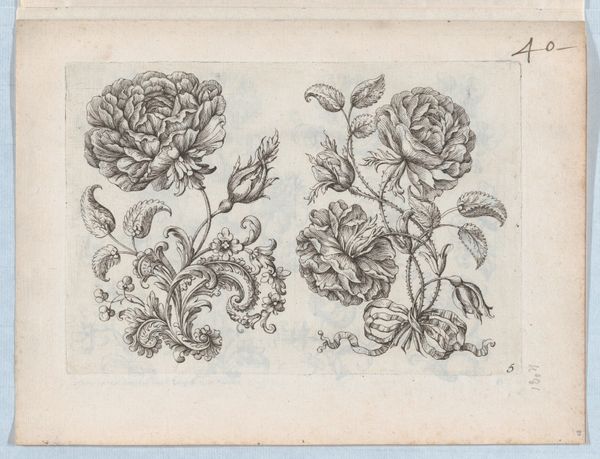
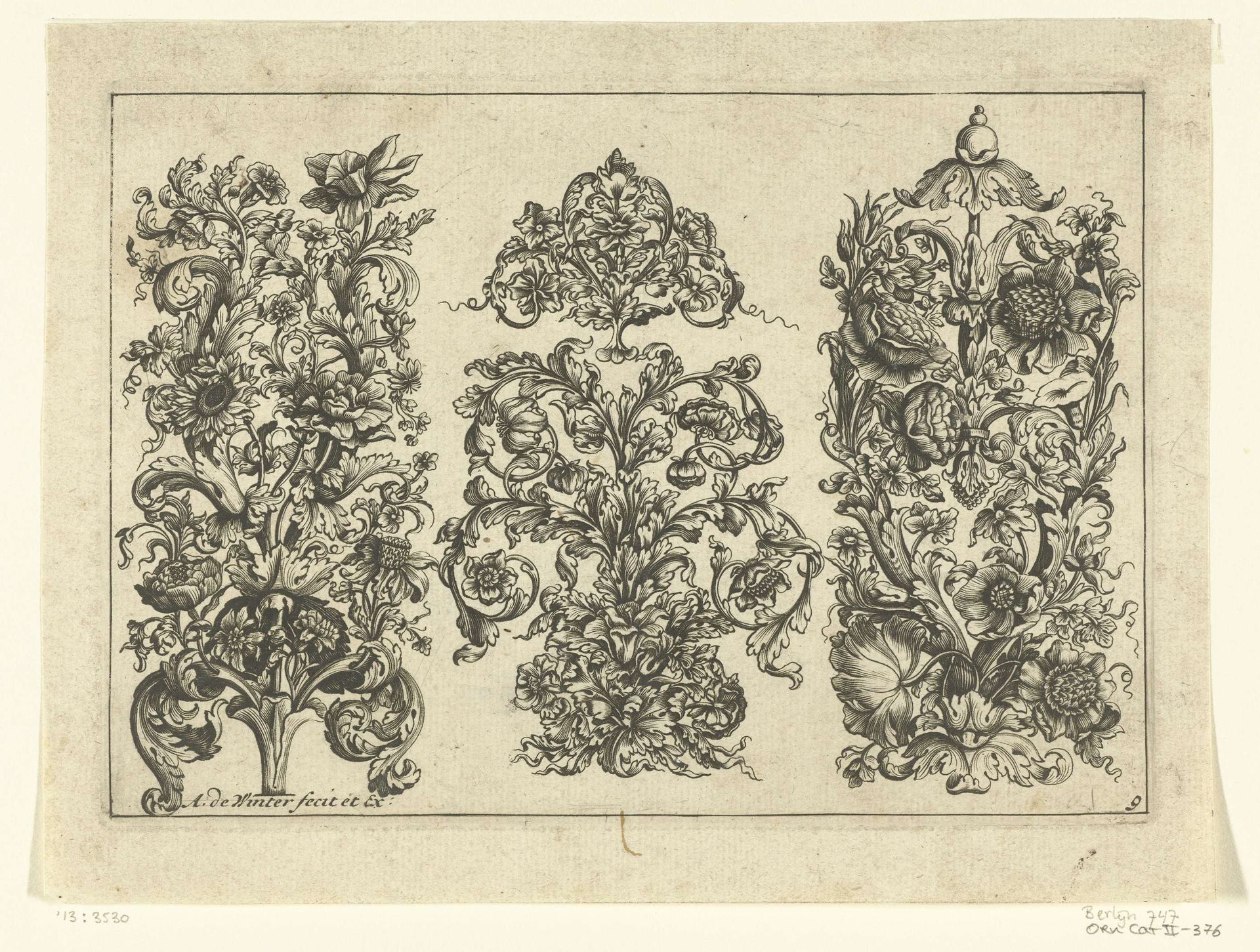
Anthonie de Winter created this print called ‘Three Vertical Strips with Leaf Tendrils and Flowers’ some time between 1663 and 1707, using etching. In the Dutch Golden Age, botanical illustration and detailed depictions of nature held great importance. These ornate designs offered patterns for artisans to decorate functional objects such as furniture, pottery, and textiles. De Winter’s designs reflect a societal desire to control and curate the natural world through art. Notice how the symmetrical arrangements echo the formal gardens that were fashionable at the time. These gardens symbolized wealth and control over nature, reflecting the power dynamics inherent in Dutch society. While seemingly decorative, the ordered nature of this print is a potent reminder of the human drive to organize and dominate the environment, turning nature into a display of status and artistry.
Drie verticale stroken met bladranken en bloemen
c. 1690 - 1700
Anthonie de Winter
1653 - 1707Location
RijksmuseumArtwork details
- Medium
- drawing, print, etching, ink, engraving
- Dimensions
- height 135 mm, width 189 mm
- Location
- Rijksmuseum
- Copyright
- Rijks Museum: Open Domain
Tags
Comments
Share your thoughts
About this artwork
Anthonie de Winter created this print called ‘Three Vertical Strips with Leaf Tendrils and Flowers’ some time between 1663 and 1707, using etching. In the Dutch Golden Age, botanical illustration and detailed depictions of nature held great importance. These ornate designs offered patterns for artisans to decorate functional objects such as furniture, pottery, and textiles. De Winter’s designs reflect a societal desire to control and curate the natural world through art. Notice how the symmetrical arrangements echo the formal gardens that were fashionable at the time. These gardens symbolized wealth and control over nature, reflecting the power dynamics inherent in Dutch society. While seemingly decorative, the ordered nature of this print is a potent reminder of the human drive to organize and dominate the environment, turning nature into a display of status and artistry.
Comments
Share your thoughts